
Museum Quality Beetle Wall Art: 7 Best Pieces
Table of Contents
- What Makes Museum Quality Beetle Wall Art Different
- 1. Triple Stag Beetles in a Frame
- 2. Three Horned Rhino Beetle Framed
- 3. Giant Three Horned Rhino Beetle in a Dome
- 4. Five Horned Rhinoceros Beetle in a Dome
- 5. Violin Beetle in a Frame
- How to Style Insect Shadowboxes in Your Home
- Benefits of Biophilic Decor in Bedrooms
- Frequently Asked Questions
Last Updated: September 1, 2026
What Makes Museum Quality Beetle Wall Art Different
Museum quality beetle wall art combines scientific rigour with aesthetic appeal through archival preservation, specimen authenticity, and presentation craftsmanship. Specimens are preserved using archival methods that protect colour and detail for decades, mounted in shadowbox frames or glass domes using museum-grade materials.
Newman Art Designs specialises in this category, sourcing ethically-preserved specimens from regions like Indonesia, Malaysia, and Southeast Asia, then framing them using conservation standards. The distinction matters because genuine museum quality beetle wall art involves multiple layers: the specimen must be ethically sourced and properly prepared, mounting materials must be archival-grade (acid-free, UV-protective), and framing must prevent deterioration from light, humidity, and handling.
Specimens sourced from sustainable suppliers maintain their iridescent colours and structural integrity far longer than insects treated with shortcuts. The framing uses museum-standard practices: acid-free backing, UV-filtering glass or acrylic, and mounting techniques that don't damage the specimen. This transforms a beetle into a genuine cabinet of curiosities piece, where the intricate detail of a stag beetle's mandibles or the geometric precision of a rhino beetle's horns becomes genuinely visible when properly lit and mounted.

1. Triple Stag Beetles in a Frame
The stag beetle's role in cultural history spans centuries, particularly in Japanese tradition where their prominent jaws inspired samurai helmet designs. This framed collection captures three different stag beetle species in a single 5x7" shadowbox, creating visual variety whilst maintaining cohesive presentation. The beetles' lustrous metallic exoskeletons, ranging from deep brown to iridescent black, catch light differently depending on viewing angle.
At $119.95, the Triple Stag Beetles in a Frame offers strong value for a multi-specimen display. The shadowbox format works well on shelving, desks, or gallery walls where you want the piece to function as a focal point. Rather than repeating the same beetle three times, Newman Art Designs sources different stag beetle types, providing genuine entomology representation rather than simple repetition.

Best for: Collectors wanting multiple specimens without committing to separate frames; anyone drawn to the cultural significance of stag beetles in Asian art traditions.
2. Three Horned Rhino Beetle Framed
The Chalcosoma caucasus (Caucasus beetle) is among Asia's largest beetles, and this 8" x 10" framed specimen showcases why size matters in entomology wall decor. The three-horned structure dominates the frame; those horns are weapons used in male-to-male combat for dominance over food sites and mates. The beetle's powerful exoskeleton and horn geometry create visual intrigue that makes museum quality beetle wall art work as genuine home decor.
At $94.95, this frame delivers impact without the premium price of larger dome displays. The shadowbox format keeps the specimen accessible for examining fine details of the horn structure, exoskeleton texture, and subtle colour variation. The 8" x 10" size works well on bedroom walls, office shelving, or gallery-style arrangements.
The Chalcosoma caucasus is often compared to the South American Hercules beetle as one of the world's most powerful insects. That strength is visible in the frame through muscular body structure, exoskeleton thickness, and aggressive horn configuration.
3. Giant Three Horned Rhino Beetle in a Dome
The dome format creates a three-dimensional viewing experience. Rather than a flat frame where light hits the insect at a fixed angle, the glass dome allows viewing from multiple angles. This Giant Three Horned Rhino Beetle in a Dome, Chalcosoma caucasus from Indonesia, measures approximately 9cm in body length within a 7" diameter dome. The curved glass and elevated presentation transforms the piece into sculpture rather than wall art.

At $119.95, the dome matches the price of the Triple Stag Beetles frame but functions as a standalone display object on nightstands, dressers, shelving units, or desk surfaces. The dome provides superior protection; sealed glass prevents dust accumulation and protects the specimen from accidental contact. Made in Australia, this piece combines the sourced specimen with local craftsmanship in the dome construction.
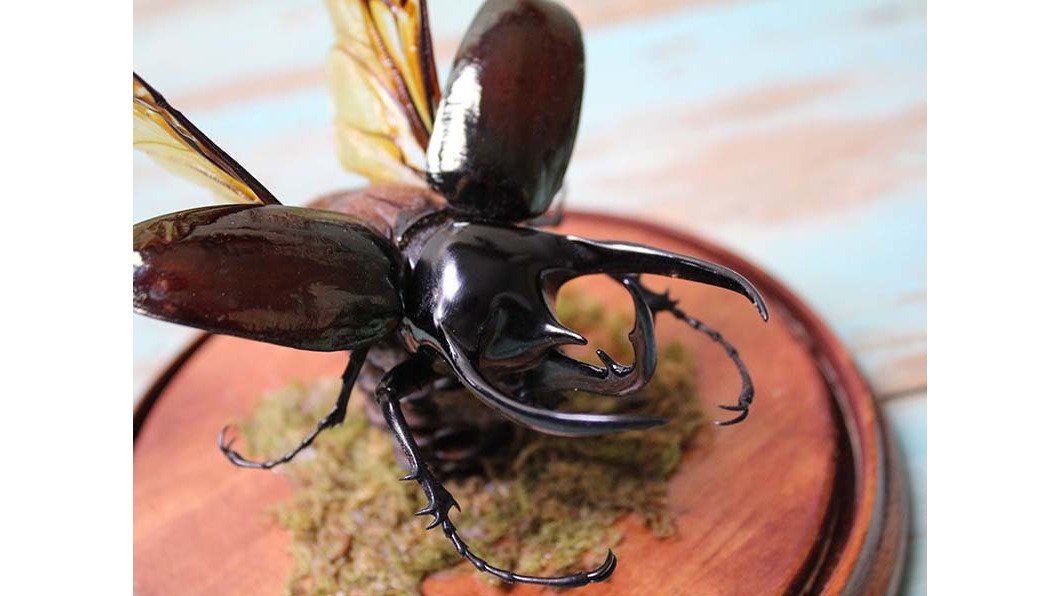
4. Five Horned Rhinoceros Beetle in a Dome
The five-horned rhino beetle represents the extreme end of beetle weaponry. Eupatorus gracilicornis carries four large horns on the prothorax plus one extra-long cephalic horn, the highest horn count of any beetle species. At $109.95, this specimen becomes a genuine conversation piece; the horn arrangement is so unusual that viewers immediately want to understand what they're seeing.
These beetles can lift their own body weight up to 850 times over. When two males wrestle for dominance, one occasionally catapults the other with such force that the loser is launched away. That raw power is visible in the exoskeleton's thickness and muscular body structure. The dome presentation lets light play across the horn surfaces, highlighting geometric precision.
Found across Asia (China, India, Myanmar, Thailand, Laos, and Vietnam), the five-horned rhino feeds on rotten wood, nectar, old fruit, and vegetables. That dietary flexibility makes them successful survivors despite their massive size and the energy cost of flying with such bulk.
5. Violin Beetle in a Frame
The violin beetle (Mormolyce tridens) defies conventional beetle aesthetics. Rather than the compact, armoured form of most beetles, the violin beetle is absurdly flat and elongated, with a disproportionately tiny head and massive wing cases. The name comes from the violin-like silhouette. That unconventional form makes it ideal for museum quality beetle wall art because it genuinely surprises viewers.
At $64.95, the 4" x 6" framed violin beetle is the most affordable entry point in the Newman Art Designs collection. The smaller frame size works well for apartment walls, office spaces, or gallery arrangements where you want multiple pieces without overwhelming the space. The flattened form benefits from the frame format; the shadowbox depth lets you see the side profile where the specimen's oddity becomes apparent.
Sourced from Malaysian rainforests, the violin beetle's flattened body is an adaptation for living under bark and in tight crevices. Their wing cases have fused, meaning they can't fly, but their ecological niche doesn't require flight.
How to Style Insect Shadowboxes in Your Home
Shadowbox frames and glass domes work best when integrated into intentional design schemes. Treat museum quality beetle wall art as genuine decor by considering scale, colour, lighting, and spatial relationships.
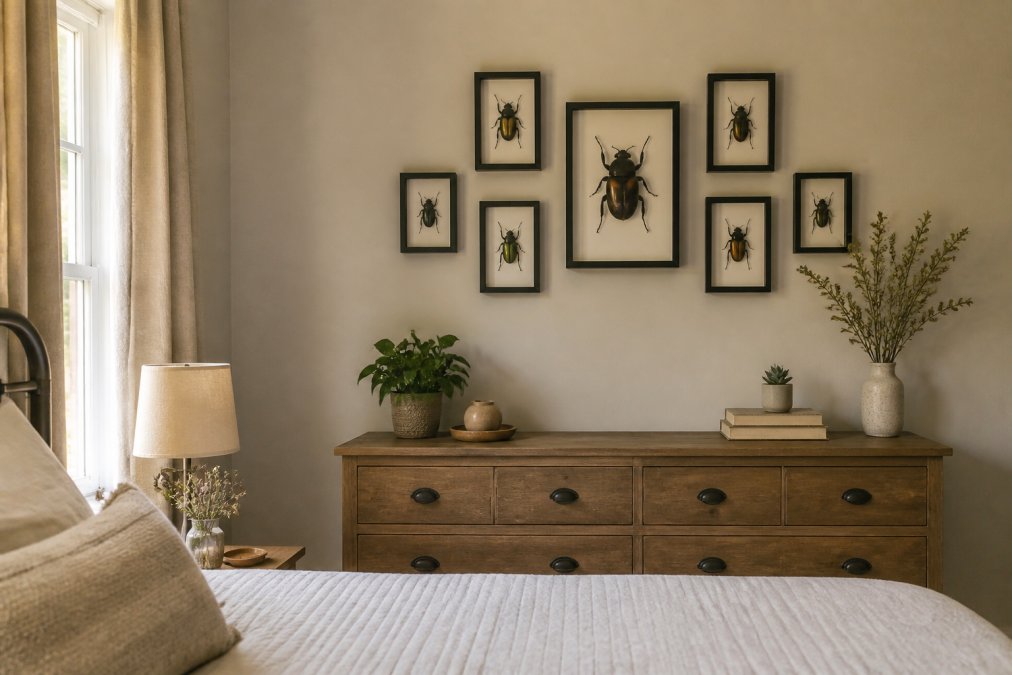
Start with grouping. Three to five pieces arranged in a grid or salon-style layout create visual impact and suggest intentional curation. Odd numbers work better than even ones. Gallery walls work particularly well for smaller frames (4x6" and 5x7").
Lighting matters significantly. Shadowbox frames and domes benefit from indirect natural light or warm artificial lighting. Soft, angled light reveals the iridescent qualities of beetle exoskeletons and creates depth within the frame. Placing frames near windows (but not in direct sunlight) or under picture lights transforms how the specimen reads.
Colour coordination influences how museum quality beetle wall art functions in the space. Beetles with metallic green or gold exoskeletons pair well with warm wood tones and earth-toned walls. Darker beetles work against cooler wall colours or in minimalist aesthetics. Black shadowboxes read as contemporary; natural wood frames feel more traditional.
Maintain consistent spacing between frames, roughly 5-10cm between frame edges creates visual rhythm. Domes on shelving should have breathing room; a dome with clear space around it functions as a sculptural focal point. Bedrooms, offices, and living rooms work well for museum quality beetle wall art. Bathrooms and kitchens are less ideal due to humidity and temperature fluctuations.
Benefits of Biophilic Decor in Bedrooms
Biophilic design, the integration of natural elements into interior spaces, has measurable effects on wellbeing and sleep quality. Museum quality beetle wall art functions as biophilic decor by bringing genuine natural history into the room without requiring living plants or creating maintenance demands.
Viewing preserved specimens activates the same attentional mechanisms as observing living nature. The intricate details of a beetle's exoskeleton, geometric precision of wing case architecture, and alien beauty of unfamiliar species create visual interest that engages the mind without overstimulating it.
Preserved specimens offer advantages over living plants in bedroom contexts. They require no watering, sunlight management, or pest control. For anyone with allergies or sensitivities, preserved insect art eliminates concerns about pollen or mould. The visual benefit and connection to natural biodiversity remain identical without practical complications.
The scientific interest layer adds another dimension. Bedrooms with museum quality beetle wall art become spaces where natural history is visible and accessible. Examining a five-horned rhino beetle in a dome on your bedside table engages your mind in a way that generic wall art doesn't, and that engagement can be genuinely calming.
The metallic greens, golds, and iridescent blacks of beetle exoskeletons are naturally calming colours. Unlike bright reds or intense oranges, beetle specimens tend toward earth tones and cool metallics, colours associated with nature and stability.
For anyone concerned about ethics, transparency about sourcing matters. Newman Art Designs sources from established suppliers in Indonesia, Malaysia, and Southeast Asia where beetle farming and ethical collection practices are standard. That sourcing transparency distinguishes museum quality beetle wall art from cheaper alternatives where specimen origins are unknown.
Properly preserved and framed beetle specimens maintain their appearance indefinitely. That permanence creates a sense of stability in the space, decor that doesn't require seasonal refreshing or constant maintenance.
| Benefit | How Museum Quality Beetle Art Delivers It | Practical Application |
|---|---|---|
| Natural connection | Preserved specimens show genuine biodiversity and natural history | Display in direct sightline from bed or seating areas |
| Visual interest | Intricate detail in exoskeleton, horns, and wing structure | Choose specimens with pronounced features (three-horned or five-horned rhinos) |
| Low maintenance | No watering, pruning, or seasonal care required | Ideal for busy lifestyles or anyone without gardening interest |
| Colour harmony | Metallic and earth-tone exoskeletons complement neutral bedroom palettes | Select frame colour (black or natural wood) to match existing decor |
| Psychological calm | Focused attention on natural forms engages mindfulness | Position domes where they naturally draw attention during wind-down |
| Ethical sourcing | Specimens from sustainable suppliers in managed collection regions | Verify sourcing transparency with retailers like Newman Art Designs |
Museum quality beetle wall art transforms how you experience natural history in your home. The pieces from Newman Art Designs combine ethical sourcing, archival-quality preservation, and thoughtful presentation to create decor that genuinely rewards sustained attention. Whether you choose a gallery wall of smaller frames or a statement dome piece on a bedside table, these specimens bring the intricate beauty of entomology into spaces where you spend meaningful time. With free shipping across Australia and a reputation built since 1996, Newman Art Designs makes museum-grade natural history accessible without requiring a museum visit.
Frequently Asked Questions
What defines museum quality beetle wall art?
Museum quality beetle wall art features archival-grade preservation techniques, high-resolution specimen presentation, and display methods that protect the insect's colours and structural integrity for decades. These pieces use acid-free materials, UV-protective glass or acrylic, and shadowbox frames or glass domes that maintain stable humidity and temperature. The specimens themselves are sourced from ethical suppliers and prepared using scientific entomology standards, ensuring the intricate details, from metallic exoskeletons to delicate wing structures, remain vivid and undamaged.
Are real beetle specimens ethically sourced for home decor?
Ethical sourcing depends on the supplier's practices. Reputable providers source specimens from sustainable populations, captive-bred insects, or legally harvested specimens that don't harm endangered species. Newman Art Designs sources beetles primarily from Indonesia, Malaysia, and Southeast Asia, where these species are abundant and not threatened. Always ask suppliers about their sourcing practices before purchasing to ensure the specimens come from ethical, legal channels rather than wild-caught endangered populations.
How do I care for preserved insect wall art?
Preserved beetle art requires minimal maintenance. Keep pieces away from direct sunlight to prevent colour fading, maintain stable indoor temperatures between 18-24°C, and avoid high humidity environments that can promote mould. Dust the frame or dome gently with a soft, dry cloth every few months. Avoid touching the specimen directly, and keep the display away from moisture, heat sources, and areas prone to vibration. Properly preserved specimens in quality frames can last for decades with these simple precautions.
How should I display beetle wall art in a small space?
In compact apartments, choose smaller framed pieces (4x6 inches) rather than large 8x10 shadowboxes, or opt for a single statement dome piece on a shelf or bedside table instead of wall-mounting multiple frames. Gallery-style arrangements work well in narrow hallway spaces, and a single large piece can anchor a feature wall without overwhelming the room. Vertical placement above furniture (dressers, shelves, desks) maximises visual impact whilst preserving floor and wall space.
What is the difference between a print and a museum quality specimen?
Prints are reproductions of insect artwork on paper or canvas, whereas museum quality specimens are actual preserved insects displayed in frames or domes. Real specimens offer three-dimensional depth, authentic colours, and intricate detail that prints cannot replicate. Specimens also provide an educational, entomology-focused element that appeals to nature lovers and collectors. Museum-grade preservation ensures real beetles maintain their visual appeal and structural integrity indefinitely, making them a lasting investment rather than a temporary decoration.
This article was written using GrandRanker
