
Buy Glass Dome Butterfly Display: A 2026 Guide
Table of Contents
- What Makes a Glass Dome Butterfly Display Worth the Investment
- Understanding Preserved Butterfly Specimens and Quality Standards
- Glass Dome and Cloche Styles: Finding Your Perfect Display
- Best Lighting for Insect Displays and Colour Preservation
- How to Clean Glass Display Domes and Maintain Your Collection
- Ethical Sourcing and Sustainable Butterfly Display Practices
- Styling and Interior Design Integration with Butterfly Displays
- DIY Assembly and Repair for Your Glass Dome Display
- Frequently Asked Questions
What Makes a Glass Dome Butterfly Display Worth the Investment
A glass dome butterfly display transforms a delicate insect specimen into museum-quality home decor that captures attention and sparks conversation. Unlike standard wall art, these pieces bring the intricate beauty of nature directly into your living space as a visual anchor that rewards closer inspection.
The value proposition is straightforward: you're investing in a handcrafted, preserved specimen housed in protective glass that lasts indefinitely. At Newman Art Designs, we've curated these displays since 1996. What sets them apart is the combination of specimen quality, preservation technique, and presentation. A well-chosen glass dome butterfly display becomes a focal point that elevates an entire room's aesthetic.
First, authenticity: these are real preserved butterflies mounted with archival techniques that protect against dust, light damage, and deterioration. Second, craftsmanship: wooden bases are finished to complement your decor, and glass domes are precision-fitted to showcase each specimen. Third, longevity: museum-preserved specimens maintain their colour and structural integrity for decades when properly cared for, becoming heirlooms rather than temporary décor.
Understanding Preserved Butterfly Specimens and Quality Standards
Preserved butterfly specimens are the foundation of any display. The quality of the specimen directly determines how striking your finished glass dome butterfly display will be. Not all preserved butterflies are equal.
A high-quality preserved butterfly specimen exhibits vibrant, unfaded wing colours, intact antennae, and wings that sit naturally without cracks or missing scales. Specimens sourced ethically, from farms, natural die-offs, or licensed collectors rather than wild capture, ensure you're supporting sustainable practices while acquiring a piece you can feel good about displaying.
The origin of the specimen matters. Tropical species like the Blue Morpho Didius, sourced from Peru, display iridescent blues that catch light beautifully and remain stable under proper preservation. When you buy a glass dome butterfly display, the species selection influences both visual impact and the story the piece tells.

Look for specimens with these hallmarks: wings that sit symmetrically, antennae that are present and intact, no visible cracks or missing wing sections, and colours that appear natural rather than artificially enhanced. These indicators tell you the specimen was collected, dried, and mounted with care.
Glass Dome and Cloche Styles: Finding Your Perfect Display
Dome versus Cloche: Key Differences
The terms "glass dome" and "cloche" are often used interchangeably, but they describe distinct styles that affect both aesthetics and functionality. A traditional glass dome is a rounded, bell-shaped cover that sits atop a wooden base, offering excellent dust protection and visual appeal from multiple angles. A cloche is typically taller and more cylindrical, with a narrower profile that suits taller specimens or arrangements.
Domes work best for single-specimen displays where you want the butterfly to be the focal point. The rounded shape draws the eye inward and creates an intimate presentation. Cloches suit multi-specimen arrangements or displays with natural elements like preserved flowers, as their taller profile accommodates layered compositions. The choice depends on your specimen, your interior design scheme, and the visual effect you're pursuing.

The choice also affects how light interacts with the display. Dome-shaped glass creates concentrated light reflection, emphasising colour and detail. Cloche-style glass diffuses light more evenly across a taller arrangement.
Wooden Base Finishes and Aesthetic Options
The wooden base anchors your glass dome butterfly display and deserves as much consideration as the specimen itself. Common finishes include natural wood (which showcases grain and warm tones), dark walnut (sophisticated and grounding), and hand-painted options that add personality. Natural wood bases work well in Scandinavian or minimalist interiors. Darker finishes suit Victorian-inspired or traditional décor. Lighter finishes pair well with contemporary spaces.
Quality bases use sustainably sourced timber that resists warping and maintains its finish over time. When you buy a glass dome butterfly display, ask about the wood species and finish durability.
Size matters too. A smaller base suits compact spaces. Larger displays, like an XLarge glass dome with wooden base, command attention on a mantelpiece and can accommodate multiple butterfly specimens. The base-to-dome ratio should feel balanced to create visual stability.
Best Lighting for Insect Displays and Colour Preservation
Lighting is the invisible hand that either preserves or fades your preserved butterfly specimens. The right lighting strategy ensures your glass dome butterfly display maintains its visual impact for decades.
Natural light is both blessing and curse. Indirect natural light is ideal for viewing and photographing your display. Direct sunlight, however, is the enemy. UV rays fade wing pigments over time, particularly vibrant blues and reds. Position your glass dome butterfly display away from south-facing windows or behind sheer curtains that diffuse harsh light.
Artificial lighting offers more control. LED spotlights with warm colour temperature (2700K-3000K) enhance the natural colours of specimens without generating heat that can damage delicate structures. Avoid incandescent bulbs, which generate excessive heat and can cause condensation inside the dome. Position lights at a 45-degree angle to the display rather than directly overhead.
Display your glass dome butterfly display in a location that receives ambient room light rather than dedicated spotlighting. If you use accent lighting, keep it at low intensity and ensure the light source doesn't warm the glass dome itself.
How to Clean Glass Display Domes and Maintain Your Collection
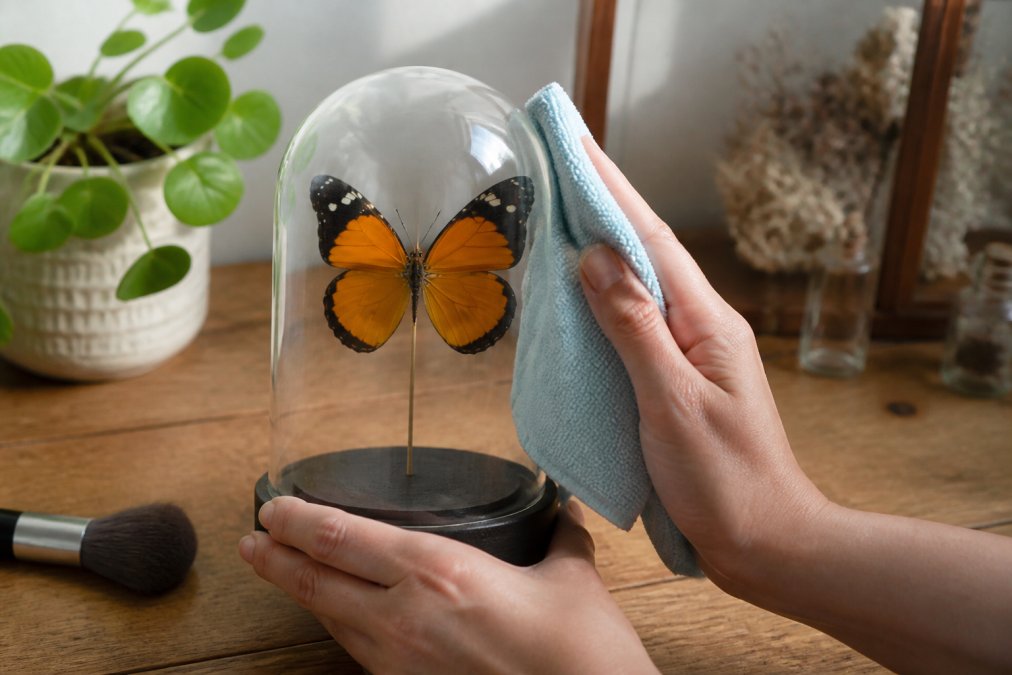
Maintaining your glass dome butterfly display requires minimal effort but consistent attention. The glass itself is resilient, but the specimen inside is delicate, so your cleaning approach must prioritise protection.
Use a soft microfibre cloth to gently wipe the glass dome. Avoid paper towels or rough fabrics that can scratch the surface. For stubborn dust, lightly dampen the cloth with distilled water and wipe in circular motions. Never spray liquid directly onto the dome, as moisture can seep into the base or affect the specimen.
The wooden base requires occasional care. Dust with a soft brush or cloth, and if the wood becomes dull, apply a light wood oil or beeswax-based polish according to the manufacturer's recommendations.
Environmental conditions matter more than you might think. Keep your glass dome butterfly display away from extreme temperature fluctuations, high humidity, and direct heat sources. Ideal conditions are 18-22°C with 40-50% relative humidity. In humid climates, consider placing a small silica gel packet inside the base to absorb excess moisture.
Inspect your display quarterly for dust accumulation inside the dome, discolouration on the wooden base, or changes in the specimen's appearance. Early detection allows you to address problems before they compromise the display's integrity.
Ethical Sourcing and Sustainable Butterfly Display Practices
When you buy a glass dome butterfly display, you're right to ask: where did this butterfly come from, and was its collection sustainable?
Ethical butterfly specimens come from three primary sources: commercial butterfly farms, natural die-offs, and licensed collectors who work within legal frameworks protecting endangered species. Reputable suppliers, including Newman Art Designs, source exclusively from these channels, never from wild-caught endangered species.
Commercial farms raise butterflies specifically for the display and educational markets. This practice is sustainable because it removes collection pressure from wild populations and creates economic incentives for habitat preservation. Farms operate under strict regulations in countries like Peru, South East Asia, and Africa. When you purchase a specimen from a farm-sourced display, you're supporting livelihoods and conservation efforts in those regions.
Wild collection of endangered species is both illegal under international law and ethically indefensible. Reputable sellers verify their supply chain and can provide documentation of legal, sustainable sourcing. If a supplier cannot answer questions about specimen origin, that's a red flag.
Sustainability extends beyond the butterfly itself. Quality suppliers use recyclable or compostable packaging, sustainable wood for bases, and responsibly sourced glass. Newman Art Designs has maintained these standards since 1996, ensuring that every preserved butterfly specimen meets ethical and legal requirements.
Styling and Interior Design Integration with Butterfly Displays
Your glass dome butterfly display is a design element that anchors a room's aesthetic. Strategic placement and thoughtful styling transform a single display into a curated collection that elevates your entire interior.
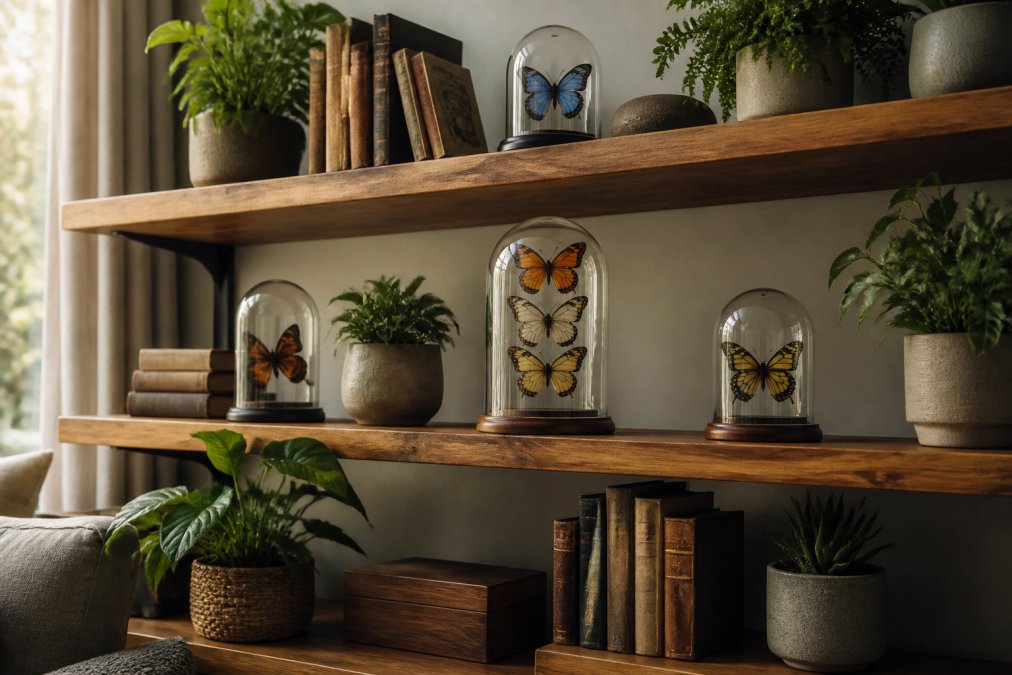
A single glass dome butterfly display works best as a focal point on a mantelpiece, bookshelf, or console table where it commands attention. Position it at eye level or slightly above, so viewers naturally engage with the specimen.
For multi-specimen displays, create a vignette by grouping glass dome butterfly displays with complementary natural elements: potted botanical plants, vintage books with nature themes, or preserved flower arrangements. This creates a cohesive curiosity cabinet aesthetic. Let each display breathe rather than crowding shelves.
Colour coordination matters. If your specimen is vibrant blue, pair it with neutral or warm-toned wooden bases and surrounding décor that doesn't compete visually. Consider the wall colour behind your display, a light wall makes dark-winged specimens pop, whilst a darker wall suits iridescent species that catch light.
Consider the room's overall aesthetic. A Victorian-inspired interior suits darker wooden bases and displays arranged on a dedicated shelf. A contemporary space works better with natural wood finishes and minimal surrounding objects. A bohemian interior can accommodate more varied displays grouped together, creating a personal museum feel.
Position your display where ambient room light naturally illuminates it, or add subtle accent lighting if the space allows. The interplay of light and the specimen's colours is part of the design strategy.
DIY Assembly and Repair for Your Glass Dome Display
Most glass dome butterfly displays arrive fully assembled and ready to display. However, understanding basic assembly and minor repair techniques helps you maintain your collection.
Assembly typically involves securing the wooden base and positioning the glass dome. If you receive components separately, alignment is critical. The dome should sit evenly on the base with consistent gaps around the perimeter. Most quality domes have a slight lip or groove that seats into the base. Never force a dome onto a base, as this can crack the glass or damage the wooden rim.
If dust accumulates inside the dome, carefully lift the dome and use a soft brush to gently remove particles from the base. Reposition the dome carefully, ensuring it seats fully. If the wooden base becomes scratched, light sanding followed by matching wood polish restores appearance without compromising structure.
For more significant damage, a cracked dome, loose specimen mounting, or water damage, professional restoration is worthwhile. Suppliers like Newman Art Designs can advise on repair options or provide replacement components. Regular inspection prevents problems. Check quarterly for loose domes, dust accumulation, or changes in specimen appearance.
A glass dome butterfly display is an investment in beauty that endures. Whether you're drawn to the iridescent blues of the Blue Morpho Didius, the intricate patterns of the Japanese Emperor, or a multi-specimen arrangement, the right display becomes a treasured piece that sparks joy and conversation for decades. Newman Art Designs offers museum-quality preserved butterfly specimens in glass domes, each crafted with attention to specimen quality, sustainable sourcing, and aesthetic presentation. Explore our collection and find the piece that speaks to your style. museum preservation techniques for insect specimens inform our approach to longevity, and ethical sourcing practices ensure every display reflects your values. Shop now and bring the captivating beauty of nature into your home.

| Display Type | Base Size | Dome Height | Best For | Price |
|---|---|---|---|---|
| Single Butterfly Dome | Small | Medium | Compact spaces, shelving | $99.95-$129.95 |
| Multi-Butterfly XLarge | Large | Medium | Statement displays, mantels | $189.95 |
| Japanese Emperor | Small | Medium | Collectors, gift-givers | $99.95 |
| Blue Morpho Didius | Medium | Large | Feature displays, colour impact | $129.95 |
Frequently Asked Questions
Q: How do I know if a preserved butterfly specimen is ethically sourced?
A: Ethical suppliers source specimens from captive-bred populations, farm by-products, or naturally deceased insects rather than wild-caught endangered species. Reputable retailers like Newman Art Designs, established in 1996, provide transparency about specimen origin and sourcing practices. Ask sellers directly about their sourcing methods before purchasing. Look for certifications or statements confirming specimens aren't from protected species. Avoid displays that seem suspiciously cheap, as this often indicates questionable sourcing practices.
Q: What's the difference between a glass cloche and a glass dome for butterfly displays?
A: A glass cloche typically has a bell shape with a wider base and narrower top, often used for Victorian-inspired decor and smaller specimens. A glass dome is usually more spherical or rounded, offering 360-degree viewing and better suited for larger displays. Cloches tend to be more decorative and vintage-aesthetic, while domes provide superior dust protection and visual appeal. Both work beautifully for preserved butterfly specimens; your choice depends on your interior styling preferences and available space.
Q: How long do preserved butterfly specimens last in a glass dome display?
A: Museum-quality preserved butterflies can last for decades when properly displayed and maintained. Longevity depends on proper lighting (avoiding direct sunlight), stable temperature and humidity, and regular gentle cleaning. The sealed glass dome environment protects specimens from dust, insects, and environmental damage. Colours may gradually fade over decades with exposure to light, but quality specimens maintain their visual appeal for many years. Newman Art Designs uses museum-preservation techniques to ensure your pieces remain beautiful and durable.
Q: Can I create my own butterfly display using a glass dome?
A: Yes, you can assemble your own display if you source preserved butterfly specimens and glass domes separately. This requires careful handling to avoid damaging delicate wings, proper mounting using entomology pins or archival adhesive, and knowledge of specimen positioning. Many people prefer purchasing pre-assembled displays like those from Newman Art Designs to ensure professional-quality results and avoid costly mistakes. If you attempt DIY assembly, research proper mounting techniques and use only museum-grade materials to preserve your specimens long-term.
This article was written using GrandRanker
