
Ethically Sourced Butterfly Wall Art: A Buyer's Guide
Table of Contents
- What Makes Butterfly Wall Art Ethically Sourced
- Understanding Captive-Bred vs Wild-Caught Specimens
- How to Display Framed Butterflies in Your Home
- Ethical Entomology Standards and Certification Bodies
- Caring for Shadowbox Insect Art: Preservation and Longevity
- Verifying Authenticity: A Step-by-Step Checklist
- Why Museum-Quality Butterfly Wall Art Justifies the Investment
- Frequently Asked Questions
Last Updated: September 3, 2026
What Makes Butterfly Wall Art Ethically Sourced
Ethically sourced butterfly wall art depends on three core factors: whether butterflies were captive-bred or wild-caught, whether they died naturally or were killed for collection, and whether their harvest supports conservation or exploits endangered populations.
Many assume all butterfly specimens are wild-caught from rainforests, but responsible producers like Newman Art Designs work exclusively with captive-bred butterflies that died naturally, eliminating environmental damage. Wild-caught specimens disrupt pollination cycles, reduce genetic diversity, and threaten vulnerable species. Captive breeding programs create sustainable populations for art and education markets while maintaining genetic diversity and funding conservation efforts.
Look for suppliers who trace specimens to documented breeding facilities rather than vague "sustainable sourcing" claims. Legitimate ethical sourcing includes specifics: which farm, which species, what date the specimen died, and proof it wasn't wild-caught.
Understanding Captive-Bred vs Wild-Caught Specimens
Captive-bred butterflies come from dedicated breeding farms where they live full life cycles and die naturally in controlled environments. This process takes months and requires expertise, but produces ethically sound specimens with intact wings, undamaged antennae, and vivid colours.
Wild-caught butterflies are netted from forests, often in developing countries with weaker environmental regulations. Collectors target the rarest, most visually striking species, iridescent blues, vibrant reds, metallic greens, which are frequently the most vulnerable to overharvesting. Even when technically legal, wild collection destabilises ecosystems and incentivises poaching of protected species.
Specimens that die naturally in captivity have superior preservation quality. Their colours remain vivid because they haven't faded under UV exposure, and their wings are undamaged. This is why museum-grade butterfly wall art uses captive-bred specimens.
Some suppliers claim wild-caught specimens come from "sustainable harvesting" or "natural mortality." Be sceptical. Natural mortality in the wild produces damaged specimens. True sustainability comes from breeding, not collection.
Newman Art Designs uses exclusively captive-bred butterflies that died naturally, ensuring every piece combines ethical sourcing with superior preservation.
How to Display Framed Butterflies in Your Home
Displaying ethically sourced butterfly wall art requires thoughtful placement to protect preservation. Shadowbox frames provide depth, protect specimens from dust, and allow butterflies to be displayed with wings fully spread.
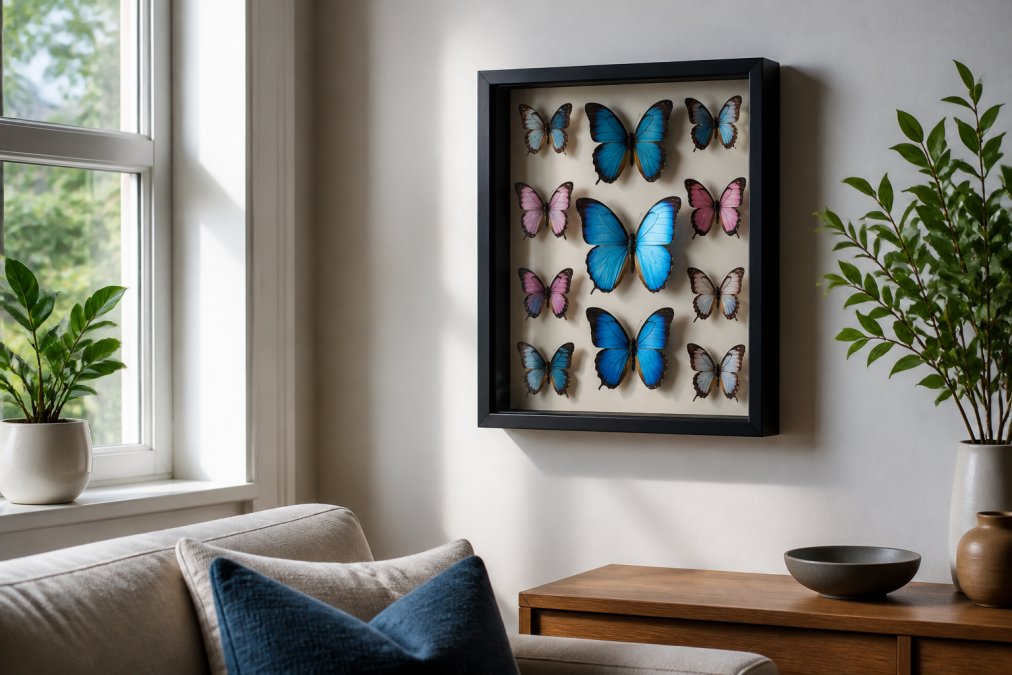
Choose wall locations away from direct sunlight, which fades colours. A north-facing or interior wall with ambient light is ideal. Avoid placing pieces directly above heating vents, radiators, or air conditioning units; temperature fluctuations damage delicate specimens. Keep pieces away from bathrooms and kitchens where humidity spikes can warp frames or encourage mould.
A 4x6" shadowbox like the Blue Triangle Butterfly frame fits perfectly on floating shelves or desks, whilst larger 8x10" frames like the Swirl of Butterfly Delight command more visual presence on feature walls. Consider your room's colour palette; iridescent blues complement cool tones, whilst warm peachy and pink hues work better with warm décor.

Grouping three to five frames in a loose grid or salon-style layout creates impact. Mix frame sizes and butterfly species to create visual rhythm. The Turquoise Emperor's electric blue pairs beautifully with softer tones, creating a cohesive collection.
Ethical Entomology Standards and Certification Bodies
The Convention on International Trade in Endangered Species (CITES) is the primary international agreement regulating wildlife trade, including butterflies. However, CITES doesn't regulate captive breeding; it only restricts wild collection and trade of protected species. A supplier can claim CITES compliance whilst sourcing wild-caught specimens of non-protected species.
More meaningful for ethical sourcing is documentation of captive breeding. Legitimate operations maintain records of specimen origin, breeding dates, and mortality. Some farms are certified by regional agricultural departments or participate in voluntary sustainability programs. Ask whether suppliers can provide farm certifications, breeding documentation, or third-party audits.
Best practices in ethical entomology include sourcing only from captive-bred populations, ensuring specimens died naturally, maintaining genetic diversity in breeding programs, and supporting habitat preservation alongside commercial breeding.
Newman Art Designs aligns with these standards by sourcing exclusively from captive-bred operations and ensuring full transparency about specimen origin, so you can display your butterfly wall art knowing it supports responsible entomology.
Caring for Shadowbox Insect Art: Preservation and Longevity
Museum-quality preservation ensures ethically sourced butterfly wall art lasts decades. Keep humidity levels between 30% and 50%; excessive moisture encourages mould and warps frames, whilst very dry air makes specimens brittle. A stable 18-22°C is ideal, but pieces survive at higher temperatures if fluctuations are minimal.
Never place butterfly art in direct sunlight or under halogen lights, which generate heat and UV radiation that fade colours. Clean the glass exterior with a soft, dry microfibre cloth; avoid liquid cleaners that might seep into the frame. Never open a shadowbox to clean the interior.
Well-preserved specimens maintain their appearance for 20+ years. The iridescent colours of butterflies like the Morpho result from how light reflects off microscopic wing scales rather than pigmentation, making them more stable and fade-resistant than dyed colours. Some specimens may develop slight colour shifts after 10-15 years, but this is normal. When relocating a piece, wrap it carefully in bubble wrap and transport it in a padded box.
Verifying Authenticity: A Step-by-Step Checklist
Before purchasing ethically sourced butterfly wall art, verify that what you're buying is genuinely what the seller claims.
Step 1: Request specimen origin documentation. Legitimate suppliers provide specifics: species name, breeding farm, date of death, and confirmation it wasn't wild-caught. Newman Art Designs includes origin details with every piece.
Step 2: Verify species identification. Check whether common and scientific names match. Cross-reference with entomology databases to confirm the specimen matches the description.
Step 3: Examine specimen condition. Photos should show intact wings with no tears, undamaged antennae, and visible body. Wild-caught specimens often show wear, bent wings, or missing antennae.
Step 4: Check frame quality. Museum-quality frames use acid-free materials, UV-protective glass, and secure mounting. The butterfly should be secured with archival pins or adhesive, not loose.
Step 5: Review seller transparency. How readily does the seller answer questions? Do they provide detailed descriptions? Are customer reviews positive about authenticity and quality?
Step 6: Confirm return and guarantee policies. Reputable sellers stand behind their products with clear return policies.
Why Museum-Quality Butterfly Wall Art Justifies the Investment
Ethically sourced butterfly wall art costs more than mass-produced nature décor, but reflects genuine value in preservation quality, ethical sourcing, and artistic presentation.
Museum-quality preservation uses archival-grade materials throughout. The frame is acid-free wood that won't yellow or warp. The glass is UV-protective, blocking wavelengths that fade colours. The backing board is acid-free, preventing chemical degradation. Mounting pins or adhesive are archival-grade, so they won't corrode or damage wings over decades. These materials cost significantly more but enable specimens to last 20+ years.
Captive-bred specimens are more expensive than wild-caught alternatives because breeding requires infrastructure, expertise, and time. Butterfly farms must maintain temperature and humidity controls, provide appropriate food plants, manage genetic diversity, and handle unpredictable mortality. Wild-caught specimens are cheaper because they externalize environmental costs.
Ethical sourcing supports communities. Butterfly farms in Costa Rica, Peru, and Southeast Asia employ hundreds of workers who might otherwise have limited employment options. When you purchase from ethical suppliers, you fund wages, training, and economic stability.
Artistic presentation matters too. A well-designed shadowbox elevates a specimen from curiosity to art. The Swirl of Butterfly Delight arranges three butterflies in a dynamic composition suggesting movement and flight, creating something more visually compelling than a single specimen.
A museum-quality butterfly piece remains vibrant for decades, making the cost per year of enjoyment reasonable. Ethically sourced butterfly wall art also holds its value better than mass-produced décor, making it a more desirable investment.
Choosing ethically sourced butterfly wall art aligns your home décor with your values. You're supporting sustainable breeding practices, protecting biodiversity, and investing in pieces built to last. Newman Art Designs specialises in museum-quality, captive-bred specimens with transparent sourcing and expert preservation. Every piece arrives with documentation confirming ethical origins and includes archival-grade framing and UV-protective glass. Explore the collection today and discover how ethically sourced specimens like the Blue Triangle Butterfly or stunning Morpho didius can transform your space whilst supporting responsible entomology.

| Consideration | What to Look For | Why It Matters |
|---|---|---|
| Specimen Origin | Captive-bred, documented farm source | Protects biodiversity and ensures ethical sourcing |
| Preservation Method | Archival materials, UV-protective glass | Ensures colours remain vibrant for 20+ years |
| Frame Quality | Acid-free wood, secure mounting | Prevents deterioration and damage over time |
| Seller Transparency | Clear documentation, return policy | Confirms authenticity and supports ethical practices |
| Display Location | Away from direct light, stable temperature | Maximises longevity and prevents fading |
| Price Point | Higher than mass-produced alternatives | Reflects genuine ethical sourcing and quality |
Frequently Asked Questions
How can I tell if butterfly specimens are ethically sourced?
Ethically sourced butterfly wall art comes from captive-bred specimens that died naturally or were sustainably harvested from conservation farms. Ask sellers for documentation showing the species origin, breeding facility, and collection method. Reputable providers can explain their supply chain. Avoid pieces labelled only as 'wild-caught' without conservation credentials, as these may harm endangered populations.
What's the difference between farm-raised and wild-caught insect specimens?
Farm-raised specimens come from captive-breeding programs where butterflies are bred specifically for the art trade, reducing pressure on wild populations. These specimens are ethically sourced and often die naturally as part of their lifecycle. Wild-caught specimens are collected directly from nature, which can threaten biodiversity and endangered species. For ethically sourced butterfly wall art, farm-raised is the responsible choice, supporting both conservation and sustainable harvesting practices.
How long will ethically sourced butterfly wall art last?
Museum-quality preservation techniques ensure ethically sourced butterfly wall art lasts 20 years or more. The iridescent colours remain stable when protected from direct sunlight and excessive humidity. Shadowbox frames shield specimens from dust and damage. Proper storage in a climate-controlled environment, away from heat, moisture, and UV light, extends longevity significantly. Regular gentle inspection and avoiding direct handling of the specimen preserves its delicate structure and vibrant appearance.
Is buying framed butterflies considered ethical?
Yes, when sourced responsibly. Ethically sourced butterfly wall art supports conservation farms that breed specimens sustainably, creating economic incentives for habitat preservation and biodiversity protection. These farms provide income to local communities whilst reducing wild-capture demand. The key is verifying the source: choose pieces from captive-bred specimens and sellers who document their ethical standards. This approach balances aesthetic appreciation with environmental responsibility.
This article was written using GrandRanker
