
Best Museum Quality Insect Shadowboxes in 2026
Table of Contents
- Museum Quality Insect Shadowboxes: What Separates Display from Preservation
- Quick Comparison: Top Newman Art Designs Shadowboxes
- 1. Morpho didius Butterfly in a Frame: Iridescent Showstopper
- 2. White Witch Moth: Rarest Wingspan in the Insect World
- 3. Triple Stag Beetles: The Collector's Trio
- Entomology Display Case Requirements: Choosing the Right Frame
- How to Mount Insects for Shadowbox Display: The Archival Method
- Protecting Insect Collections from Dermestid Beetles and Pests
- Frequently Asked Questions
Museum Quality Insect Shadowboxes: What Separates Display from Preservation
A museum quality insect shadowbox is more than a specimen pinned to a board; it is a sealed, archival environment engineered to protect delicate wings and exoskeletons from light, moisture, and pests for decades. The difference between a decorative piece that fades within a few years and one that remains vibrant for generations comes down to materials and method, not just the beauty of the insect itself. At Newman Art Designs, we have spent decades perfecting these preservation techniques, and this guide breaks down exactly what separates true conservation from simple display.
Most collectors discover too late that standard picture frames allow dust, humidity, and carpet beetles to reach the specimen. A genuine museum-quality shadowbox uses acid-free backing boards, archival mounting pins, and a sealed frame construction to create a stable microclimate. UV-blocking glass is non-negotiable, as direct sunlight will bleach even the most brilliant Morpho blue into a dull brown within months. Understanding these specifications matters because it determines whether your investment survives the decade ahead.

Below, we will walk through the top specimen choices, the entomology display case requirements that protect them, and the exact archival method used to mount insects for shadowbox display. We will also cover how to protect your collection from the most common threat: dermestid beetles.
Quick Comparison: Top Newman Art Designs Shadowboxes
| Specimen | Frame Size | Price | Best For |
|---|---|---|---|
| Morpho didius Butterfly | 8" x 10" | $114.95 | Iridescent blue centrepiece |
| White Witch Moth | 8" x 10" | $179.95 | Largest wingspan, rare find |
| Triple Stag Beetles | 5" x 7" | $119.95 | Collector's trio, masculine decor |
1. Morpho didius Butterfly in a Frame: Iridescent Showstopper
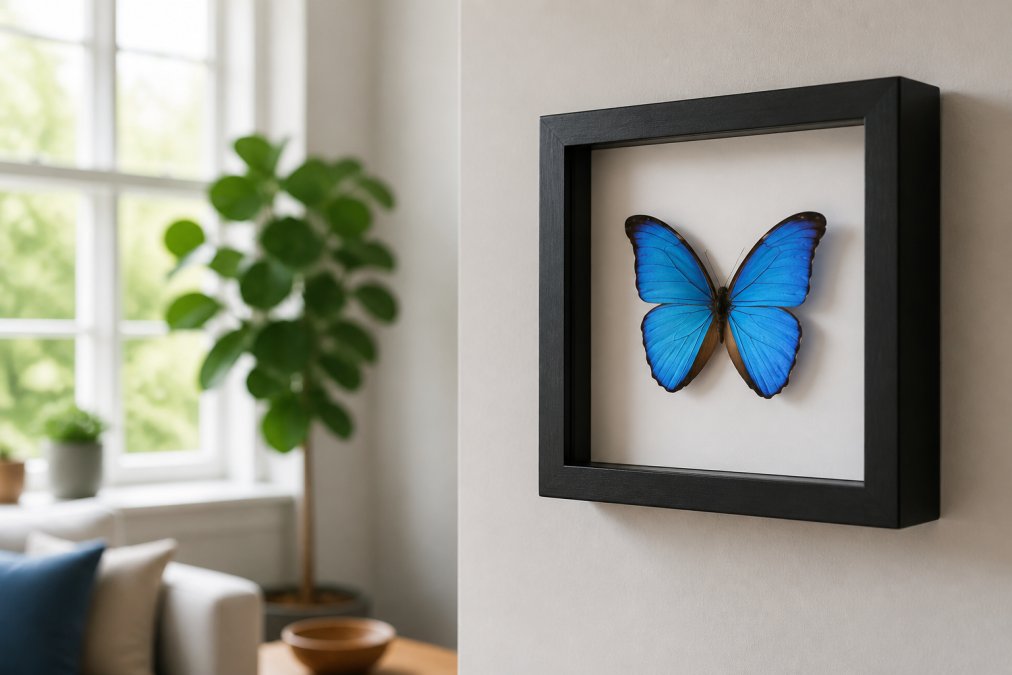
The Morpho didius is the definitive statement piece for anyone seeking the best museum quality insect shadowboxes. Its wings do not rely on pigment; the microscopic scale structure reflects light to produce that electric blue, shifting with your viewing angle. This structural coloration, similar to a photonic crystal, is why the specimen appears to glow. Presented in an 8" x 10" black shadowbox frame at $114.95, this Peruvian native is a conversation starter in any room.

What makes this piece exceptional is how the iridescence interacts with proper display lighting. Under soft, indirect natural light, the blue deepens and shimmers in a way that flat prints cannot replicate. The frame depth provides enough clearance to protect the antennae and wing edges from contact with the glass, a detail often missed in cheaper alternatives.
2. White Witch Moth: Rarest Wingspan in the Insect World
For the serious collector, the White Witch Moth, or Thysania agrippina, represents a genuine prize. It is considered to have the largest wingspan of any insect, and its rarely seen nature adds to its mystique. At $179.95, this 8" x 10" framed specimen is an investment piece. The story behind its name, where early naturalists firing shotguns at this "unkillable witch" as it sailed through the canopy, adds a layer of history to its display.
The subtle brown and cream patterning of the White Witch rewards close inspection. Unlike the bold Morpho, this moth demands a viewer who appreciates understated elegance and the intricate veining across its expansive wings. It is the kind of piece that prompts questions from every guest, making it ideal for a study, library, or hallway gallery.
3. Triple Stag Beetles: The Collector's Trio
If butterflies represent the delicate side of entomology, the Triple Stag Beetles frame brings a strong, sculptural energy. This 5" x 7" shadowbox at $119.95 houses three distinct stag beetles from Indonesia, their prominent jaws a nod to the samurai helmets they inspired in Japanese culture. The glossy, armour-like exoskeletons catch the light differently than any wing, offering a textural contrast perfect for a shelf or desk.

The three-dimensional quality of these beetles requires a frame with sufficient depth to display them without crushing their legs or mandibles. This is where a true shadowbox design excels over a flat frame, preserving the natural form and allowing viewing from multiple angles.
Entomology Display Case Requirements: Choosing the Right Frame
The frame is the first line of defence in specimen preservation. Entomology display case requirements centre on three critical elements: an airtight seal, UV-blocking glazing, and acid-free materials. A floating frame with double glass offers a modern aesthetic, but you must verify the backing is not cardboard, which traps moisture and attracts pests.
Timber frames, particularly those finished in black, offer both aesthetic appeal and structural rigidity. The depth of the frame, typically 20mm to 30mm, must accommodate the specimen's thickness, especially for beetles or moths with raised bodies. Sealing the backing board with a moisture barrier prevents humidity fluctuations that cause wings to droop or become brittle over time.
Glazing Specifications: What 'UV-Blocking' Actually Means
Most retail frames claim UV protection without specifying the percentage. Museum-grade glazing blocks 97% to 99% of UV radiation across the 300-400nm spectrum. Standard picture frame glass blocks roughly 40% to 60%. The difference is not academic, UV exposure is the primary driver of pigment breakdown in butterfly wings, particularly in structural colours like the Morpho's iridescent blue, which relies on microscopic scale geometry rather than pigment.
Two glazing options meet museum standards:
- Conservation Clear Glass, blocks 99% of UV, optically clear, minimal colour distortion. This is a common choice for serious collections.
- Museum Glass, adds an anti-reflective coating that eliminates glare while maintaining 99% UV filtration. It costs more but is often preferred for brightly lit rooms where reflections obscure the specimen.
The Seal: Where Most Frames Fail
A 'sealed' frame is not simply one where the glass meets the frame. True pest-proof sealing requires:
- A rebated frame channel, the glass sits into a routed groove, not just on top of the frame face.
- Neutral-pH silicone sealant applied along the interior joint between glass and frame. Acidic sealants off-gas and can discolour the backing over years.
- A rigid backing board, 3mm to 5mm MDF or plywood, not corrugated cardboard. Cardboard is hygroscopic; it absorbs and releases moisture, creating micro-humidity fluctuations inside the frame.
- A dust seal, gummed paper tape (acid-free) applied around the entire rear edge after the backing is fitted. This is the barrier that stops dermestid beetles and dust mites from entering.
A floating frame with double glass may look elegant, but unless both panes are sealed to the frame with a gasket, it is not pest-proof. Many floating frames rely on gravity and friction, gaps large enough for carpet beetle larvae (less than 1mm) to crawl through.
Backing Materials: The Chemistry of Acid-Free
Acid-free backing is not a single product. The term covers several materials with different properties:
- Museum board (alpha-cellulose), pH neutral or slightly alkaline, buffered with calcium carbonate. It is the archival standard for mounting.
- Acid-free foam board, lighter and cheaper, but less rigid. Suitable for smaller specimens under 8" x 10".
- Basswood or poplar plywood, used in higher-end frames for rigidity, but must be sealed with an archival barrier film before mounting to prevent natural wood acids from migrating.
Most practitioners find that a combination works best: a rigid backing for structure, overlaid with a museum board for the actual pinning surface. The specimen pins must never touch the rigid backing directly, as wood acids will wick along the pin and discolour the specimen over time.
Frame Depth: Why 20mm Is Not Always Enough
Frame depth must accommodate the specimen's thickest point, typically the thorax for beetles or the folded body for moths, plus a minimum 5mm clearance between the specimen and the glass. A 20mm internal depth suits most butterflies, but large beetles or moths with raised abdomens require 30mm to 40mm. Measure the specimen before choosing a frame; guessing leads to crushed antennae or a specimen pressing against the glass, which traps moisture and promotes mould.
Australian Climate Considerations
Australian conditions, particularly the humidity of the eastern seaboard and the dry heat of the interior, place unique demands on frame construction. In humid climates, the seal must be absolute, as moisture drives both mould growth and pest activity. In arid zones, the risk is desiccation; wings become brittle and legs snap off if the specimen dries too rapidly. A sealed frame with stable internal humidity mitigates both extremes, but the choice of backing material matters: in high-humidity areas, a sealed plywood backing outperforms foam board, which can warp.
Australian Museum specimen preservation guidelines
Choosing the right frame is not about aesthetics, it is about engineering a microclimate that keeps the specimen chemically and physically stable for decades. The frame is the single most important purchase decision you will make, and the specifications above are the difference between a display that lasts and one that quietly degrades.
How to Mount Insects for Shadowbox Display: The Archival Method
Proper mounting is a skill that separates professional results from hobbyist attempts. The archival method for how to mount insects for shadowbox display begins with relaxing the specimen if it is dried, then carefully positioning the wings using precision forceps. Entomological pins are inserted through the thorax, not the abdomen, to ensure stability without damaging vital structures.
The specimen must be centred on an acid-free backing board, with wings spread symmetrically to display the dorsal pattern. Pinning the wings involves setting small strips of tracing paper over them to hold their position while they dry. This process requires patience; rushing it leads to torn wings or misaligned antennae, which ruins the display value.
For most collectors, the risk of damaging a valuable specimen during DIY mounting is high. Professional preparation ensures the wings are spread at the correct angle and the body is free of fats that can seep out and discolour the backing over time. This is a case where expertise genuinely protects your investment.
Protecting Insect Collections from Dermestid Beetles and Pests
The greatest threat to any insect collection is not light, but pests. Dermestid beetles and carpet beetles are tiny scavengers that can reduce a prized specimen to dust inside a frame if they gain entry. Protecting insect collections from dermestid beetles requires a two-pronged approach: prevention through sealing and periodic inspection.
A properly sealed shadowbox with no gaps between the glass, frame, and backing is your primary defence. Before framing, professional preparators often freeze specimens to kill any larvae or eggs that may be present. Once displayed, keep the frame away from damp areas like bathrooms or exterior walls where condensation can form.
Regular inspection, every six months, involves checking the corners of the frame for fine dust or the tell-tale signs of frass. If you notice an infestation, isolate the frame immediately and consult a professional conservator. As documented by museum conservation guidelines, prevention is always more effective than treatment for pest damage.
Choosing the best museum quality insect shadowboxes comes down to understanding that you are purchasing a preservation system, not just a decorative object. Whether you select the iridescent Morpho didius, the record-breaking White Witch Moth, or the sculptural Triple Stag Beetles, the craftsmanship of the frame and the archival mounting method determine how long your piece will last. Newman Art Designs has built museum-quality preservation techniques into every shadowbox since 1996, ensuring your specimen remains vibrant for decades. Get started with Newman Art Designs and bring a piece of the natural world into your home with confidence.
Frequently Asked Questions
What makes an insect shadowbox museum quality?
A museum quality insect shadowbox uses archival materials that protect the specimen for decades. Key features include UV-blocking glass to prevent wing colour fading, an acid-free backing board that will not degrade the specimen, and a sealed frame to keep out moisture and pests. The specimen itself must be professionally dried and preserved before mounting. Cheaper frames often use standard glass and cardboard backing, which allows UV damage and acid migration that slowly destroys the display.
How long will a professionally framed insect specimen last?
A properly preserved and mounted specimen in a museum quality shadowbox can last for decades. The two main threats are UV light, which fades wing colours, and pests such as dermestid beetles that can consume the dried specimen. UV-blocking glass and a tightly sealed frame address both risks. Display your shadowbox away from direct sunlight and in a dry room to maximise its lifespan.
How do I protect my insect collection from dermestid beetles?
Dermestid beetles are the primary pest threat to dried insect specimens. Prevention starts with a sealed shadowbox frame that leaves no gaps for pests to enter. Before mounting, specimens should be properly frozen or treated to kill any larvae. Once displayed, inspect the frame periodically for fine dust or small holes near the specimen, which indicate pest activity. Keeping the shadowbox in a dry, cool room also discourages infestations.
Why are museum quality insect shadowboxes more expensive than regular frames?
The price reflects the specimen and the framing materials. Ethically sourced specimens from sustainable farms cost more than mass-produced decor. Museum quality shadowboxes also use UV-blocking glass, acid-free backing boards, and sealed timber frames that protect the specimen. A $69.95 frame such as the Monarch Butterfly uses the same archival construction as a $179.95 White Witch Moth; the price difference is the rarity of the species.
Can I mount insects myself or should I buy a professionally framed shadowbox?
Mounting insects yourself is possible but requires practice and the right tools. You will need entomology pins, a spreading board, acid-free paper, and a sealed display case with UV-blocking glass. Mistakes such as tearing wings or improper drying can ruin a specimen. Professional framing services have the experience and archival materials to ensure the specimen stays intact for decades, which is why collectors often prefer ready-made shadowboxes.
This article was written using GrandRanker
