How to Ethically Source Butterfly Specimens
Table of Contents
- What Ethical Sourcing of Butterfly Specimens Actually Means
- Captive Breeding, Butterfly Farming Conservation, and Wild Collection
- Importing Insect Specimens Regulations and CITES Compliance
- How to Identify Sustainable Insect Specimens Before You Buy
- Supply Chain Transparency and Traceability
- Responsible Ownership: Display, Care, and End-of-Life for Collections
- Conclusion
Last Updated: August 30, 2026
What Ethical Sourcing of Butterfly Specimens Actually Means
Ethical sourcing of butterfly specimens is the practice of acquiring preserved lepidoptera through methods that protect wild populations, support conservation outcomes, and comply with all relevant legal frameworks. At Newman Art Designs, this principle sits at the core of how we curate our collection, because a beautiful specimen that harms biodiversity is not something worth displaying.
The distinction matters more than most buyers realise. Many suppliers use the word "ethical" as a marketing label without substantiating it. Before purchasing any butterfly specimens, you need to understand what ethical sourcing actually requires: traceability back to the source, documentation of legal compliance, and evidence that collection methods did not damage wild populations.
Below, we'll walk through exactly how to verify that a specimen meets genuine ethical standards, from understanding captive breeding programmes to checking CITES documentation and asking the right questions before you buy.
Sustainable vs. Ethical: Why the Distinction Matters
These two terms are often used interchangeably, but they describe different things.
Sustainable means a practice can continue without depleting the resource. A butterfly farm that harvests only a percentage of its pupae while allowing the rest to complete their lifecycle and reproduce is operating sustainably. The population remains stable.
Ethical is a broader standard. It encompasses sustainability, but also considers the welfare of ecosystems, the livelihoods of local communities involved in butterfly ranching, and the transparency of the entire supply chain. A practice can be technically sustainable, harvesting within population limits, while still being unethical if it exploits local workers or obscures its origins.
The most rigorous ethical sourcing policy satisfies both criteria. When evaluating suppliers, ask for evidence of both, not just one.
Captive Breeding, Butterfly Farming Conservation, and Wild Collection
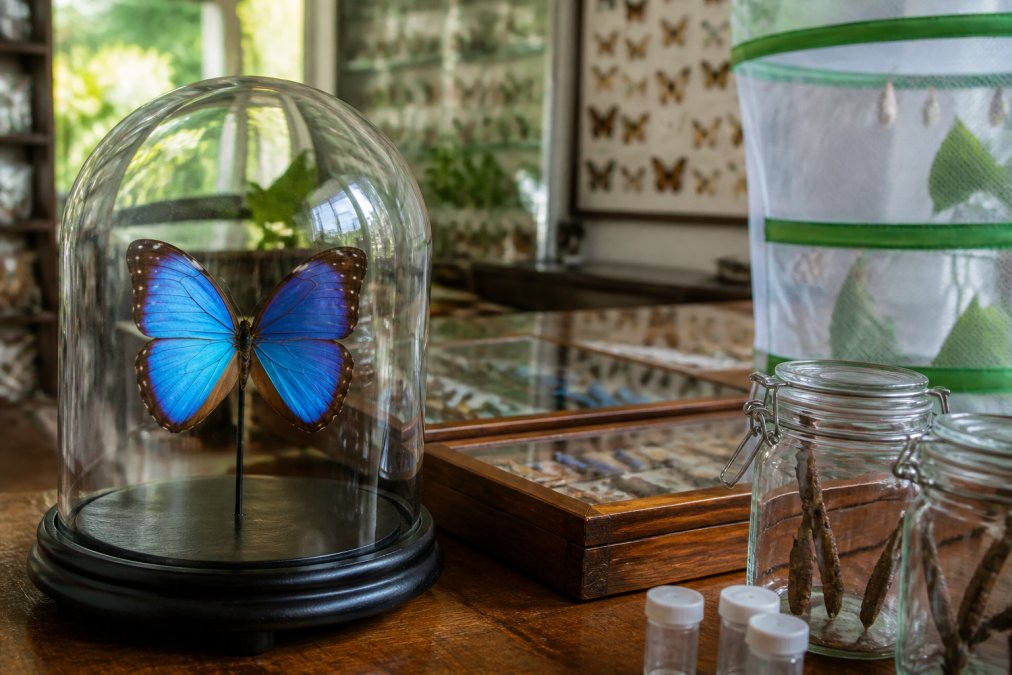
Butterfly farming conservation is the most defensible sourcing model available today. Farms raise lepidoptera through their complete lifecycle, egg, larva, pupa, and adult, in controlled environments that replicate natural habitat conditions. Specimens that die of natural mortality are then preserved for the collector market, meaning no living butterfly is killed for display.
This model does more than supply specimens. Well-managed butterfly farms in biodiverse regions actively contribute to habitat protection by giving local communities an economic incentive to preserve forest rather than clear it. The farm's commercial viability depends on the surrounding ecosystem remaining intact. That alignment of financial interest and conservation outcome is what makes butterfly ranching genuinely valuable, not just less harmful.
The Lifecycle of a Farm-Raised Specimen
Understanding this lifecycle helps buyers assess whether a supplier's claims are credible.
- Egg stage: Female butterflies lay eggs on host plants within the farm enclosure. No wild collection occurs at this stage.
- Larval stage: Caterpillars feed on cultivated host plants. Farms manage plant stocks to sustain larval populations.
- Pupal stage: Chrysalises form under controlled conditions. Temperature and humidity are managed to maximise survival rates.
- Adult emergence: Adult butterflies emerge and live out their natural lifespan within the enclosure, typically one to three weeks depending on species.
- Natural mortality collection: Specimens that die naturally are collected, relaxed, and spread by skilled technicians using museum-quality preservation techniques.
- Preservation and export: Specimens are dried, set, and prepared for export with accompanying documentation.
A reputable farm can trace each specimen back through this chain. If a supplier cannot describe this process or provide documentation, that is a significant red flag.
Why Wild-Caught Specimens Are Discouraged
Wild-caught specimens are those taken directly from natural habitats, typically using nets or traps. The problem is not that wild collection is always catastrophically harmful, for common, abundant species in well-managed programmes, non-invasive collection with population monitoring can be sustainable. The problem is verification.
Without strong population monitoring and regulatory oversight, wild collection puts pressure on species that may already face habitat loss. For rarer species, even modest collection pressure can have outsized effects. And because wild-caught specimens are harder to trace than farm-raised ones, the supply chain is far less transparent.
For collectors prioritising ethical procurement, farm-raised specimens are the clear preference. The lifecycle is documented, the environmental impact is understood, and the sourcing story is verifiable.
Importing Insect Specimens Regulations and CITES Compliance
Importing insect specimens is governed by international and domestic frameworks that exist precisely to prevent the trade in wildlife from driving species decline. The primary international instrument is the Convention on International Trade in Endangered Species of Wild Fauna and Flora, better known as CITES, which regulates trade in listed species through a permit system.
According to CITES official trade documentation guidelines, specimens of species listed under CITES Appendix I, II, or III require specific export permits from the country of origin and, in many cases, import permits from the receiving country. Butterfly species listed under these appendices, including many birdwings and swallowtails, cannot legally be traded without this documentation.
Australian Import Requirements for Lepidoptera
Importing butterfly specimens into Australia is regulated under the Environment Protection and Biodiversity Conservation Act 1999, administered by the Department of Climate Change, Energy, the Environment and Water. This legislation controls the import of CITES-listed specimens and requires that importers hold valid permits for covered species.
The key compliance requirements for importing lepidoptera specimens are:
- CITES export permit issued by the country of origin, confirming legal acquisition and authorised export
- Australian import permit for CITES Appendix I or II species, obtained from the relevant federal department before the shipment arrives
- Accurate species identification on all documentation, generic descriptions like "butterfly specimen" are insufficient for CITES-listed species
- Traceability records linking the specimen to its farm or collection source
The Australian Border Force biosecurity import conditions also apply. Preserved insect specimens may be subject to biosecurity inspection on arrival, and specimens that do not meet import conditions can be seized or destroyed. Buyers importing specimens personally should verify current conditions before purchasing from overseas suppliers.
How to Identify Sustainable Insect Specimens Before You Buy
The most common mistake buyers make is accepting a supplier's self-description at face value. "Sustainably sourced" and "ethically collected" are easy phrases to print on a website. What separates genuine ethical sourcing from marketing language is evidence.
Here is what to look for before purchasing butterfly specimens.
Verification Checklist for Buyers
Use this checklist when evaluating any supplier of butterfly specimens or other insect specimens:
- Species identification: Is the exact species name provided, not just a common name? Vague descriptions make CITES compliance impossible to verify.
- Origin country: Is the country of origin clearly stated? Cross-reference this against CITES listings for that species and region.
- Farm-raised or wild-caught: Does the supplier explicitly state which sourcing method was used? Is that claim supported by farm documentation?
- CITES documentation: For listed species, are export permits available? Can the supplier provide permit numbers?
- Supplier transparency: Does the supplier describe their sourcing relationships? Can they name the farms or cooperatives they work with?
- Population monitoring: For any wild-collected specimens, is there evidence of population monitoring and harvest limits?
- Preservation method: Are museum-quality preservation techniques used? This affects both specimen longevity and the credibility of the supplier's claims.
- Return policy: Does the supplier stand behind their product's quality and provenance claims?
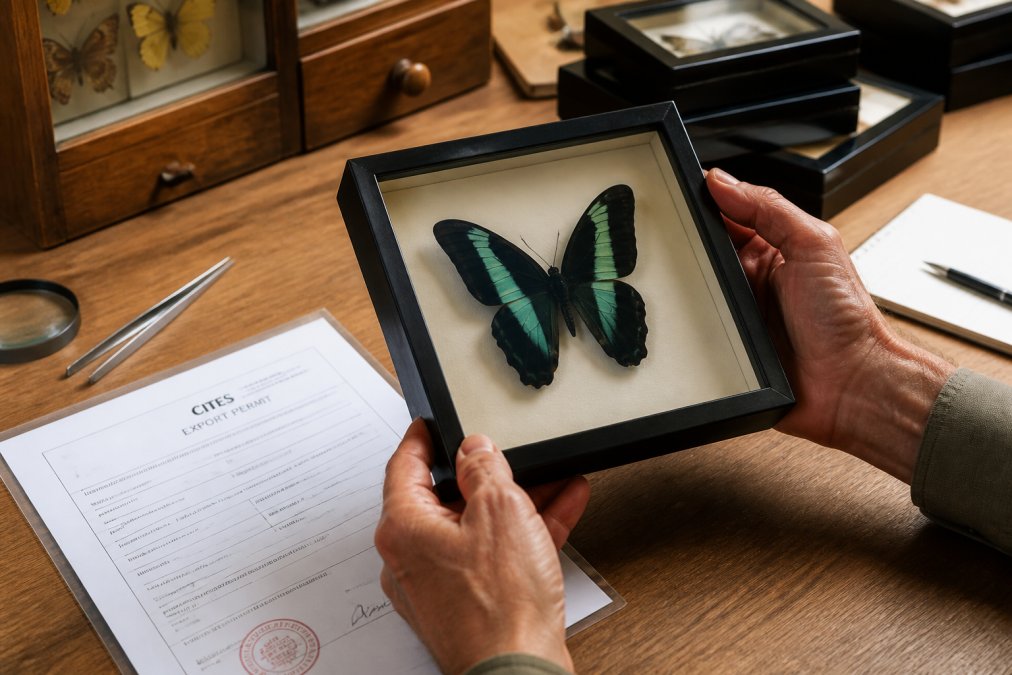
No reputable supplier will be troubled by these questions. The ones who are troubled are telling you something important.
Supply Chain Transparency and Traceability
Supply chain transparency means being able to follow a specimen from its point of origin to the display case, every step documented, every handler accountable. Traceability is what makes that transparency verifiable rather than theoretical.
The collector ethics community has increasingly moved toward demanding full traceability as a baseline standard, not a premium feature. This shift reflects a broader understanding that ecosystem services depend on biodiversity, and biodiversity depends on trade practices that do not silently erode wild populations.
What does a transparent supply chain actually look like in practice? It includes farm records showing breeding stock and harvest rates, export documentation from the country of origin, import records from the receiving country, and clear labelling at the point of sale. Each link in that chain should be accessible to the buyer on request.
For buyers in Australia, this traceability also serves a practical legal purpose. Possessing a CITES-listed specimen without documentation of its legal import is a potential offence under the Environment Protection and Biodiversity Conservation Act 1999. The documentation that proves ethical sourcing is also the documentation that proves legal compliance. They are the same thing.
The TRAFFIC wildlife trade monitoring network tracks global trade patterns in wildlife, including lepidoptera, and provides useful context for understanding which species and source regions carry higher risk. Consulting resources like this before purchasing rare or high-value specimens is sound practice.
Responsible Ownership: Display, Care, and End-of-Life for Collections
Owning butterfly specimens responsibly extends beyond the purchase decision. How you display, maintain, and eventually dispose of specimens matters, both for the longevity of the piece and for the integrity of your collecting practice.
Display conditions significantly affect specimen preservation. Direct sunlight causes wing pigments to fade, sometimes within months. UV-filtering glass or acrylic dramatically extends colour retention. Humidity fluctuations cause specimens to become brittle or, in very humid conditions, to develop mould. A stable environment, away from direct light, with consistent moderate humidity, is the baseline requirement for museum-quality preservation.
Handling should be minimal and careful. Even well-set specimens are fragile. If a specimen becomes damaged, a specialist in entomology or taxidermy can often carry out repairs, though this is delicate work.
Long-term care is straightforward if display conditions are maintained. Properly preserved specimens in sealed frames or glass domes can remain stable for decades. The museum-quality preservation techniques used by reputable suppliers are designed for exactly this kind of longevity, the goal is a piece that lasts a lifetime, not one that deteriorates within years.
End-of-life for collections is a topic most guides ignore entirely. When a collection is no longer wanted, the ethical options include:
- Donating to a natural history museum or educational institution, where specimens contribute to scientific study and public education
- Passing the collection to another collector, maintaining the specimens' value and provenance
- Contacting entomology departments at universities, which often accept specimens for teaching collections
What to avoid is disposal that treats the specimens as waste. A specimen sourced ethically and preserved carefully deserves an end-of-life that reflects that care.
| Display Factor | Recommended Condition | Risk if Ignored |
|---|---|---|
| Light exposure | No direct sunlight; UV-filtering glass | Colour fade within months |
| Humidity | Stable, moderate (40-55% RH) | Brittleness or mould growth |
| Temperature | Consistent; avoid extremes | Structural deterioration |
| Handling | Minimal; avoid touching wings | Physical damage to fragile structures |
| Enclosure | Sealed frame or glass dome | Pest damage, dust accumulation |
Newman Art Designs uses museum-quality preservation techniques across its collection, and pieces displayed in sealed shadowbox frames or glass domes benefit from the protection those enclosures provide. Customers have described pieces as "absolutely stunning" with frames that are "pretty solid", which reflects both the quality of the specimens and the care taken in their mounting.
For collectors interested in expanding beyond butterfly specimens, the range includes framed bat skeletons and other natural history pieces, all prepared with the same attention to long-term preservation. The Short-nosed fruit bat skeleton in a dome is one example of how ethical sourcing and museum-quality display can be combined in a single piece, the species is non-CITES listed, origin-documented, and presented in a way that honours the specimen's natural form.

Sourcing butterfly specimens ethically requires more than good intentions, it requires documentation, verification, and a willingness to ask hard questions of suppliers. The collector who does that work contributes to a trade that supports conservation rather than undermining it. Newman Art Designs has been curating ethically sourced, museum-quality natural history pieces since 1996, with free shipping across Australia and a collection built on the same verification standards described in this guide. Shop now and find a piece that brings the natural world into your home with full confidence in its provenance.
Frequently Asked Questions
Can butterfly taxidermy be ethically sourced?
Yes, butterfly specimens can be ethically sourced when they come from certified captive breeding or butterfly ranching operations. Reputable farms raise lepidoptera through their full lifecycle, collecting specimens that die from natural mortality rather than targeted killing. The key is verifying that the supplier holds valid CITES documentation and export permits, and that the species is not listed under threatened categories. Ethical sourcing policy and supply chain transparency from the seller are the clearest indicators that a piece has been responsibly produced.
What is the difference between wild-caught and farm-raised butterfly specimens?
Wild-caught specimens are collected directly from natural habitats, which can disrupt local populations and biodiversity if done without rigorous population monitoring. Farm-raised specimens, by contrast, come from sustainable butterfly farming operations where insects complete their lifecycle in controlled conditions. Natural mortality provides the specimens, meaning no targeted collection from wild ecosystems. Farm-raised butterfly specimens are widely considered the ethical standard for collectors and home decor buyers, and reputable suppliers will clearly state the origin of every piece.
Are there specific regulations for importing butterfly specimens into Australia?
Yes. Importing butterfly and insect specimens is governed by the Environment Protection and Biodiversity Conservation Act 1999 (EPBC Act) and the Department of Agriculture, Fisheries and Forestry biosecurity requirements. CITES-listed species require valid CITES documentation and Australian import permits. Non-CITES species still require biosecurity declarations and must be properly preserved to meet quarantine standards. Buyers should always confirm that their supplier provides the correct export permits from the country of origin and that the specimens comply with Australian Border Force requirements before purchase.
How do I verify the ethical credentials of an insect specimen supplier?
Ask the supplier directly for CITES documentation, the country and farm of origin, and confirmation that specimens come from captive breeding rather than wild collection. A transparent supplier will share traceability information without hesitation. Check whether the species appears on the CITES appendices or the EPBC Act threatened species list. Look for clear ethical sourcing policies on their website, and read customer reviews for mentions of documentation and packaging quality. Suppliers established over many years with consistent positive feedback are a reliable starting point.
This article was written using GrandRanker
