Ethically Sourced Insect Art: A Complete Guide
Table of Contents
- What Ethically Sourced Insect Art Really Means
- Conservation Farming vs. Wild Collection: Understanding the Difference
- Sustainable Insect Collection Practices and Responsible Sourcing
- How to Identify Ethically Sourced Butterflies and Other Specimens
- Legal Requirements and CITES Compliance for Specimen Trade
- Caring for Framed Insect Specimens: Preservation and Display
- Verification Checklist and End-of-Life Disposal
- Frequently Asked Questions
Last Updated: September 22, 2026
What Ethically Sourced Insect Art Really Means
Ethically sourced insect art refers to specimens collected, preserved, and displayed in ways that prioritise environmental responsibility, legal compliance, and animal welfare. Rather than treating insects as disposable commodities, this approach recognises them as valuable parts of ecosystems deserving respectful handling throughout their lifecycle.

Understanding what "ethical" means protects the environment and your legal standing as a collector or gift-giver.
At Newman Art Designs, we source specimens from sustainable sources.
Core principles include verifiable provenance, documented collection methods, CITES compliance, and preservation techniques that maintain specimen integrity for decades.
Conservation Farming vs. Wild Collection: Understanding the Difference
Conservation farming produces insects for art and educational markets in controlled environments, while wild collection removes specimens from natural habitats with profound implications for biodiversity.
Farmed insects are bred in controlled environments in countries like Indonesia, Malaysia, and Thailand, raised on appropriate host plants and harvested humanely without depleting wild populations or damaging forests.
Wild collection removes insects from nature and can disrupt ecosystems, reduce breeding populations, and capture endangered species, even when done legally.
Conservation farming sustains insect populations and ecosystems; wild collection carries inherent biodiversity risks that farming eliminates.
Sustainable Insect Collection Practices and Responsible Sourcing
Licensed breeders operate under strict regulatory oversight, maintaining detailed records of breeding stock, mortality rates, and specimen handling, non-negotiable for ethical operations.
Sustainable practices include:
- Selective breeding: Maintaining genetically diverse populations without inbreeding
- Natural lifespan completion: Allowing insects to live out their full natural lifecycle before preservation
- Habitat preservation: Ensuring farming operations don't replace native ecosystems
- Waste reduction: Using all parts of the specimen and minimising environmental impact
- Staff training: Ensuring collectors understand humane handling and legal requirements
Ask whether your specimen came from conservation farming or wild collection. Reputable sellers like Newman Art Designs maintain supplier relationships with licensed breeders and can document this.
How to Identify Ethically Sourced Butterflies and Other Specimens
Request documentation from the seller: proof of origin and collection method.
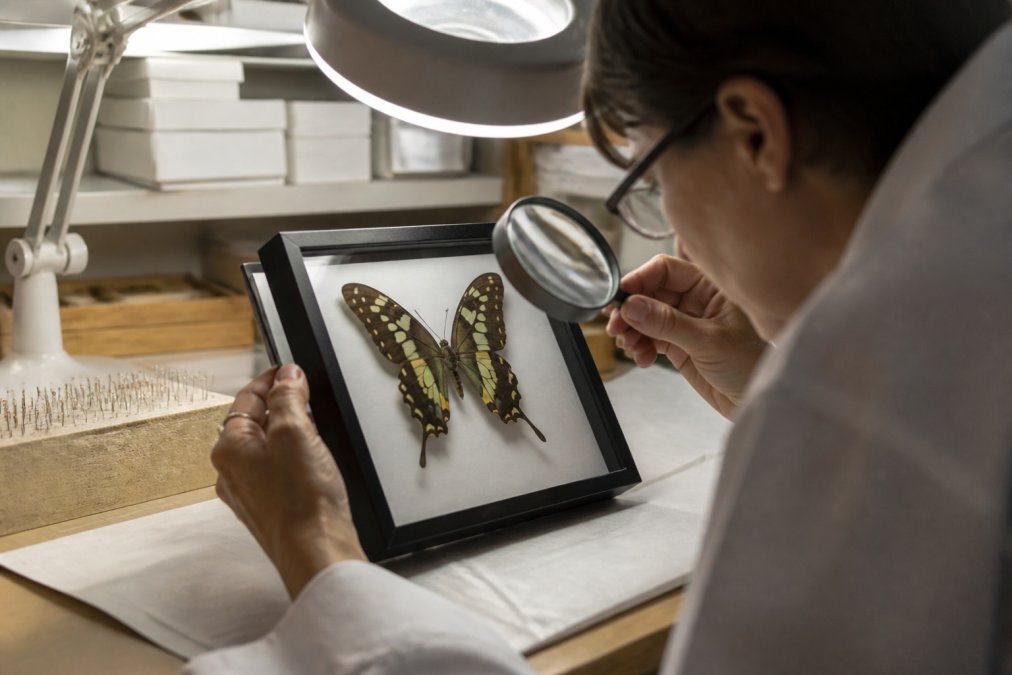
Look for these markers of ethical sourcing:
- Seller transparency: Reputable retailers provide species name, origin country, and collection method without hesitation
- Licensed breeder affiliation: The seller can name their supplier and confirm it's a registered breeding operation
- Specimen condition: Ethically sourced insects show signs of natural maturation, proper wing expansion, natural colour patterns, absence of damage from rough capture methods
- Packaging quality: Museum-quality framing and archival materials indicate professional handling
- Price consistency: Ethically sourced specimens cost more than suspiciously cheap alternatives, reflecting proper breeding, handling, and documentation costs
When examining a specific piece, check the shadowbox frame for professional mounting techniques. Insects preserved with archival pins, acid-free backing, and UV-resistant glass have been handled by someone who understands specimen integrity. Rough mounting, visible damage, or amateur framing suggests lower standards throughout the sourcing chain.
Newman Art Designs frames specimens using museum-preservation standards with acid-free backing and UV-resistant glass.
Legal Requirements and CITES Compliance for Specimen Trade
International wildlife trade operates under CITES, which regulates protected species movement across borders. Understanding CITES and country-specific regulations is essential for legal compliance.
CITES divides species into three appendices by extinction risk. Most insects used in art fall into Appendix II or are unregulated, but some carry additional restrictions depending on conservation status and origin country.
Phyllium giganteum Leaf Insect in a →
Country-Specific Import Regulations
Importing insect specimens into this market requires compliance with the Department of Climate Change, Energy, Environment and Water (DCCEEW) Wildlife Trade regulations. The DCCEEW enforces CITES alongside the Environment Protection and Biodiversity Conservation Act 1999 (EPBC Act), which prohibits the import of specimens from endangered species without explicit permits, even if CITES permits exist.
Key requirements include:
- Import permits: Specimens from CITES Appendix II species require an import permit issued by DCCEEW before the specimen enters the country. The exporting country must also issue a corresponding export permit. Sellers operating domestically must have obtained these permits before acquiring stock.
- Customs declaration: All insect specimens must be declared to the Department of Agriculture, Fisheries and Forestry (DAFF) upon import. Undeclared specimens can be seized and result in fines up to AUD $10,660 for individuals under the Biosecurity Act 2015.
- Biosecurity screening: Specimens are subject to inspection for pests, pathogens, and parasites that could threaten local ecosystems. Specimens in sealed frames typically pass screening without issue, but documentation of origin and health status accelerates clearance.
- Species-specific restrictions: Some species face additional prohibitions. For example, specimens from certain tropical regions may require health certificates or proof of captive breeding to rule out wild-capture origins.
Verification of Documentation
Reputable sellers provide CITES export permits, DCCEEW import permits, customs documentation, and breeder certification upon request.
Enforcement and Penalties
- Confiscation of the specimen
- Fines up to AUD $10,660 under the Biosecurity Act
- Criminal prosecution for trafficking endangered species (penalties up to AUD $222,000 and imprisonment)
- Civil liability if the specimen damages local ecosystems
Caring for Framed Insect Specimens: Preservation and Display
Proper care ensures ethically sourced specimens remain vibrant for decades. Museum-quality preservation requires understanding threats to specimen integrity.
Verification Checklist and End-of-Life Disposal
Before purchasing any ethically sourced insect artwork, use this verification checklist to confirm responsible sourcing and distinguish naturally deceased specimens from those captured by harmful methods:
| Verification Step | What to Check | Red Flags |
|---|---|---|
| Species identification | Seller provides scientific and common name | Vague species description or "mixed specimens" |
| Origin documentation | Proof of breeding facility or legal collection permit | "Origin unknown" or refusal to provide details |
| Collection method | Confirmation of conservation farming or licensed breeding | Wild-caught without permits or ambiguous sourcing |
| CITES compliance | Seller references permits or confirms non-regulated species | No mention of legal compliance |
| Natural death markers | Specimen shows signs of natural maturation and lifespan completion | See section below |
| Preservation quality | Museum-grade framing, archival materials, UV glass | Amateur mounting or cheap materials |
| Seller credentials | Established business with transparent practices | New sellers with no track record or poor reviews |
Identifying Natural Death vs. Capture Trauma
End-of-Life Disposal and Recycling
Frequently Asked Questions
What does 'ethically sourced' mean in the context of insect art?
Ethically sourced insect art means specimens come from sustainable, legal, and responsible origins. Ethical sourcing prioritises biodiversity protection, compliance with CITES regulations, and transparent provenance documentation. It ensures your purchase doesn't harm endangered species or wild ecosystems. Newman Art Designs uses museum-quality preservation techniques on responsibly sourced specimens to guarantee both beauty and environmental responsibility.
How can you tell if insect specimens are ethically sourced?
Look for sellers who provide complete provenance documentation, including origin, collection method, and species information. Reputable collectors offer traceability records showing the specimen came from licensed breeders or conservation farming rather than wild capture. Ask whether the species is endangered or protected under CITES. Verify the seller's credentials and how long they've been established. Newman Art Designs, founded in 1996, provides detailed species information and sourcing practices with every piece, allowing you to trace the ethical journey of your specimen.
Is it ethical to buy framed butterflies and other insect art?
Yes, buying framed insect art is ethical when sourced responsibly. The key difference lies in how and where specimens originate. Purchasing museum-quality pieces from established retailers like Newman Art Designs ensures your purchase supports responsible sourcing while allowing you to appreciate the intricate beauty and biodiversity of the natural world.
Are there regulations regarding the trade of insect specimens?
Yes, international and local regulations govern insect specimen trade. CITES (Convention on International Trade in Endangered Species) protects thousands of insect species from commercial trade. Endangered species lists vary by region and require permits for legal trade. Many countries, including those with strict wildlife protection laws, regulate which specimens can be imported or exported. Reputable sellers comply with all applicable regulations and maintain proper documentation. Before purchasing specimens online or internationally, verify that the seller has the necessary permits and that the species isn't protected under local wildlife trade regulations.
How are insects preserved for display in shadowboxes?
Museum-quality preservation involves careful mounting and archival techniques. Specimens are typically mounted using entomological pins or archival-safe adhesives, then positioned in shadowboxes with UV-resistant glass to prevent fading. Archival mounting materials prevent degradation over decades. Proper humidity control and protection from direct sunlight preserve specimen integrity. The mounting process requires expertise to display the insect's natural beauty whilst maintaining its structural integrity. Newman Art Designs uses these professional preservation techniques on all framed specimens, ensuring your piece remains vibrant and intact for years to come.
How long do preserved insect specimens actually last?
Properly preserved insect specimens can last 50+ years or longer when stored correctly. Museum-quality preservation using archival materials, UV-resistant glass, and appropriate humidity levels significantly extends specimen life. Factors affecting longevity include exposure to direct sunlight, temperature fluctuations, and humidity extremes. Colours may gradually fade over decades, but the specimen structure remains intact. Newman Art Designs specimens are mounted using museum-preservation standards, meaning your piece will maintain its visual appeal and integrity for generations with basic care like avoiding direct sunlight and maintaining stable indoor conditions.
What's the difference between conservation farming and wild collection?
Conservation farming involves breeding insects in controlled environments specifically for the art and educational market, supporting biodiversity without harming wild populations. Wild collection involves capturing insects from their natural habitats, which can damage ecosystems and threaten endangered species. Ethically sourced insect art prioritises sustainable specimens, ensuring your purchase protects rather than harms natural ecosystems.
