
Buy Museum Grade Spider Specimens: A Collector's Guide
Table of Contents
- What Makes Museum Grade Spider Specimens Different
- Identifying High-Quality Spider Specimens
- Specimen Dimensions and Display Options
- Ethical Insect Taxidermy and Sourcing Practices
- Popular Museum Grade Spider Specimens to Collect
- Care and Maintenance of Preserved Insect Art
- Shipping and Handling Protocols for Delicate Specimens
- Frequently Asked Questions
Last Updated: September 18, 2026
What Makes Museum Grade Spider Specimens Different
Museum grade spider specimens represent the pinnacle of insect preservation and display. These are not casual collectibles; they're carefully curated arthropods preserved using techniques that protect the specimen's structural integrity, colour, and morphology for decades. The difference between a museum grade specimen and a standard preserved insect comes down to three core elements: preservation method, mounting quality, and ethical sourcing.
A true museum grade spider specimen uses dry-preservation techniques that maintain the exoskeleton's natural appearance without degradation. The specimen is pinned or mounted using archival-quality materials that won't corrode or discolour the arthropod over time. Most importantly, museum grade specimens are sourced ethically, either from captive-bred populations or from specimens that died naturally, never from wild-caught endangered species.
Newman Art Designs specialises in curating museum grade spider specimens that meet these standards. Each piece is selected for quality, mounted with precision, and displayed in either shadow box frames or glass domes that protect the specimen from dust and environmental damage. This approach transforms a preserved insect into a lasting piece of natural history art.
Identifying High-Quality Spider Specimens
Not all preserved spiders are created equal. Identifying a high-quality specimen requires understanding what separates Grade A museum pieces from lower-quality alternatives.
Start by examining the exoskeleton. A quality spider specimen should retain its natural colouring and have no visible cracks, missing legs, or discolouration. The specimen should appear lifelike, with legs properly positioned and symmetrical. If a leg appears bent at an unnatural angle or the body shows signs of deterioration, the preservation has failed.
Next, check the mounting method. Museum grade specimens are either pinned through the thorax using entomological pins, or mounted using archival adhesive that doesn't damage the arthropod. Poor mounting uses cheap glues that yellow over time or pins that rust. Quality mounting is invisible; it holds the specimen in place without drawing attention to itself.
The display case matters enormously. A proper shadow box frame uses acid-free backing and UV-protective glass that prevents fading. Glass domes should sit on a stable wooden base and be made from clear acrylic or glass, not cloudy plastic. If the display case feels flimsy or looks yellowed, the specimen inside won't remain museum grade for long.
Finally, verify the specimen's origin and species classification. A quality seller provides the scientific name, common name, and geographic origin. This information proves the specimen is documented and traceable, not a mystery insect of unknown provenance.
Specimen Dimensions and Display Options
Museum grade spider specimens come in two primary display formats, each suited to different spaces and preferences.
Shadow Box Frames are the traditional choice for museum displays. These are typically 15 cm × 20 cm or 20 cm × 25 cm with a black mat background and archival-quality glass. The specimen is mounted against the backing, creating a flat, wall-mounted display that fits easily into living rooms, offices, or study spaces. Shadow boxes are space-efficient and work well for smaller apartments or rooms with limited wall space. The frame's depth is minimal, usually 2.5 to 5 cm, so it doesn't protrude far from the wall.
Glass Domes offer a three-dimensional display that showcases the specimen from all angles. These typically measure 18 cm in diameter and sit on a wooden base, creating a striking tabletop or shelf display. Domes are ideal for specimens you want to examine closely or display as a centrepiece. They require more horizontal surface space than frames but create a more dramatic visual impact.
Consider your available space before choosing. A small bedroom might accommodate a 15 cm × 20 cm frame but not a dome. A living room bookshelf can display a dome as a conversation piece. A gallery wall works beautifully with multiple shadow boxes in varying sizes.
Ethical Insect Taxidermy and Sourcing Practices
Ethical sourcing is non-negotiable for museum grade specimens. The difference between ethical and unethical insect collection is the difference between supporting conservation and contributing to species decline.
Ethical museum grade specimens come from one of three sources: captive-bred populations, specimens that died naturally in captivity, or insects collected from non-endangered species in sustainable ways. Captive-bred tarantulas, for example, are raised specifically for the pet and art trade. These specimens are abundant, sustainable, and ethically sound.
Specimens that died naturally in captivity are another ethical source. Many collectors and institutions maintain insect colonies for research or display. When a specimen dies of natural causes, it can be preserved and displayed rather than discarded. This maximises the value of the specimen's life.
Wild-collected specimens are ethical only when taken from non-endangered species in sustainable numbers. Some regions have insect populations large enough to support limited collection without ecological harm. However, many spider species are protected, and collecting them is illegal. The Department of Climate Change, Energy, the Environment and Water oversees regulations related to protected species.
Haplomia minax Spider vs Scorpion in a →
What you should avoid: specimens from endangered species, wild-caught specimens without documentation of legal collection, or insects sourced through wildlife trafficking networks. These practices harm ecosystems and often violate international law, including regulations that govern the import and export of protected arthropods.
Newman Art Designs sources specimens ethically. When you purchase a museum grade specimen, ask about its source. Reputable sellers will tell you whether the specimen was captive-bred, naturally deceased, or wild-collected, and they'll explain why that source is ethical.
Popular Museum Grade Spider Specimens to Collect
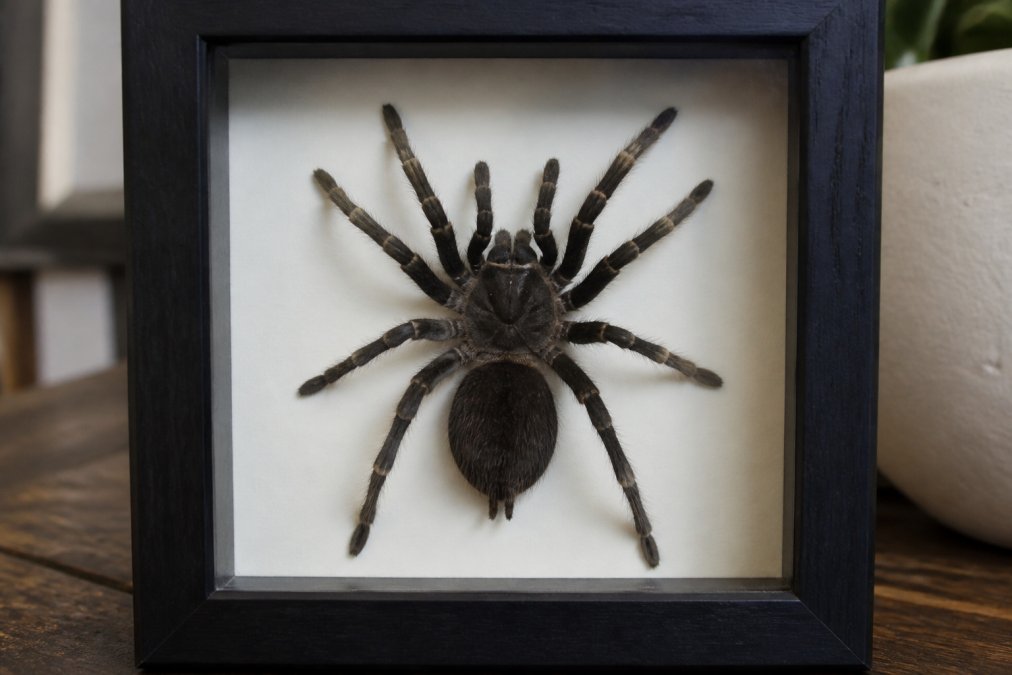
Haplomia minax Spider in a Frame
The Haplomia minax, commonly known as the Thailand Tarantula, is one of the most popular museum grade specimens for collectors. Native to Thailand, this species is striking in appearance: a dark arthropod with a strong body and well-defined legs that display beautifully in a framed mount.
The Haplomia minax is ideal for collectors seeking a classic tarantula specimen. It's commonly available, which means ethical sourcing is straightforward. Many specimens are captive-bred for the pet trade, making them sustainable choices for preservation and display.
Newman Art Designs offers the Haplomia minax Spider in a Frame in a 15 cm × 20 cm black shadow box frame at $84.95. The specimen is mounted against a neutral backing, highlighting the spider's morphology and natural colouring. This size is perfect for shelves, desks, or small wall spaces.

Haplomia minax Spider vs Scorpion in a Frame
For collectors seeking a more dramatic display, the Haplomia minax Spider vs Scorpion in a Frame presents a compelling comparison. This specimen features a Haplomia minax from Thailand positioned alongside a black rainforest scorpion (Heterometreus spinifer) from Malaysia.

The juxtaposition creates a narrative; these two arthropods would never encounter each other in nature, but the display invites comparison of their morphology, size, and predatory adaptations.
White Striped Tarantula Framed
The Pamphobeteus antinous, a tarantula from Peru, represents the larger end of the spider collecting spectrum. Tarantulas are among the biggest spiders in the world, with body lengths ranging from 2.5 to 10 centimetres and leg spans reaching 8 to 30 centimetres when fully extended. The Pamphobeteus antinous is a substantial specimen, making it a showstopper in any collection.

Pamphobeteus antinous Tarantula in a Dome
For collectors who want the ultimate three-dimensional display, the Pamphobeteus antinous Tarantula in a Dome offers museum-quality presentation. The specimen is mounted on an 18 cm wooden base beneath a matching acrylic dome, allowing 360-degree viewing.
Care and Maintenance of Preserved Insect Art
Museum grade spider specimens are designed to last decades, but proper care ensures they remain vibrant and undamaged.
Shipping and Handling Protocols for Delicate Specimens
Shipping preserved insect specimens requires care to prevent damage during transit. Understanding how specimens are packaged and handled reduces the risk of arrival damage.
Insurance:
| Packing Element | Purpose | Quality Indicator |
|---|---|---|
| Bubble wrap or foam | Absorbs shock and prevents movement | Multiple layers, no gaps |
| Cardboard box | Provides rigid outer protection | Reinforced seams, appropriate size |
| Padding material | Fills empty space, prevents shifting | Fills all voids around inner package |
| Tracking and insurance | Ensures accountability and financial protection | Signature required, full coverage |
Frequently Asked Questions
What does 'museum-grade' mean for insect specimens?
Museum-grade spider specimens meet rigorous preservation and quality standards used by natural history institutions. This means the specimen has been carefully preserved using archival-quality materials and techniques that prevent deterioration of the exoskeleton and colours over decades. The mounting, framing, and overall presentation follow museum standards, ensuring longevity and visual integrity. Museum-grade specimens are typically graded for quality control, with Grade A specimens showing minimal damage and authentic morphology.
How are museum-grade spiders preserved to maintain their appearance?
Museum-grade spider specimens are preserved using dry-preservation methods that protect the exoskeleton and natural colouring. Specimens are carefully pinned or mounted using archival materials that do not degrade over time.
Are there ethical considerations when purchasing museum-grade spider specimens?
Yes. Ethical sourcing is essential when buying preserved insect art. Reputable collectors prioritise specimens from sustainable sources, ensuring spiders are not taken from endangered species or wild populations in ways that harm biodiversity. Many museum-grade specimens come from captive-bred populations or ethical entomology suppliers. Before purchasing, verify the supplier's commitment to ethical insect taxidermy practices and ask about the specimen's origin. Choosing pieces from established retailers who document sourcing helps support responsible collecting and conservation of species diversity.
How do I prevent damage to framed spider specimens during delivery?
Museum-grade specimens require careful shipping protocols to arrive intact. Reputable suppliers use protective packaging that cushions the frame and prevents movement inside the box. The specimen is secured within the frame using archival mounting techniques that absorb shock. Quality shadow box frames and acrylic domes are designed to protect the delicate arthropod during transit. Upon arrival, inspect the frame for any signs of damage and store the piece in a stable environment away from direct sunlight and humidity fluctuations.
