
Best Museum Quality Insect Specimens: 7 Stunning Picks
Table of Contents
- What Defines Museum Quality Insect Specimens?
- Comparison of Top Specimens and Pricing
- 1. Blue Morpho Didius in a Dome: The Iconic Showstopper
- 2. A Pair of Comet Moths: Rarity in a Frame
- 3. Triple Stag Beetles: The Collector's Choice
- 4. Turquoise Emperor Butterfly: A Study in Iridescence
- Why Ethically Sourced Insect Art Matters
- Caring for Framed Butterflies and Beetles
- Frequently Asked Questions
Last Updated: September 7, 2026
Finding the best museum quality insect specimens is about more than picking the largest butterfly or the shiniest beetle. True museum quality comes down to preservation technique, ethical sourcing, and the careful presentation that lets a specimen's natural morphology shine for decades. At Newman Art Designs, we have spent years curating ethically sourced insect art.
A genuinely museum quality specimen is dry-preserved through professional pinning and spreading, then sealed behind UV-blocking glass to protect its fragile scales from fading. The wings must be intact, the antennae unbroken, and the colours as vivid as the day the insect emerged. Below, we will show you seven stunning pieces that meet this standard, explain what makes each one special, and cover the practical details of caring for framed butterflies and beetles so your investment lasts.
What Defines Museum Quality Insect Specimens?
Museum quality insect specimens are preserved insects that meet curatorial standards for scientific accuracy, physical integrity, and display presentation. This means the specimen is properly dried, professionally pinned or mounted, and free from damage such as missing legs, torn wings, or faded colouration.
But what does 'professionally pinned' actually mean? This is where the difference between a true museum-grade piece and a decorative import becomes visible. The distinction lies in the preparation technique, and knowing what to look for will help you verify quality before you buy.
The Pinning Standard
Professional entomologists pin specimens through the right side of the thorax (the middle body segment) for butterflies and moths, or through the right elytron (wing cover) for beetles. The pin must be positioned precisely so that the specimen sits at a consistent height on the pin, allowing for easy handling and scientific study. Mass-produced specimens often use lower-grade pins or glue the insect to a surface, which is a clear sign of a decorative item, not a museum piece.
Wing Spreading and Symmetry
For butterflies and moths, the wings must be spread flat and symmetrical. A professional spreader aligns the hindwing's front edge at a perfect 90-degree angle to the body. The wings should be held in place by small paper strips, not glued directly. Check that the forewings and hindwings on both sides are at the same angle; any asymmetry suggests rushed work or damage.
Anatomical Integrity
A museum-quality specimen must be complete. This means:
- Antennae: Both must be present and unbroken. Many mass-produced specimens have missing or repaired antennae.
- Legs: All six legs should be present and articulated. In beetles, the legs are often arranged in a specific display posture; in butterflies, they may be tucked close to the body.
- Wing margins: There should be no tears, chips, or missing scales along the wing edges. Minor scale loss is natural, but large bald patches indicate poor handling.
- Abdomen: The abdomen should be intact and not sunken or shrivelled, which can happen if the specimen was not properly dried or was stored in high humidity.
The 'Freshness' Test
A well-prepared specimen looks as if it just emerged from its pupa. The colours are vivid, the body is plump (not desiccated), and the wings have a slight sheen. If a specimen looks dull, dusty, or has a 'flat' colour, it may be old, poorly dried, or exposed to light damage.
Labelling
True museum specimens are labelled with the species name (binomial nomenclature), the collection locality, and the date of collection. This is not just bureaucratic detail; it is the scientific record that confirms the specimen's identity and provenance. A quality seller should be able to provide this information. If a seller cannot tell you the exact species name (e.g., Morpho didius rather than just 'Blue Morpho'), or where the specimen was sourced, that is a red flag.

Comparison of Top Specimens and Pricing
| Specimen | Price | Display | Best For | Standout Feature |
|---|---|---|---|---|
| Blue Morpho Didius | $129.95 | Dome | Statement centrepiece | Iridescent electric blue wings |
| Pair of Comet Moths | $169.95 | 12" x 16" Frame | Serious collectors | Male and female pair, rare tails |
| Triple Stag Beetles | $119.95 | 5" x 7" Frame | Masculine decor | Three species, samurai history |
| Turquoise Emperor | $69.95 | Frame | Budget-friendly colour | Angle-shifting turquoise sheen |
1. Blue Morpho Didius in a Dome: The Iconic Showstopper
The Blue Morpho Didius is the specimen most people picture when they imagine insect art, and for good reason. Its wings carry an iridescent electric blue that shifts with the light, while the undersides reveal brown-ringed orange eyespots edged in metallic bronze. This dome piece from Newman Art Designs brings that iconic beauty to a 7-inch acrylic dome on a turned wooden base, made in Australia.
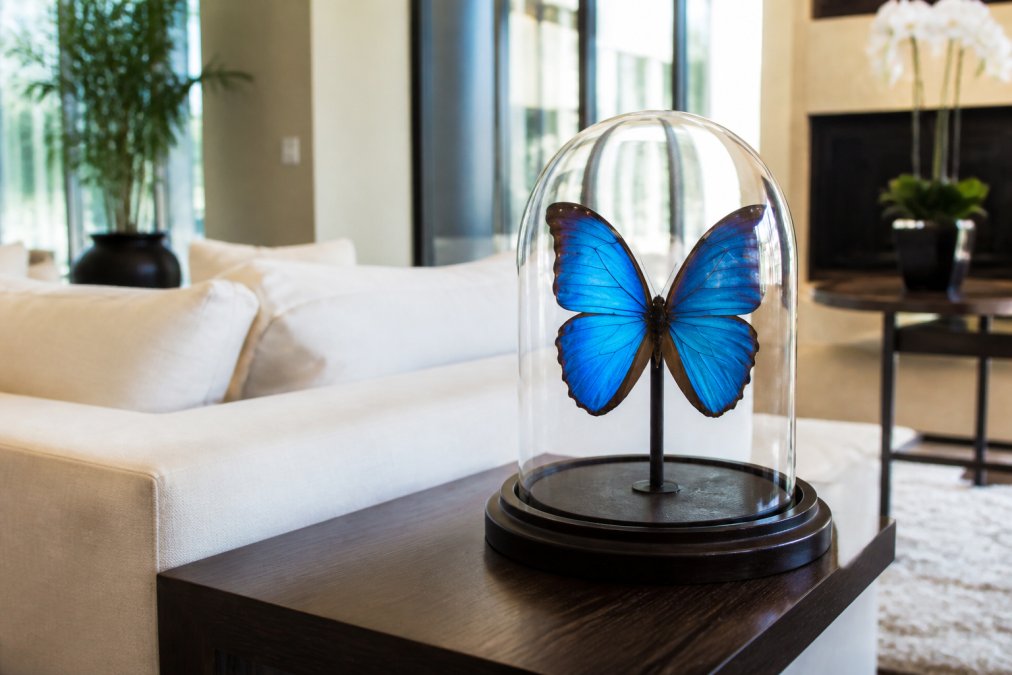
For home decor, the dome format is a genuine advantage. You can place it on a coffee table, sideboard, or shelf where it invites a 360-degree view, and the acrylic protects the specimen from dust and curious hands. At $129.95, it sits at a mid-range price point, but the visual impact rivals pieces costing far more.
2. A Pair of Comet Moths: Rarity in a Frame
The Comet Moth, or Madagascan moon moth, is one of the largest silk moths in the world, and a pair displayed together is a genuine collector's piece. The male carries long, sweeping tails on his hindwings, while the female shows rounder wings with much shorter tails, making the sexual dimorphism immediately visible. This 12-inch by 16-inch black shadowbox frame holds both sexes side by side, a rare presentation that most collections never achieve.
What makes this piece particularly valuable is the story behind the species. The Comet Moth is now successfully bred in captivity, which means owning one supports conservation rather than undermining it. The adult moth lives only four to five days in nature, so a framed pair preserves a fleeting beauty that most people will never see alive.
3. Triple Stag Beetles: The Collector's Choice
Stag beetles bring a different energy to insect art, trading delicate wings for the bold, armoured presence of the Coleoptera order. This frame holds three different stag beetle species, each known for the prominent jaws they use to wrestle rivals. In Japan, those jaws were stylised into samurai helmets, a cultural connection that gives these beetles a depth of meaning beyond their appearance.

The triple arrangement works exceptionally well in a 5-inch by 7-inch shadowbox, creating a balanced composition that reads as intentional design rather than a single curiosity. It is the kind of piece that suits a study, home office, or library shelf, where its darker tones and sculptural forms complement wood and leather. For collectors who already own butterfly pieces, stag beetles offer a striking contrast in texture and silhouette.
4. Turquoise Emperor Butterfly: A Study in Iridescence
The Turquoise Emperor is a masterclass in how light changes colour. Viewed from directly above, its wings appear a brilliant turquoise, but shift your angle and they deepen to a silvery electric blue. This optical effect comes from microscopic scale structure rather than pigment, which means the colour does not fade the way painted surfaces do.

Found in the Amazonian forests of Central and South America, the males are territorial and perch on high foliage, swooping down to investigate fermenting fruit on the forest floor. At $69.95, this framed piece is the most accessible entry point into museum quality insect specimens, making it an ideal first purchase or a thoughtful gift for a natural history enthusiast.
Why Ethically Sourced Insect Art Matters
Ethically sourced insect art is the foundation of the entire category, and it is the first question any responsible buyer should ask. The concern is legitimate: when specimens are collected from endangered wild populations, the trade harms biodiversity rather than celebrating it. The solution lies in knowing your source.
Captive breeding programmes have changed the landscape. Species like the Comet Moth are now reared in controlled environments, which protects wild populations while making specimens available to collectors. For species that are still wild-collected, ethical suppliers work within regulated frameworks that ensure collection does not threaten local populations. The CITES guidelines on trade in endangered species provide the international legal framework for what can and cannot cross borders, and reputable sellers comply with these rules.
Caring for Framed Butterflies and Beetles
Framed butterflies and beetles will last for generations if you follow a few simple rules. The most important is protecting them from direct sunlight. Even with UV-blocking glass, prolonged exposure to harsh light will eventually fade the delicate scales. A spot away from windows or skylights is always safest.
Dust management is your second concern. The best approach is to leave the frame sealed and gently wipe the exterior glass with a soft, dry cloth. Never open a shadowbox to clean the specimen itself, as the wings of dried butterflies are fragile and easily damaged. For dome displays, the enclosed design means internal dust is rarely a problem at all.
Pest control is the maintenance issue most people never consider, yet it is the primary threat to a home collection. The pests you need to worry about are not the insects you display, but the ones that want to eat them. The two most common culprits are dermestid beetles (often called 'woolly bears' or 'larder beetles') and common clothes moths. Their larvae are the real threat; they are small, cream-coloured grubs that will chew through the dried exoskeleton of your specimens, starting with the softest parts like the abdomen and wing bases.
A sealed frame or dome is your primary defence, as it physically blocks these pests. However, a seal is only effective if it is intact. Here is a practical checklist most museum conservators use for home collections:
- Inspect the seal: Every six months, run your finger along the edge of the glass or acrylic where it meets the frame backing. If you feel any give, or see a gap, the seal has failed and needs re-sealing with a clear conservation-grade adhesive.
- Quarantine new pieces: If you buy an unframed specimen or an antique piece, keep it in a separate room for at least two weeks. This prevents any hitchhiking larvae from infesting your existing collection.
- Recognise the signs: The first sign of a problem is often fine, powdery 'frass' (insect droppings) accumulating on the inside of the glass or on the frame's backing board. If you see this, isolate the piece immediately.
- The freezer treatment: If you suspect an infestation in an unframed specimen, the standard non-chemical treatment is to place it in a sealed plastic bag and freeze it at -18°C for 72 hours. This kills all life stages. Allow it to thaw completely in the bag before removing it, to prevent condensation from forming on the specimen.
Light damage is a slower but equally destructive force. UV-blocking glass filters out the vast majority of ultraviolet radiation, but it does not stop all fading. The pigments in butterfly wings are delicate, and even visible light can cause photodegradation over many years. Keeping specimens in rooms that do not receive direct sun for more than two hours a day, and avoiding spotlights or track lighting that shines directly on the frame for extended periods, is recommended.
Humidity is the final factor. Most Australian homes are dry enough, but coastal areas and bathrooms can be problematic. High humidity (above 60%) encourages mould growth on the specimen and can cause the frame backing to warp. Low humidity (below 30%) can make the specimens brittle. A stable, moderate environment, between 40% and 50% relative humidity, is ideal. If you live in a humid climate, consider placing a small silica gel sachet behind the frame (not inside the sealed display) to absorb ambient moisture.
A common mistake is displaying pieces in kitchens or bathrooms where humidity fluctuates. Moisture can cause mould growth on the specimen or the frame backing. If you follow these steps, your piece will remain a vivid, intact tribute to the natural world for decades.
Frequently Asked Questions
What defines 'museum quality' when purchasing insect specimens?
Museum quality means the specimen is intact, correctly identified, and professionally preserved using curatorial standards. Look for specimens that are free from damage like missing legs or rubbed wing scales. The display should use UV-blocking glass and archival materials to prevent fading and deterioration. High-quality pieces also include accurate labelling with the species name and origin, similar to what you would find in a natural history museum collection.
Where can I find ethically sourced insect specimens?
Look for sellers who source from conservation programs or captive-breeding initiatives rather than wild collection. Many specimens, like the Comet Moth, are bred in captivity, which supports biodiversity rather than harming it. Reputable suppliers will explain their sourcing practices and avoid species protected under CITES regulations. Always ask about the origin of the specimen if it is not clearly stated, as transparency is a key sign of an ethical provider.
How long do insect specimens last?
With proper care, museum quality insect specimens can last for decades, even over a century. The key is protecting them from direct sunlight, which causes fading, and from moisture, which can lead to mould. Displaying them in a sealed frame or dome with UV-blocking glass significantly extends their life. Avoid placing them in humid areas like bathrooms, and they will remain a beautiful piece of natural art for generations.
How should I care for framed insect specimens to ensure longevity?
Caring for framed butterflies and beetles is simple. Dust the outside of the frame gently with a soft, dry cloth; never use water or cleaning chemicals. Keep the piece away from direct sunlight to preserve the wing colours. Do not open the frame, as this can expose the specimen to pests and humidity. A stable indoor temperature between 18-24°C is ideal for maintaining the integrity of the specimen.
Choosing the best museum quality insect specimens comes down to three factors: preservation integrity, ethical sourcing, and display protection. Newman Art Designs has curated a collection that meets all three standards, with pieces ranging from the iconic Blue Morpho dome to rare paired Comet Moths, all finished in Australia with free shipping. Whether you are starting a collection or adding a statement piece, shop now to bring a lasting piece of natural history into your home.
