
Unique Gift Ideas for Science Lovers: 2026 Guide
Table of Contents
- Why Science Lovers Deserve Better Than Another Mug
- Real Specimen Art: The Ultimate Unique Gift for Science Lovers
- Skeleton Art for the Anatomy Obsessed
- Resin and Lucite: Portable Science Gifts Under $100
- Nature-Inspired Home Decor for Every Room
- Biophilic Design Benefits: Why These Gifts Do More Than Look Good
- How to Choose the Right Gift for a Science Lover
- Frequently Asked Questions
Last Updated: September 18, 2026
Why Science Lovers Deserve Better Than Another Mug
Finding unique gift ideas science lovers will keep on display starts with abandoning the novelty aisle. A printed mug or plastic galaxy lamp says you noticed their job, not their curiosity. Real science lovers want objects that reward a second look.
Real Specimen Art: The Ultimate Unique Gift for Science Lovers
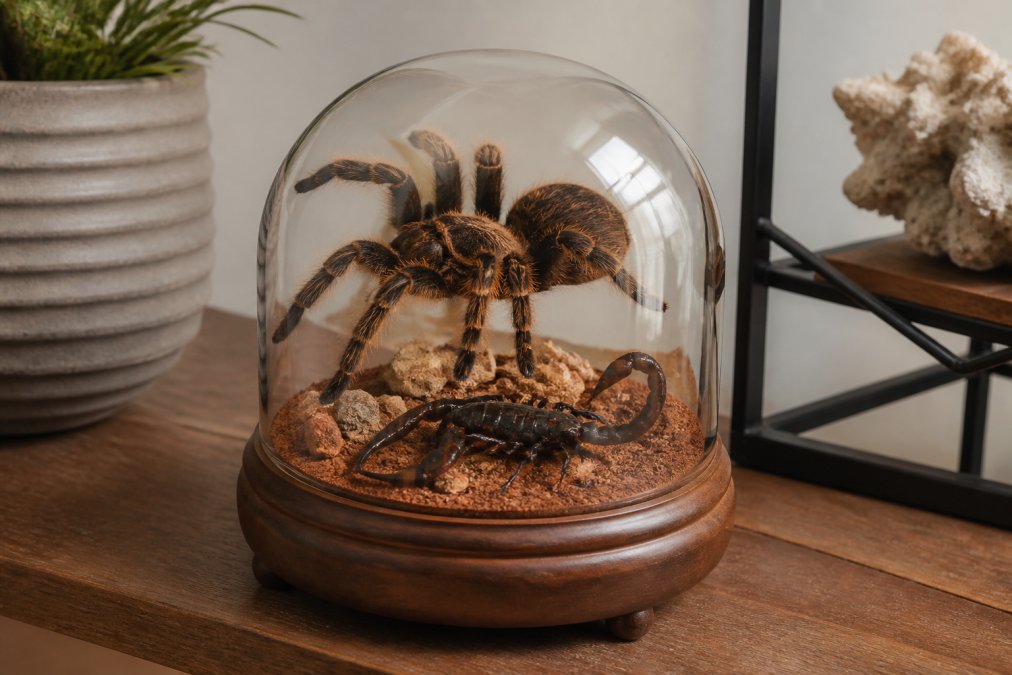
Tarantula vs Scorpion in a Dome
The Tarantula vs Scorpion in a Dome ($154.95) sets a Pamphobeteus antinous tarantula from Peru against a Malaysian rainforest scorpion, Heterometreus spinifer, on a wooden base approximately 18cm across under an acrylic dome. The two would never meet in the wild, making it the strongest pick for someone who likes drama in their decor.

Scorpion in a Small Dome
Smaller spaces suit the Scorpion in a Small Dome ($99.95). Measuring approximately 9cm across the wooden base by 11cm high, it features a captive-bred Malaysian scorpion inside. It sits comfortably on a coffee table, side table, or cabinet, and it is made in Australia.

Skeleton Art for the Anatomy Obsessed
Skeleton art suits the recipient who took anatomy seriously and never stopped. A mounted skeleton shows structure, proportion, and the engineering behind how an animal moves.
Asian Bat Skeleton in a Dome
The Asian Bat Skeleton in a Dome ($119.95) displays a short-nosed fruit bat, Cynopterus brachyotis, a non-CITES listed species, on a wooden base approximately 18cm across under an acrylic dome of similar size. Bat skeletons are light with fewer bones than land vertebrates, which is what lets them fly.

Minivet Bird Skeleton in a Dome
At $99.95, the Real Minivet Bird Skeleton displays Pericrocotus cinnamomeus on a base approximately 9cm across by 11cm high.
Bee-Eater Bird Skeleton in a Dome
The Bee-Eater Bird Skeleton in a Dome ($119.95) shows a blue-tailed bee-eater, Merops philippinus, on a wooden base approximately 18cm across. Bird skeletons are built for flight: light, strong, and without teeth or a true jaw, making them the centrepiece for anyone who studies how animals are put together.
Resin and Lucite: Portable Science Gifts Under $100
Resin and Lucite pieces cast a real specimen in clear material, so the object can be handled or kept on a desk without risk to delicate parts. They are the most practical entry point into specimen collecting.
| Piece |
|---|
| --- |
| Glow-in-the-Dark Scorpion Hemisphere |
| Real Scorpion Key Ring |
| Real Spider Key Ring |
| Price |
|---|
| $99.95 |
| $89.95 |
| $11.95 |
| $11.95 |
| Size |
|---|
| 89mm diameter x 45mm high |
| 89mm diameter x 45mm high |
| Keyring |
| Keyring |
| Best For |
|---|
| Desk and study |
| Bedside and shelf |
| Stocking filler |
| Stocking filler |
Snake Skeleton Paperweight
The Dendrelaphis pictus Snake Skeleton Paperweight ($99.95) casts a bronze back snake skeleton in Lucite, measuring 89mm in diameter by 45mm high. It's the piece for someone who works at a desk and likes an object with a story.
Glow-in-the-Dark Scorpion Hemisphere
For $89.95, the Black Scorpion in a Glow in the Dark Resin Hemisphere holds a Malaysian scorpion in clear Lucite that glows after dark, a natural fit for a bedside table.
Real Scorpion and Spider Key Rings
The Real Scorpion Key Ring and the Real Spider Key Ring are $11.95 each, set in Lucite and glow-in-the-dark. They offer a low-risk way to test whether someone likes specimen art before committing to a dome.
Nature-Inspired Home Decor for Every Room
Nature-inspired home decor borrows the shapes, textures, and colours of the natural world and places them indoors. A preserved specimen does this literally, which is why it reads as decor rather than a collection. The strongest science-themed decor does two jobs: it looks considered in a room, and it is made in a way the recipient can feel good about.
Match the piece to the room, not the other way around
Interior stylists treat a specimen piece as the single natural focal point in a space, then keep everything around it quiet. That is why the larger domes work best where there is negative space to absorb them.
- Living room: A larger dome such as the tarantula and scorpion piece anchors a shelf or console. Give it at least 20cm of clear space on either side so the composition reads as art, not clutter.
- Hallway or study: A shadow box frame such as the Mink Skeleton in a Frame ($99.95), a black shadow box measuring approximately 13cm by 18cm showing Neovison vison, sits flat against the wall without taking up surface space. Shadow boxes suit narrow corridors where a dome would be knocked.
- Bedroom or bedside: The glow-in-the-dark resin hemisphere works here because it is small, self-contained, and does not need direct light to be interesting after dark.
- Small apartment or desk: The keyring and paperweight pieces deliver the same idea in a fraction of the footprint. A Lucite paperweight at 89mm diameter is roughly the size of a coaster, so it fits a shared desk without dominating it.
Sustainability and eco-friendly science gifts
Most science gift guides push plastic gadgets, battery-powered toys, and mass-produced novelties. A preserved specimen is, by nature, a long-life object: not disposable, no power needed, and it does not end up in landfill after a novelty phase wears off.
A few practical points worth knowing before you buy:
- Captive-bred over wild-caught. The scorpion pieces in this range are captive-bred, which means no pressure on wild populations.
- Non-CITES species. The bat skeleton is a non-CITES listed species, meaning it is not covered by the international trade restrictions that protect endangered animals.
- Made locally. Pieces made in Australia carry shorter freight distances than imported resin novelties, which lowers the carbon cost of the gift itself.
- Repairable, not replaceable. Bird and bat skeletons are sent with the dome unglued so a break in transit can be repaired rather than thrown away. That is the opposite of a disposable gift.
Experiential science gifts to pair with a physical piece
Not every science lover wants more objects. For the recipient with a full shelf, an experience can sit alongside a small physical gift, a keyring or paperweight, and turn a $12 add-on into a memorable present.
- Museum and science centre memberships. Annual memberships to state museums and science centres typically include unlimited entry, member-only events, and discounts on talks. They suit families and repeat visitors.
- Public lecture series. Universities and learned societies run free or low-cost public lectures on biology, astronomy, and physics. A season pass or a curated list of upcoming talks makes a thoughtful, low-waste gift.
- Citizen science projects. Programs such as frog surveys, bird counts, and pollinator monitoring let a hobbyist contribute real data to real research. Most are free to join; the gift is the time and the nudge.
- Planetarium or observatory nights. Many public observatories run ticketed viewing nights. Pair a ticket with a small specimen piece and you have a gift that works for both the experience-seeker and the collector.
Gifts for professional scientists versus hobbyists
A working scientist and a curious hobbyist want different things.
- For the hobbyist: Start with a keyring, paperweight, or small dome. These are low-commitment, easy to display, and forgiving if the interest fades.
- For the professional or serious collector: Go straight to a dome or frame. A mounted skeleton or a composed dome reads as a reference object, not a novelty, and it holds up next to lab equipment or a study shelf.
- For the anatomy-focused recipient: Skeleton art beats resin every time, because the structure is the point.
- For the entomology-focused recipient: A composed dome such as the tarantula and scorpion piece tells a story that a single pinned insect cannot.
Biophilic Design Benefits: Why These Gifts Do More Than Look Good
Biophilic design is the practice of bringing natural elements into built spaces to support how people feel in them. The principles of biophilic design describe it as a way to connect occupants with nature through direct and indirect experience. The distinction matters for gift buyers, because most science-themed decor delivers only the indirect version.
Direct versus indirect natural experience
A direct experience is the real thing: a plant, daylight, water, fresh air, or a preserved specimen you can see and touch. An indirect experience is a representation: a photograph of a leaf, a printed galaxy print, a plastic model of a molecule.
What the research and design bodies actually say
The Australian Institute of Landscape Architects and other design bodies have long argued that access to natural elements supports wellbeing in built environments. The common thread across their guidance is not that nature is decorative, but that it gives occupants something to rest their attention on, a focal point that is complex enough to be interesting without being demanding.
Why this matters for a gift
Most gifts are consumed once and then stored. A biophilic object keeps working: it changes with the light, invites conversation, and gives the room a natural anchor. For someone who spends a lot of time indoors, a student, a remote worker, a lab researcher, that is more useful than another novelty item.
Practical ways to get the benefit without overdoing it
- One focal point per room. A single dome or frame is enough. More than one competes for attention and the effect weakens.
- Place it where you pause. A hallway console, a desk corner, or a bedside table works better than a high shelf you never look at.
- Let it catch natural light. Specimens under glass or resin show far more detail in daylight than under overhead LEDs.
- Keep the surrounding palette quiet. Neutral walls, wood, and matte finishes let the specimen read as the natural element in the space.
- Rotate seasonally. Swapping a piece between rooms every few months keeps the focal point fresh without buying anything new.
The sustainability angle
Biophilic design and sustainable gifting overlap more than most buyers realise. A preserved specimen is a long-life object: no power, no wear from use, no obsolescence. Compared with a battery-powered gadget or novelty lamp, it has a far lower ongoing footprint, a combination hard to beat for a recipient who cares about design and waste.
How to Choose the Right Gift for a Science Lover
Match the gift to the person's discipline and space, not the biggest piece in the range. A marine biologist and a physics graduate will not want the same object.
Work through these questions before you buy:
- Which discipline do they actually follow: biology, anatomy, entomology, or something else?
- Do they have shelf, wall, or desk space, or are they short on room?
- Will they display it, or keep it boxed?
- Is this a centrepiece gift or a small add-on?
- Do they prefer a natural finish or something that glows in the dark?
Frequently Asked Questions
What are five unique gifts for science lovers?
Five standout options include a tarantula vs scorpion dome ($154.95), an Asian bat skeleton in a dome ($119.95), a bee-eater bird skeleton ($119.95), a snake skeleton paperweight ($99.95), and a glow-in-the-dark scorpion hemisphere ($89.95). Each piece combines scientific curiosity with display-quality craftsmanship, making them memorable gifts for anyone fascinated by the natural world.
Are preserved biological specimens considered good gifts for science enthusiasts?
Yes, preserved specimens appeal strongly to science lovers because they offer direct engagement with anatomy and natural history. Unlike books or posters, a real skeleton in a dome lets someone examine structural details up close. Museum-quality preservation ensures the piece lasts, and the variety available, from bird skeletons to resin-encased scorpions, means you can match the gift to the recipient's specific interest.
How do I choose a gift for someone interested in natural history?
Start by identifying their focus area. Bird enthusiasts appreciate a minivet or bee-eater skeleton, while arachnid fans lean toward scorpion or tarantula pieces. Consider display space: small domes suit apartments, while larger pieces work in dedicated studies. Budget also guides the choice, with key rings starting at $11.95 and statement domes reaching $154.95. Nature-inspired home decor pieces double as functional art, which broadens their appeal.
What is a good gift for a science lover who has limited display space?
Compact options work best for small spaces. The scorpion in a small dome measures approximately 9cm by 11cm and sits easily on a coffee table or cabinet. Resin paperweights and glow-in-the-dark hemispheres are similarly space-efficient. Key rings offer an even smaller footprint while still delivering the scientific curiosity factor. These pieces provide biophilic design benefits without requiring a dedicated shelf.
Are these specimens ethically sourced?
Newman Art Designs uses museum-quality preservation techniques. Many species, such as the Asian bat skeleton, are non-CITES listed, meaning they are not endangered or restricted under international trade agreements. Scorpions are bred in captivity.
Buying for a science lover is really a test of how well you know them. Newman Art Designs makes that easier with museum-quality preservation, many specimens including butterflies, spiders, and snake skeletons, and free shipping across Australia. Every piece is built to last and arrives ready to display. Shop now and give a gift that rewards a second look.
