
Butterfly in a Dome: A Guide to Preserved Display Art
Table of Contents
- Why a Butterfly in a Dome Makes a Striking Display
- Choosing Your Specimen: Types of Butterfly Domes
- The Importance of Ethically Sourced Insect Specimens
- Biophilic Home Decor Ideas Using Butterfly Domes
- Preserved Butterfly Display Care: A Simple Guide
- DIY Preservation: A Beginner's Guide
- Species Identification Basics
- Conclusion
- Frequently Asked Questions
Last Updated: September 27, 2026
Why a Butterfly in a Dome Makes a Striking Display
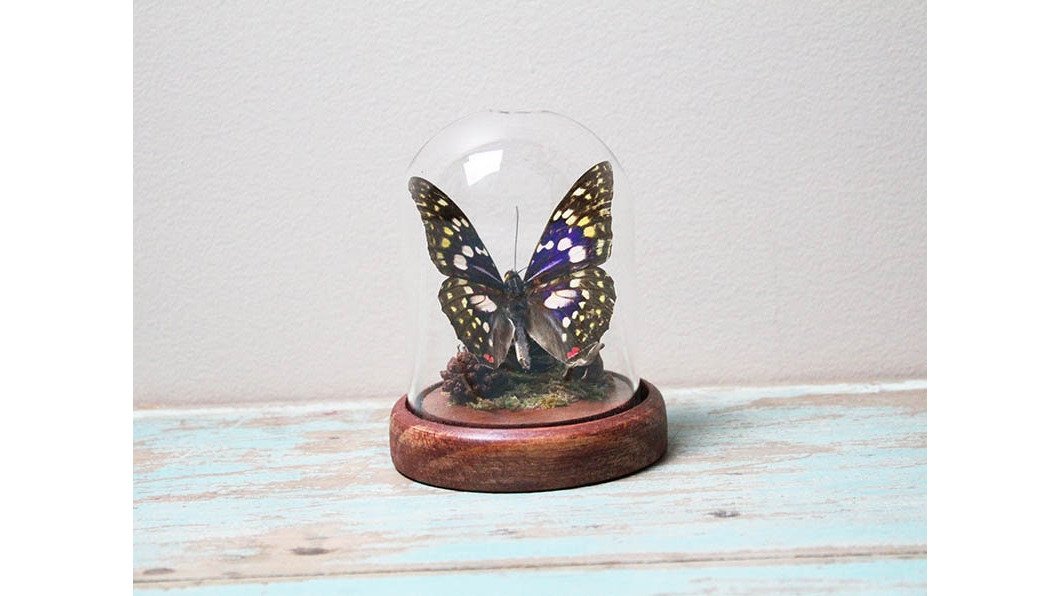
A butterfly in a dome is a preserved, hand-mounted specimen displayed under glass, turning a fleeting creature into a lasting piece of natural art. This guide from Newman Art Designs covers how to choose one, where to put it, and how to care for it. The appeal is simple: a specimen under glass captures detail you would never notice in the wild, from iridescent wing scales to intricate vein patterns.

Choosing Your Specimen: Types of Butterfly Domes
The right dome depends on where you plan to display it. Small domes suit desks and shelves, while large statement domes anchor a coffee table or sideboard. Each format changes how closely the specimen is examined, so match the size to the space before you fall in love with a particular species.
Small Domes for Desks and Shelves
Small butterfly domes typically sit on a wooden base and stand around 11 cm high, which makes them ideal for tight spots. The Japanese Emperor butterfly in a dome, for example, measures roughly 9 cm across its base and 11 cm high, small enough for a desk without crowding it.
Large Statement Domes for Coffee Tables
Large domes are the ones guests notice from across the room. The Blue Morpho Didius butterfly in a dome uses a roughly 18 cm diameter dome on a matching wooden base, giving the specimen room to breathe and making it a genuine centrepiece. These larger pieces suit coffee tables, side tables, and cabinets where they can be viewed from multiple angles.

| Dome Type |
|---|
| --- |
| Best Placement |
| Example Specimen |
| Small dome |
| 9-10 cm |
| Desk, shelf, bedside table |
| Japanese Emperor, Dotted Glory |
| Large statement dome |
| 18 cm |
| Coffee table, sideboard, cabinet |
| Blue Morpho Didius |
The Importance of Ethically Sourced Insect Specimens
Ethical sourcing is the question every serious buyer should ask first. Ethically sourced insect specimens come from regulated suppliers who farm or collect species without threatening wild populations. Many butterflies used in display art are reared on dedicated farms, which supports local livelihoods and reduces pressure on wild habitats. The Australian Department of Agriculture, Water and the Environment oversees regulations regarding the import and export of biological specimens to ensure biosecurity and conservation efforts are maintained.
Biophilic Home Decor Ideas Using Butterfly Domes
Biophilic home decor ideas work best when they bring the outside in without demanding constant upkeep. A butterfly in a dome fits that brief perfectly: it adds a living, natural element to a room while needing nothing more than occasional dusting. A single dome on a stack of books reads as quiet and considered.
Preserved Butterfly Display Care: A Simple Guide
Care advice on most retail pages is one line: keep it out of the sun. That is not enough. Preserved specimens fail for four distinct reasons: UV, humidity, pests, and physical handling, and each needs a different response.
Why UV Is the Real Enemy
Wing colour comes from two sources: pigments, which fade, and structural colour (the shimmering blue of a Morpho, for example), which is produced by microscopic scale architecture and is more resilient but still degrades under prolonged UV. Glass blocks most UVB but transmits a large share of UVA, so a dome on a sunny windowsill is not protected just because it is enclosed.
Lighting That Shows the Specimen Without Damaging It
- Best: indirect daylight from a north- or south-facing room, or a cool-white LED (2700-4000K) placed at least 30 cm away.
- Acceptable: warm LED accent lighting on a timer, kept under 4 hours per day.
- Avoid: halogen and incandescent bulbs (they emit heat and UV), direct sunlight at any time of day, and display cabinets with unshielded downlights directly above the dome.
If you want the dome lit as a feature, fit a low-heat LED strip to the underside of the shelf above rather than pointing a lamp at the glass.
Humidity and Temperature
Aim for a stable indoor environment, roughly 40-55% relative humidity and 18-24°C. Bathrooms, laundries, kitchens, and uninsulated garages all swing outside that range. Mould appears as grey or green fuzz, usually starting at the abdomen or under the wings, and once it takes hold the specimen is effectively lost.
Pests: The Silent Threat
Dermestid beetles and clothes moths will happily eat a dried specimen. Signs include fine dust under the dome, tiny bore holes in the thorax, or detached antennae. Prevention is easier than cure:
- Freeze any new specimen at -20°C for 72 hours before it enters your display area.
- Keep the dome sealed; a loose base is an open door.
- Inspect quarterly. A torch held against the glass will reveal frass (fine powdery droppings) quickly.
Handling and Cleaning
- Lift by the base only. Never by the glass; the seal can flex and let humid air in.
- Dust the outside of the glass with a microfibre cloth. Do not use glass cleaner sprayed directly; the mist can seep under the base.
- If the glass needs a deeper clean, dampen the cloth, not the dome.
- Never open the dome to 'check' the specimen. Every opening resets the internal humidity.
A Simple Seasonal Routine
- Monthly: visual check through the glass for frass, mould, or colour shift.
- Quarterly: dust the exterior, check the base seal, confirm the display spot still gets no direct sun as the season shifts.
- Annually: rotate the dome a quarter turn if it sits near a window, so any residual light exposure is even.
The most common mistake is not a sunny windowsill, it is a display shelf directly under a halogen downlight. The heat and UV from a single 50W halogen will fade a specimen faster than a window will.
DIY Preservation: A Beginner's Guide
Most pages selling a butterfly in a dome stop at the checkout. This section covers what they skip: how a specimen actually gets from a collecting jar to a sealed glass display, and why most first attempts fail.
Japanese emperor butterfly in a dome →
What You Need Before You Start
A basic kit contains insect pins (sizes 1-3 are the workhorses), a foam or cork mounting board, fine-pointed tweezers, acid-free paper strips for holding wings flat, a sealed rehydration container, and your chosen dome with a fitted base. Skip the household sewing pins; they are too thick and will split the thorax.
Step 1: Rehydrate the Specimen
A dried butterfly is brittle. Place it in a sealed container over damp (not wet) paper towel or cotton wool for 24-48 hours. Larger species such as a Blue Morpho may need closer to three days. The wings should move with light resistance, not crack. Over-soaking is a real risk: too much moisture encourages mould, which shows as grey fuzz along the abdomen within a week.
Step 2: Pin and Spread the Wings
Push a single pin through the right side of the thorax, slightly off-centre so it does not obscure the body. Rest the pin in the board groove so the wings sit level. Use paper strips laid over each forewing and pin them down, then gently draw the forewings forward until the trailing edge is perpendicular to the body.
Step 3: Dry and Set
Leave the spread specimen in a cool, dust-free, low-humidity spot for one to two weeks. A cupboard away from the kitchen works better than an open shelf. Do not rush this with a hairdryer or heater; rapid drying warps the wings and can pull scales off the membrane.
Step 4: Mount Inside the Dome
Once dry, lift the specimen by its pin and trim the pin close to the thorax. Secure it to the dome's base using a tiny dab of acid-free adhesive on the underside of the thorax, or pin it through a pre-drilled hole if the base allows. A small silica gel sachet tucked behind the base (out of sight) helps buffer humidity.
Common Failure Modes
- Grease bleed: unwashed hands transfer oils that stain wings within months. Handle with tweezers only.
- Wing curl: caused by drying too fast or in direct airflow.
- Mould: caused by over-rehydration or displaying in a humid room.
- Colour fade: not a DIY failure; it is UV damage, covered in the care section below.
- Dermestid beetles: the single biggest destroyer of home collections. If you keep multiple specimens, freeze new additions at -20°C for 72 hours before mounting to kill eggs and larvae.
DIY preservation is achievable, but it takes two to three weeks end to end and one torn wing ends the project. For a one-off display piece, buying a hand-mounted specimen is usually the smarter spend. For collectors building a series, learning the spread technique pays for itself quickly.
Species Identification Basics
Knowing what you own adds to the enjoyment. The Japanese Emperor (Sasakia charonda) is a large, multicoloured butterfly and the national butterfly of Japan. The Dotted Glory (Asterope maackii) is a South American species marked with a distinctive pattern of black spots. The Blue Morpho (Morpho didius) is famous for its shimmering blue upper wings and brown, eyespotted undersides.
Conclusion
Choosing a butterfly in a dome is really a question of matching the specimen to your space and your purpose. Whether you want a small desk piece or a large statement dome, the right display turns a delicate creature into lasting art. Newman Art Designs has been mounting museum-quality specimens since 1996, offering free shipping across Australia and a collection that includes butterflies, beetles, spiders, and snake skeletons.
Frequently Asked Questions
How long do preserved butterfly specimens last?
When properly preserved and displayed, a butterfly in a dome can last for many years, often decades. The key is protecting it from direct sunlight, humidity, and physical damage. Museum-quality preservation techniques, like those used in our domes, ensure the specimen remains stable. Keeping it out of harsh UV light and in a dry environment will help maintain its colours and structural integrity for a very long time.
Are ethically sourced butterfly specimens sustainable?
Yes, ethically sourced insect specimens can be sustainable. Responsible suppliers work with conservation projects and local communities, often using farmed or sustainably collected specimens. This practice can actually help protect habitats by giving local people an economic reason to preserve forests. When you choose ethically sourced specimens, you support biodiversity and responsible collection practices rather than contributing to wild population decline.
How do I clean and maintain a glass dome display?
To clean your display dome, gently wipe the outside of the glass with a soft, dry microfibre cloth. Avoid using liquid cleaners directly on the dome, as moisture can damage the specimen inside. If the wooden base needs dusting, use a dry, soft brush. Keep the dome out of direct sunlight to prevent fading. With this simple preserved butterfly display care, your piece will stay beautiful for years.
What is the best way to display a butterfly in a glass dome?
The best placement is away from direct sunlight and heat sources, as UV light can fade colours over time. A shelf, desk, or side table in a living area works well. For biophilic home decor ideas, group your dome with plants or natural textures. Ensure it sits on a stable surface where it won't be knocked over. Rotating it occasionally lets you appreciate the specimen from every angle.
