
Nature-Inspired Home Decor Trends for 2026
Table of Contents
- What Makes Nature-Inspired Home Decor Resonate Now
- Understanding Biophilic Design Principles
- Key Materials and Textures Defining the Trend
- Earthy Colour Palettes That Ground Your Space
- Styling Preserved Insect Specimens as Living Art
- Sustainable Home Decor Ideas Without Compromise
- Bringing the Outdoors In: Botanical and Natural Light Integration
- Budget-Friendly Ways to Embrace Nature-Inspired Design
- Frequently Asked Questions
Last Updated: September 25, 2026
What Makes Nature-Inspired Home Decor Resonate Now
Nature-inspired home decor trends continue to gain momentum because they address a fundamental human need. People spend more time indoors than ever before, and bringing elements of the natural world into living spaces creates a sense of calm and grounding that ordinary furnishings simply cannot match. At Newman Art Designs, carefully curated nature-inspired pieces transform homes from functional spaces into sanctuaries that reflect both aesthetic taste and environmental values.
The appeal runs deeper than visual beauty. Biophilic design, the practice of integrating natural elements into interior spaces, has become central to how homeowners think about their environments. Whether through raw wood textures, earthy colour palettes, botanical accents, or museum-quality preserved specimens, nature-inspired home decor creates an immediate connection to the living world. This trend reflects a broader cultural shift toward sustainability, authenticity, and meaningful design choices.
What sets today's nature-inspired home decor apart is the sophistication of execution. Rather than scattered houseplants or generic nature prints, contemporary approaches combine intentional material selection, thoughtful colour theory, and statement pieces that serve as focal points. The preserved insect specimens displayed in elegant domes and shadowbox frames exemplify this shift, they're conversation starters that celebrate the intricate beauty of nature whilst maintaining museum-quality preservation standards.

Understanding Biophilic Design Principles
Biophilic design principles are rooted in the idea that humans have an innate connection to nature, and integrating natural elements into our spaces improves wellbeing. This goes beyond decoration; it's about creating environments that feel alive and restorative. The core principle is simple: spaces that incorporate natural materials, organic shapes, and living elements reduce stress and increase focus.
The psychological benefits are measurable and real. When you surround yourself with natural textures, earthy hues, and organic forms, your nervous system responds by downregulating stress responses. Spaces designed with biophilic principles create what designers call a "grounded aesthetic", an environment that feels settled and intentional rather than chaotic or overstimulated.
Practical application means thinking about layering. One accent piece doesn't create biophilic design. Instead, combine raw wood furniture with stone accents, add botanical prints, introduce natural lighting, and select a warm colour palette that echoes earth tones. The cumulative effect is what transforms a room. Many homeowners find that starting with one or two statement pieces, such as a museum-preserved butterfly specimen in a dome or a framed leaf insect, provides an anchor around which to build the rest of the design.

Key Materials and Textures Defining the Trend
The materials you select determine whether nature-inspired home decor feels authentic or superficial. Sustainable materials and authentic textures are non-negotiable if you want the space to genuinely reflect nature rather than merely imitate it.
Raw Wood and Stone Accents
Raw wood brings warmth and organic character that finished surfaces cannot replicate. Unfinished or lightly treated wood maintains visible grain patterns, knots, and natural colour variation, these imperfections are precisely what make the material feel genuine. Stone accents, whether as decorative objects, shelving supports, or accent walls, add weight and permanence to a space.
The key is balance. Pairing raw wood with stone creates textural contrast without overwhelming the space. A wooden shelf displaying a collection of preserved specimens in glass domes, for instance, grounds the display whilst the stone base provides visual stability. This combination works because both materials age gracefully and improve with time rather than deteriorating.
Handwoven and Sculptural Elements
Handwoven textiles, rattan, seagrass, jute, introduce organic shapes and tactile surfaces that mass-produced items lack. These materials carry visible evidence of human craftsmanship, which adds authenticity that synthetic alternatives cannot match. Sculptural elements, whether natural wood forms or preserved specimens displayed as living art, serve as focal points that draw the eye and anchor a room's design narrative.
The texture layering approach works best when you combine smooth and rough surfaces. Smooth stone or polished wood paired with rough rattan or woven seagrass creates visual interest and invites tactile engagement. Many people find that running their hands across these textures creates a sensory experience that contributes to the calming effect of the space.
| Material Type | Characteristics | Best Used For | Maintenance |
|---|---|---|---|
| Raw wood | Visible grain, warm tones, organic | Shelving, frames, furniture | Occasional dusting, avoid direct moisture |
| Stone accents | Neutral, durable, grounded feel | Display bases, decorative objects | Minimal maintenance, wipe clean as needed |
| Handwoven textiles | Tactile, organic shapes, artisanal | Wall hangings, baskets, storage | Gentle vacuuming, avoid prolonged sun exposure |
| Preserved specimens | Museum-quality, conversation starters | Gallery walls, focal displays | Protected from direct sunlight, sealed domes |
Earthy Colour Palettes That Ground Your Space
Colour selection determines the emotional resonance of a room. Earthy hues, sage green, warm terracotta, soft taupe, deep charcoal, create a warm colour palette that feels inherently calming. These tones reflect the natural world without requiring bright, saturated colours that can feel jarring in a home environment.
Unlike bright greens, sage carries grey undertones that feel sophisticated and grounded. It works equally well as a wall colour, in textiles, or as an accent through botanical prints and preserved specimens. The colour naturally complements raw wood and stone, creating a cohesive visual narrative.
Layering earth tones creates depth without complexity. Start with a neutral base, warm white, soft taupe, or pale grey, then introduce deeper tones through accent pieces. A preserved butterfly specimen in a frame or dome naturally introduces colour variation. The Mother of Pearl butterfly, with its iridescent pink and purple tones, works beautifully against neutral backgrounds because the specimen becomes the focal point rather than competing with the wall colour.

Avoid the mistake of treating colour as an afterthought. A common approach is selecting furniture first, then trying to match wall colours. Instead, establish your colour palette early, then choose materials and pieces that complement it. This ensures cohesion and prevents the space from feeling like a collection of unrelated items.
Beautiful Blue Morpho Didius Butterfly →
Styling Preserved Insect Specimens as Living Art
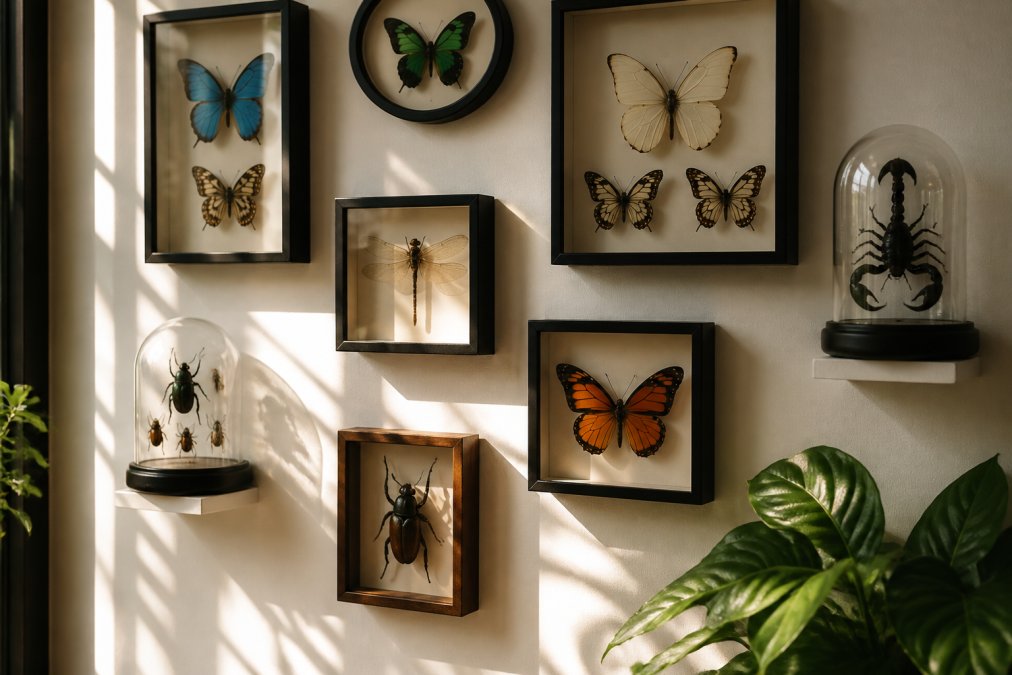
Preserved insect specimens represent the intersection of art, science, and nature-inspired home decor. When displayed thoughtfully, they function as conversation starters and focal points that elevate a room's design narrative. The key is treating them as curated art rather than novelty items.
Gallery Walls and Focal Points
Creating a gallery wall with preserved specimens requires intentional spacing and arrangement. Rather than clustering pieces tightly, allow breathing room between items. This approach transforms individual specimens into a cohesive installation. The Blue Morpho butterfly in its 7" diam. Wooden Base x 7" Acrylic Domes becomes a statement piece when positioned as the centrepiece of a gallery arrangement, with smaller framed specimens arranged around it at varying heights.
Lighting matters significantly. Natural light streaming across preserved specimens highlights their intricate details and iridescence. Position your gallery wall where it receives indirect natural light throughout the day. This creates dynamic visual interest as the light angle changes, revealing different aspects of each specimen's colouration and texture.
The Monarch butterfly, whether framed or domed, works beautifully as part of a gallery arrangement because its bold orange and black pattern commands attention without overwhelming adjacent pieces.
Domes and Frames for Compact Spaces
For those without extensive wall space, glass domes offer elegant solutions. A single dome-displayed specimen on a side table, bookshelf, or coffee table serves as a functional art piece that requires minimal space. The dome protects the specimen whilst keeping it visible from all angles, a significant advantage over framed pieces.
A single well-chosen piece, such as the Monarch butterfly in a dome at $99.95, becomes a conversation starter without overwhelming a compact room. The specimen draws the eye and adds visual interest to otherwise empty surfaces.
Framed specimens work equally well in compact spaces. A 4x6 frame takes up minimal wall space whilst providing a strong visual anchor. The Monarch butterfly in a frame or the Leaf mimic grasshopper frame creates a curated feeling without demanding significant real estate.
Sustainable Home Decor Ideas Without Compromise
Sustainability and aesthetic appeal are not opposing forces in nature-inspired home decor. In fact, many of the most beautiful pieces are inherently sustainable because they're built to last and made from renewable or responsibly sourced materials.
The preserved specimens from Newman Art Designs exemplify this principle.
Bringing the Outdoors In: Botanical and Natural Light Integration
Creating an indoor-outdoor flow doesn't require extensive renovations or access to outdoor space. Strategic use of botanical elements, natural light, and nature-inspired pieces achieves this effect in any home.
Budget-Friendly Ways to Embrace Nature-Inspired Design
Creating nature-inspired home decor doesn't require unlimited funds. Strategic choices allow you to build an authentic aesthetic gradually.
Frequently Asked Questions
What exactly is biophilic design and how does it shape nature-inspired home decor trends?
Biophilic design is the practice of incorporating natural elements, patterns and materials into interior spaces to foster a deeper connection with nature. It shapes 2026 trends by encouraging the use of raw wood, stone, organic shapes and botanical accents. This approach reduces stress and creates a grounded aesthetic that resonates with environmentally conscious homeowners seeking calm, nature-connected environments.
Are preserved insect specimens considered sustainable home decor ideas?
Yes, museum-quality preserved specimens represent a sustainable choice when ethically sourced. They're bred in captivity (never wild-caught from endangered species) and built to last decades without deterioration, eliminating the waste cycle of fast decor. Displayed in durable frames or domes, these pieces become heirloom-quality art that honours nature whilst avoiding the environmental cost of mass-produced alternatives.
How do I incorporate nature-inspired home decor into a small apartment?
Small spaces benefit from vertical solutions: narrow shadowbox frames and compact domes occupy minimal wall or shelf space whilst delivering maximum visual impact. Layer earthy textures through cushions and throws, use natural light strategically, and choose one or two statement pieces like a framed leaf insect rather than cluttering with many items. This creates a cosy sanctuary without overwhelming limited square metres.
What colour palettes work best for nature-inspired home decor?
Earthy hues dominate trends: sage green, terracotta, warm browns, soft greys and cream form the foundation. These warm colour palettes create a grounded aesthetic that complements raw wood, stone and preserved specimens naturally. Accent with muted botanical prints or the iridescent wings of preserved butterflies to add depth without visual noise, maintaining the calm environment that biophilic design aims to achieve.
