
Are Preserved Scorpion Specimens Worth It for Home Decor?
Table of Contents
- What Preserved Scorpion Specimens Actually Cost
- Resin, Dome, or Shadow Box: Which Format Fits Your Budget
- Resin vs Shadow Box: Choosing How to Display Preserved Insects
- Ethically Sourced Insect Taxidermy: What to Look For
- The Benefits of Biophilic Decor in Bedrooms and Living Spaces
- Caring for Preserved Scorpion Specimens: Handling, Dust, and Longevity
- Safety, Styling, and Value: What Buyers Often Overlook
- Conclusion: Are Preserved Scorpion Specimens Worth It for You?
- Frequently Asked Questions
Last Updated: September 26, 2026
What Preserved Scorpion Specimens Actually Cost
A preserved scorpion specimen is a real, ethically sourced arachnid that has been carefully dried, posed and sealed inside resin, a glass dome or a shadow box frame for long-term display. This guide from Newman Art Designs breaks down whether are preserved scorpion specimens worth it for home decor in 2026, what they cost, and how to choose one that lasts.

- Shadow box frame: the most affordable entry point, typically $79.95 for a 5 x 7" frame
- Small dome: $99.95 for a 3.5" wooden base with a 4.5" high dome
- Large dome: $104.95 to $154.95 depending on the species and scene
- Resin hemisphere: $89.95 for a glow-in-the-dark Lucite piece
Resin, Dome, or Shadow Box: Which Format Fits Your Budget
Match the format to the room before the price. Resin is toughest and easiest to dust; domes and frames show the specimen from more angles, which matters on a coffee table rather than a wall.
| Format | Price | Best For | Handling |
|---|---|---|---|
| Shadow box frame | $79.95 | Wall display, small rooms | Dust cloth only |
| Small dome | $99.95 | Coffee tables, side tables | Lift carefully, dust base |
| Large dome | $104.95-$154.95 | Shelves, statement pieces | Two hands, stable surface |
| Resin hemisphere | $89.95 | Desks, bedside tables | Wipe with damp cloth |
Resin vs Shadow Box: Choosing How to Display Preserved Insects
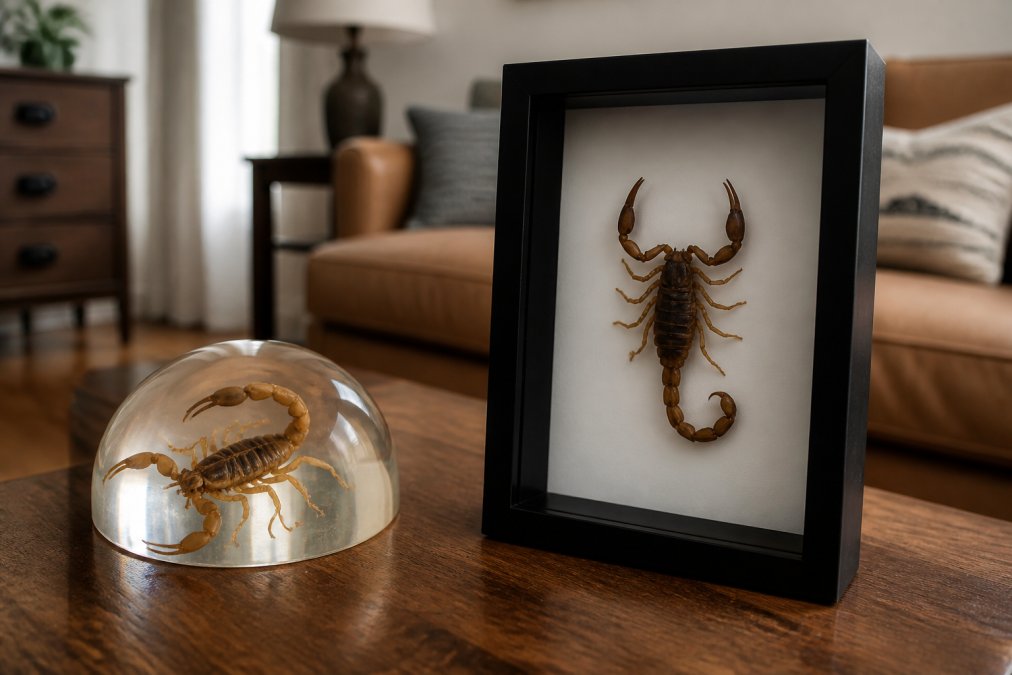
Choosing how to display preserved insects comes down to two questions: how much light will hit the piece, and how often hands will touch it. Resin seals the specimen inside Lucite, so dust never reaches it and it survives knocks that would crack glass. A shadow box frame gives a traditional, museum-like presentation and hangs flat against a wall.

Ethically Sourced Insect Taxidermy: What to Look For
Ethically sourced insect taxidermy means the specimen was bred in captivity or collected under permit, not taken from wild populations. Reputable sellers state the species name, origin and breeding status on the listing. Newman Art Designs lists the species, common name and origin on every piece, and its rainforest scorpions are bred in captivity.
Ask these questions before buying:
- Does the listing name the species, not just "scorpion"?
- Is the origin country stated?
- Does the seller confirm captive breeding or permitted collection?
- Is the piece made locally or imported without documentation?
The Benefits of Biophilic Decor in Bedrooms and Living Spaces
The benefits of biophilic decor in bedrooms and living spaces come from the way natural forms calm a room. A preserved specimen brings the texture and silhouette of the natural world indoors without the upkeep of a live plant. A small dome adds interest to a bedside table; a framed piece works as a focal point above a console or sofa.
Caring for Preserved Scorpion Specimens: Handling, Dust, and Longevity
A properly cured and sealed specimen will outlast most wall art, but "properly" is doing a lot of work in that sentence. Longevity depends on three things: UV exposure, moisture, and how the piece is mounted.
Why UV light is the main threat
Ultraviolet light breaks down the pigments in a scorpion's exoskeleton, fading darker browns and blacks toward a washed-out tan. It also degrades resin, yellowing and clouding a clear Lucite block within a few years of direct sun. Glass domes offer no UV protection at all, they filter visible light, not UV.
Moisture, humidity and the mount
Scorpion exoskeletons are hygroscopic, they absorb and release moisture from the air. In a humid room, a mounted specimen can soften, sag or develop mould behind the glass. Bathrooms, kitchens, laundries and unventilated garages are the worst places to display one.
- Keep relative humidity in the display area below roughly 60% where possible
- Never display a dome or frame directly above a kettle, sink or shower
- In humid climates, a small silica gel sachet hidden behind a shadow box mount helps, replaced every 6-12 months
- If you see condensation inside a dome or frame, the seal has failed, remove the piece from the humid area immediately
Format-specific care
Each display format has its own weak point, and treating them all the same is how pieces get damaged.
- Resin blocks and hemispheres: the toughest format. Wipe with a soft damp cloth and mild soap if needed. The main risk is surface scratching, never use abrasive pads or ammonia-based cleaners, which dull the surface. Keep out of prolonged direct sun to prevent clouding.
- Glass domes: lift by the base, never the dome itself; the dome is not attached and the specimen is usually pinned to the base. Dust the base with a soft dry brush. Check the dome sits flush, a gap lets in dust and humidity.
- Shadow box frames: dust the glass with a microfibre cloth. Never spray cleaner directly onto the glass, spray the cloth, then wipe, so liquid cannot seep into the frame and reach the specimen. Check the mount annually; if the specimen has shifted or a pin has worked loose, have it re-mounted rather than pushing it back into place.
Handling rules that prevent most damage
- Wash and dry hands before handling any unsealed piece; oils and moisture damage dried exoskeletons
- Support the base with both hands when moving a dome or large frame
- Never stack stored pieces; store upright, wrapped in acid-free tissue, in a cool dry place
- Avoid moving pieces more than necessary, every handling is a chance to crack a leg or tarsus
- Keep a record of the species and maker with the piece, which helps if you ever need a repair or resale valuation
Shipping and transit
Shipping damage is a real concern for delicate pieces, and the risk is highest for glass domes and large frames. Newman Art Designs ships free within Australia, and customer feedback regularly notes that pieces arrive intact and well packed. Keep the original packaging for at least the first month in case a return is needed, and inspect the seal and mount before placing the piece in its final spot.
Photograph the piece and its packaging on arrival. If damage occurs in transit, a dated photo set makes any claim or replacement far simpler to resolve.
Safety, Styling, and Value: What Buyers Often Overlook
Most guides stop at "is it pretty?" Three things separate a piece you keep for years from one you regret: whether it is safe to live with, whether it suits your room, and whether it holds value.
Safety and toxicity: what is actually in a preserved specimen
A preserved scorpion is not a live animal, but it is also not inert. Understand the preservation chemistry and the physical specimen itself.
- Residual chemicals. Specimens are typically fixed and dried using alcohols, formalin substitutes or borax-based methods before being sealed. In a properly cured and fully enclosed piece, those residues are locked inside the resin, glass or frame. The risk is not the sealed piece on your shelf, it is the loose, unsealed or freshly made specimen handled bare-handed.
- Fragile stingers and pedipalps. Even a dried scorpion's tarsus (the stinger) and claws remain sharp and brittle. A sealed dome or resin block removes that risk entirely; a shadow box with a loose mount does not.
- Venom is denatured, not dangerous. Once dried and cured, scorpion venom proteins degrade and are not a sting hazard. The realistic injury from a preserved specimen is a puncture or scratch from a broken piece of exoskeleton, not envenomation.
If a seller cannot tell you how the specimen was preserved and whether it is fully sealed, treat it as a handling hazard, not a decor piece. This is the single most common safety oversight buyers make.
Styling by interior aesthetic
A preserved scorpion reads very differently depending on what surrounds it. Match the piece to the room's existing language rather than forcing it in.
- Minimalist / Scandi: one small dome or resin hemisphere on a pale timber shelf, plenty of negative space. The specimen becomes the only dark focal point. Avoid grouping, a single piece does more work than three.
- Gothic / dark academia: shadow box frames in black or dark walnut, clustered in odd numbers (three or five) on a wall, paired with brass, aged leather-bound books and low warm lighting. This is the aesthetic most buyers are actually searching for.
- Maximalist / eclectic: mix formats, a large dome on a console, a resin block on a side table, a framed piece above. Vary heights by at least 15cm between adjacent pieces so the eye moves.
- Modern industrial: resin hemispheres and Lucite blocks on concrete or black metal shelving. The transparency of resin suits hard surfaces better than a glass dome, which can look fussy.
Investment and valuation: what holds value
Preserved specimens are not a financial asset class, and no honest seller will promise appreciation. But quality does hold value, and the gap between a well-made piece and a cheap one is visible within a year.
What separates a high-quality specimen from a low-quality one:
- Species identification. A named species (with scientific name) holds value; a generic "scorpion" does not.
- Pose and symmetry. Legs and pedipalps should be arranged symmetrically and naturally. Asymmetrical or collapsed poses indicate rushed work.
- Mount quality. The specimen should be pinned or glued securely, with no visible adhesive residue or floating parts.
- Seal integrity. Resin should be bubble-free and clear; glass should be clean and properly fitted. Cloudy resin or a loose dome is a durability red flag.
- Provenance. Captive-bred, documented origin, and a maker with a track record all support resale appeal.
A preserved scorpion is worth it when the specimen is ethically sourced, fully sealed, styled to suit the room, and bought for quality rather than resale. Skip any of those and the piece will not hold up, financially or aesthetically.
Conclusion: Are Preserved Scorpion Specimens Worth It for You?
For most buyers, yes, if you value a piece that starts conversations and lasts. Newman Art Designs has been making museum-quality preserved specimens since 1996, with free shipping across Australia and a range covering frames, domes and resin. Start with a shadow box frame or a small dome, see how it sits in your space, then build from there.
Frequently Asked Questions
How long do preserved scorpion specimens typically last?
Museum-quality preserved scorpion specimens kept out of direct sunlight and away from damp conditions can last for many years without losing their shape. Resin-encased pieces offer the longest lifespan because the scorpion is fully sealed inside clear Lucite, while shadow box and dome displays rely on good sealing and careful handling. Keeping them away from humid rooms and direct UV light is the single biggest factor in how well they age.
Are preserved scorpion specimens considered ethical home decor?
Ethically sourced insect taxidermy means the specimens were bred in captivity rather than taken from wild populations. Many suppliers, including Newman Art Designs, state clearly that their scorpions are captive-bred, which avoids pressure on wild habitats. If ethical sourcing matters to you, look for sellers who name the species and confirm captive breeding before you buy, and ask directly if the listing is unclear.
What is the difference between resin-encased and shadowbox scorpion displays?
Resin-encased scorpions are fully embedded in clear Lucite, making them sealed, durable, and safe to handle. Shadow box frames and glass domes present the scorpion in open air behind glass, which gives a more traditional museum look and shows finer anatomical detail. Resin suits high-touch spots like desks and coffee tables, while shadow boxes and domes work best on shelves and walls where they will not be knocked.
Are preserved scorpion specimens safe to display in a home with pets?
Preserved scorpions are non-living and do not sting, but resin pieces are the safer choice in homes with curious pets because the specimen is fully sealed. Shadow box frames and glass domes protect the scorpion behind glass, though a knocked-over dome can break. Place displays on high shelves or wall-mount them, and keep resin hemispheres out of reach of pets that chew.
The real challenge with preserved specimens is not finding one, it is finding one that was sourced responsibly and mounted to last. Newman Art Designs has handled that part since 1996, offering museum-quality preservation, a wide range of specimens including butterflies, spiders and snake skeletons, and free shipping across Australia. Get started with Newman Art Designs and bring a piece of the natural world into your home.
