
10 Ethical Natural History Decor Trends
Table of Contents
- Museum-Quality Preservation and Display Standards
- Ethical Preserved Butterfly Art and Insect Collections
- Responsibly Sourced Natural History Specimens
- Nature-Inspired Home Decor with Skeletal and Anatomical Displays
- Ethical Alternatives to Taxidermy
- Sustainable Materials and Handcrafted Framing
- Styling Natural History Pieces in Small Spaces
- Longevity and Care for Preserved Specimens
- Frequently Asked Questions
Last Updated: October 10, 2026
Museum-Quality Preservation and Display Standards
Ethical natural history decor has become increasingly popular among homeowners and collectors who want to celebrate the natural world responsibly. Proper preservation begins with archival materials. Glass domes protect specimens from dust and environmental damage while allowing full visibility. Mounting techniques are critical, specimens must be secured without damaging delicate structures like wings or exoskeletons.
Temperature and humidity control matter significantly. Preserved specimens deteriorate faster in fluctuating environments. Ideally, display spaces should maintain 45-55% relative humidity and avoid direct sunlight. Ethical natural history decor displayed in proper conditions can last decades without fading or structural damage.
Ethical Preserved Butterfly Art and Insect Collections
Preserved butterfly art represents one of the most accessible entry points into ethical natural history decor. The key distinction lies in how specimens were collected: ethical sources use naturally deceased specimens, captive-bred insects, or legally sourced specimens from sustainable populations.
Newman Art Designs sources butterflies like the Danaus plexippus (Monarch Butterfly, in a Dome) at $99.95, which showcases the bold orange and black pattern. The specimen is mounted on Amethist Crystal. The Ayuthia spectabile (White Ghost Cicada, in a Dome) at $134.95 presents a striking pale specimen that draws attention through subtlety.
The ethical angle is straightforward: ask your supplier whether specimens were captive-bred, naturally deceased, or legally harvested from non-endangered populations. Reputable sellers provide this information transparently.
Responsibly Sourced Natural History Specimens
CITES Compliance and Species Protection
CITES (the Convention on International Trade in Endangered Species) governs which animal specimens can legally be bought and sold internationally. Protected species are listed in three appendices, with Appendix I containing species threatened with extinction that cannot be traded commercially.
Many preserved specimens available through legitimate retailers fall outside CITES restrictions entirely. Non-CITES listed species like the Asian Bat Skeleton in a Dome at $119.95 are explicitly labelled as such, confirming they pose no conservation concerns. When shopping for ethical natural history decor, look for sellers who clearly state the CITES status of each specimen. If a seller cannot provide this information, that's a red flag.

Provenance Documentation and Seller Transparency
Provenance, the documented history of where a specimen came from, separates ethical dealers from opportunistic sellers. Responsible suppliers maintain records showing when, where, and how each specimen was obtained. Newman Art Designs provides species information, common names, origin locations, and size specifications for every piece.
Ask sellers direct questions: Where did this specimen come from? When was it collected? Was it captive-bred or wild-caught? Ethical dealers welcome these questions because they're confident in their sourcing practices.
Nature-Inspired Home Decor with Skeletal and Anatomical Displays
Skeletal displays offer a different aesthetic approach to ethical natural history decor. Bird skeletons reveal remarkable adaptations that enable flight. The Bee-Eater Bird Skeleton in a Dome at $119.95 showcases the blue-tailed bee-eater's lightweight bone structure engineered for aerial hunting. The Dendrelaphis pictus (Painted Bronzeback Snake Skeleton in a Frame) at $114.95 displays the elongated vertebral column that gives snakes their distinctive flexibility. The Toad Skeleton in a Frame at $94.95 reveals adaptations for jumping and terrestrial life.

These pieces work particularly well for science enthusiasts, educators, and collectors interested in comparative anatomy. They're conversation starters that combine aesthetic appeal with educational value.
| Display Type | Best Location | Ideal Room Size | Price Range |
|---|---|---|---|
| Butterfly domes | Shelving, desks, side tables | Any size | $69.95-$99.95 |
| Bird skeleton domes | Shelving, mantels, bookcases | Medium to large | $99.95-$119.95 |
| Snake skeleton frames | Walls, gallery arrangements | Any size | $94.95-$114.95 |
| Insect frames | Walls, gallery arrangements | Any size | $94.95-$99.95 |
Ethical Alternatives to Taxidermy
Traditional taxidermy involves preserving an entire animal body, raising ethical concerns for many collectors. Ethical alternatives focus on specific anatomical elements or naturally deceased specimens without requiring active hunting or killing.
Skeletal displays avoid the ethical issues of full-body preservation. The Finch Skeleton in a Dome at $99.95 offers this approach, with genuine bone structure displayed with care and respect. Insect specimens present another ethical alternative, insects have shorter lifespans and reproduce in large numbers, making ethical collection more straightforward than with vertebrates.

Sustainable Materials and Handcrafted Framing
The frame and mounting system contribute as much to the ethical profile of natural history decor as the specimen itself.
Wood and Base Materials
Frames constructed from reclaimed or sustainably harvested timber reduce demand for virgin forest resources. Look for suppliers who can document their wood source and verify FSC (Forest Stewardship Council) certification, which confirms the wood comes from forests managed to environmental, social, and economic standards. Handcrafted framing allows makers to select low-VOC finishes, solid-wood joinery that avoids formaldehyde-based adhesives, and assembly methods that prioritise durability. A frame built to last 20-30 years has a lower lifecycle impact per year than a cheaper frame replaced every 5 years.
Protective Materials and Alternatives to Glass
Archival-quality backing materials, acid-free cardboard, cotton rag board, and lignin-free mounting substrates, prevent chemical degradation of specimens over time. When purchasing framed specimens, confirm that backing materials are acid-free and that adhesives are reversible.
Asian Bat Skeleton in a dome - Non-Cites Listed Species →
Manufacturing Footprint and Local Production
Handcrafted framing made locally reduces transport emissions compared to mass-produced frames shipped internationally.
Styling Natural History Pieces in Small Spaces
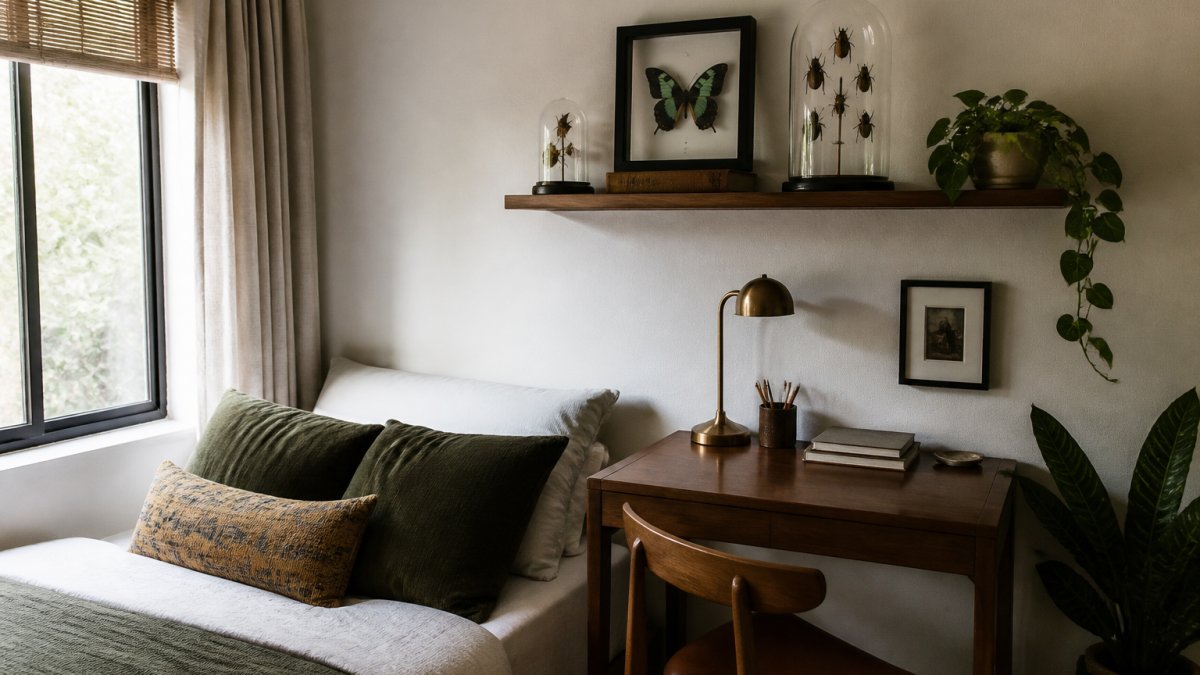
Small apartments and modest wall space don't exclude you from collecting ethical natural history decor. Vertical arrangements work better than spreading pieces across multiple walls. A gallery wall featuring 3-5 framed specimens creates visual impact without overwhelming the space. A single floating shelf can display 2-3 dome pieces, creating a curated collection that draws the eye. Corner arrangements work well too, displaying a dome specimen paired with a framed piece without consuming valuable wall real estate.
Longevity and Care for Preserved Specimens
Preserved specimens can remain in excellent condition for 50+ years when environmental conditions and handling practices are carefully managed.
Environmental Stability: Temperature, Humidity, and Light
Fluctuating temperature and humidity are the primary drivers of specimen degradation. Preserved insects, skeletons, and mounted specimens expand and contract with moisture changes, causing stress on mounting adhesives and delicate structures. Ideally, display spaces should maintain 45-55% relative humidity and remain between 18-21 °C.
Direct sunlight causes fading in pigmented specimens and accelerates chemical breakdown of organic materials. UV-protective glass or acrylic filters out 99% of ultraviolet radiation, but prolonged direct sunlight exposure degrades specimens over time. Position pieces on interior walls away from windows. Avoid bathrooms and kitchens, which experience humidity spikes. Attics and basements undergo seasonal temperature and humidity swings that damage specimens. Climate-controlled living areas provide the stable environment these pieces require.
Pest Prevention and Biological Threats
Insect specimens attract museum pests: carpet beetles, silverfish, and booklice feed on organic materials and can infest collections if specimens are not properly sealed. Sealed frames and domes with tight-fitting bases prevent pest entry far more effectively than open displays.
If you notice small holes, frass (insect droppings), or signs of activity inside a sealed frame, do not open it yourself. Contact the maker or a conservator.
Handling and Physical Care
Natural oils and acids on human skin damage delicate specimens. Avoid touching specimens directly; handle frames and domes only by their edges or bases. If you must touch a specimen, wear cotton gloves. Dust the frame or dome exterior with a soft, dry microfibre cloth. Never use water, solvents, or commercial cleaning products on the specimen itself.
When moving pieces, support the frame or dome fully in both hands. Transport in a padded box with cushioning material. Avoid rapid temperature changes during transport.
Monitoring and Preventive Inspection
Examine your collection every 6-12 months for signs of deterioration: fading, discolouration, loose mountings, condensation inside sealed frames, or pest activity. Keep a simple log noting the date, condition, and observations for each piece. Condensation inside a sealed frame indicates humidity imbalance or seal failure and requires professional attention.
Repair and Conservation
Minor issues can often be addressed by the original maker if you contact them within a reasonable timeframe. For valuable or irreplaceable specimens, professional conservation may be worthwhile.
Frequently Asked Questions
How can I tell whether a preserved insect specimen was ethically sourced?
Ask the seller for documentation about the specimen's origin and whether it comes from captive-bred populations or legally harvested wild stock. Reputable sellers like Newman Art Designs provide species names, origin information, and CITES compliance details. Non-CITES listed species (such as the Asian Bat Skeleton available at $119.95) are generally safer choices. Request proof that the specimen was not collected from endangered populations, and look for transparency about preservation methods used.
What makes ethical preserved butterfly art different from standard insect displays?
Ethical preserved butterfly art sources specimens responsibly, often from captive-bred populations or legal, sustainable harvests. Sellers should disclose species status and origin. Products like the Monarch Butterfly in a Dome ($99.95) use proper mounting on natural materials to enhance the specimen's beauty.
Are there ethical alternatives to traditional taxidermy for natural history decor?
Yes. Skeletal displays, like the Painted Bronzeback Snake Skeleton ($114.95) or Bee-Eater Bird Skeleton ($119.95), offer an ethical alternative by showcasing anatomical beauty without full-body preservation. Preserved insects in frames or domes, such as the Giant Leaf Insect ($99.95), also avoid taxidermy whilst celebrating natural form. These alternatives highlight the creature's structure and design, appeal to collectors and educators, and often come from non-endangered species or captive-bred sources.
How should I care for preserved specimens to ensure they last?
Keep specimens away from direct sunlight, excessive heat, and high humidity to prevent colour fading and deterioration. Dust glass domes and frames gently with a soft cloth. Avoid touching the specimen itself, as oils from skin can damage delicate structures. Maintain stable indoor temperatures and display pieces in climate-controlled rooms. Proper placement in your home will extend their lifespan significantly.
Can natural history decor work in a small apartment or minimal space?
Absolutely. Framed specimens like the Ghost Cicada in a Black Frame (5 x 7", $94.95) or Monarch Butterfly Frame (4 x 6", $69.95) take up minimal wall space and create visual impact. Smaller dome displays, such as the Finch Skeleton (4.5" high, $99.95), fit on shelves, desks, or floating ledges. The key is choosing pieces that suit your room's scale and grouping them intentionally rather than scattering them. Even one statement piece can anchor a room's aesthetic without overwhelming tight quarters.
