
Pamphobeteus antinous: Species Guide & Care
Table of Contents
- What Is Pamphobeteus antinous?
- Pamphobeteus antinous Size and Appearance
- Pamphobeteus antinous Enclosure Setup
- Pamphobeteus antinous Diet and Feeding
- Pamphobeteus antinous Care: Growth, Molting, and Lifespan
- Behaviour, Handling, and Safety
- Why Pamphobeteus antinous Specimens Make Striking Displays
- Frequently Asked Questions
Last Updated: October 10, 2026
What Is Pamphobeteus antinous?
Pamphobeteus antinous is a large, striking tarantula species belonging to the family Theraphosidae, subfamily Theraphosinae.

Taxonomy and Common Names
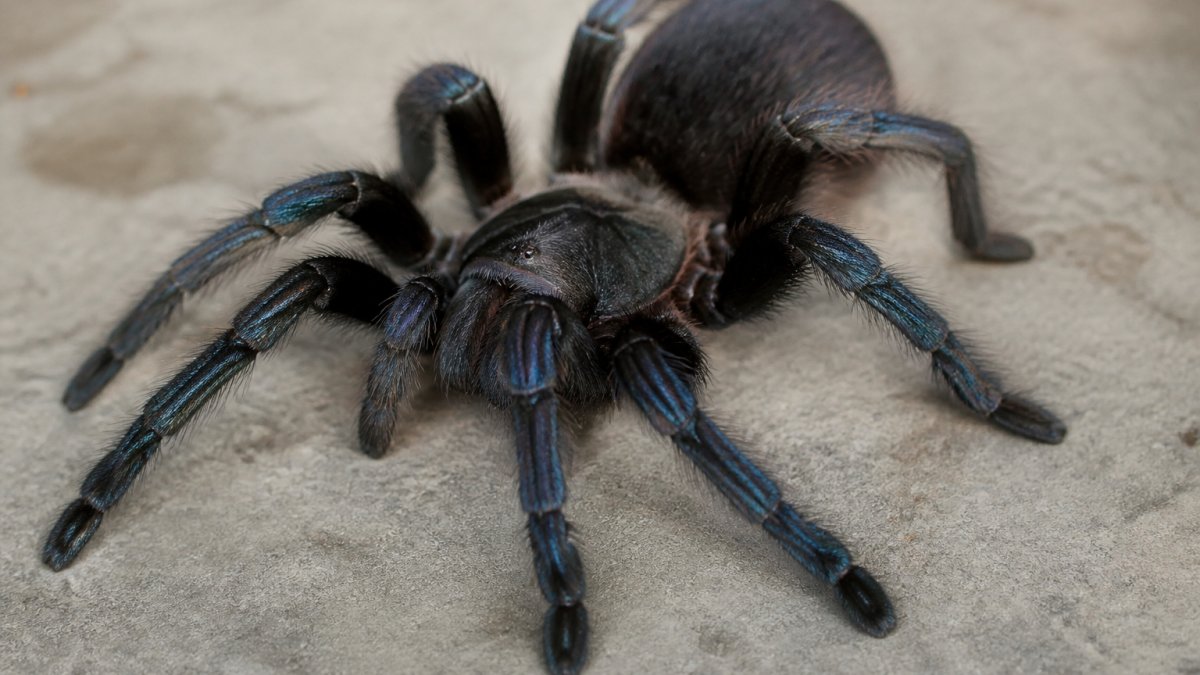
The scientific name Pamphobeteus antinous reflects its classification within the genus Pamphobeteus, a group of substantial South American tarantulas. Common names include the Steely Blue, Bolivian Blue Leg, and Big Black, referring to the iridescent blue-violet coloration on the legs of many specimens, particularly mature males.
Correct scientific identification matters when acquiring specimens; some retailers use trade names loosely, and cf. antinous (closely related but not definitively identified specimens) sometimes enter the market.
Native Range and Locality
Pamphobeteus antinous originates from Peru and Bolivia, inhabiting humid, forested regions where it constructs burrows. Locality-specific populations display subtle colour and size variations, which is why collectors often note specimen origin.
Pamphobeteus antinous Size and Appearance
Adult Pamphobeteus antinous specimens rank among the larger tarantula species, commanding attention through sheer physical presence. Size and coloration are the primary visual markers that make this species so prized by collectors and display enthusiasts.
Body Length and Leg Span
Adult Pamphobeteus antinous have body lengths of 6-8 cm and leg spans of 15-18 cm, comparable to a dinner plate when fully extended. Females generally exceed males in body mass, though males often display longer legs proportionally.
Sexual Dimorphism and Coloration
Males display more vibrant blue-violet iridescent bristles on their legs, intensifying with maturity. Females show darker, more subdued coloration but retain the characteristic steely-blue sheen. Both sexes have dark brown to black bodies.
Pamphobeteus antinous Enclosure Setup
Proper enclosure design is fundamental to captive Pamphobeteus antinous health. This burrower requires deep substrate and balanced moisture and ventilation to prevent mould, bacterial growth, and respiratory stress.
Substrate and Burrowing Space
Pamphobeteus antinous requires deep substrate for burrow construction:
- Slings (0-1 year): 8-10 cm
- Juveniles (1-3 years): 12-15 cm
- Subadults and adults (3+ years): 15-20 cm
Use coconut husk, peat moss, or a mixture for moisture retention and tunnel formation. Avoid substrates that compact heavily or retain excessive moisture, as these promote anaerobic conditions and fungal growth.
Provide floor space of at least 20 × 20 cm for juveniles and 30 × 30 cm for adults. Plastic storage containers (10-15 litre opaque boxes) modified with ventilation holes are practical; avoid glass aquaria, which retain heat unevenly.
Temperature and Humidity
Pamphobeteus antinous thrives at 24-26°C with 70-80% humidity. Temperature fluctuations below 20°C or above 28°C stress the tarantula and slow growth.
Humidity management requires careful attention:
- Water provision: A shallow water dish (bottle cap or small ceramic dish) should always be present, allowing the tarantula to drink and contributing to ambient humidity. Refill or clean the dish every 2-3 days to prevent bacterial contamination.
- Substrate moisture: The substrate should be damp to the touch but not waterlogged. A practical test is to squeeze a handful: a few drops of water should emerge, but the substrate should not feel soggy. Check moisture levels weekly by inserting a finger 5 cm into the substrate away from the burrow entrance.
- Ventilation: Adequate air circulation is critical despite humidity requirements. A small vent (3-5 mm diameter hole) on one side of the enclosure, combined with a second vent on the opposite side near the top, creates passive air exchange without excessive evaporation. Avoid sealing the enclosure completely, as stagnant, humid air promotes mould on the substrate and fungal infections on the tarantula's book lungs.
Common mistakes to avoid: Overwatering (causes anaerobic mould), placing enclosures in direct sunlight or near heating vents, using inadequate ventilation, and failing to monitor humidity in cooler seasons.
For keepers in cooler climates, a low-wattage heat mat (under-tank or adhesive) set to 24-26°C and controlled by a thermostat prevents temperature drift. Place the heat mat under one side of the enclosure only, allowing the tarantula to move away if it becomes too warm.
Pamphobeteus antinous Diet and Feeding
Pamphobeteus antinous is a voracious eater with a strong appetite. Feeding frequency and prey size should match the tarantula's size and age.
Prey Selection and Frequency
Adult Pamphobeteus antinous readily consume crickets and roaches of appropriate size; prey should not exceed body length. Juveniles begin on fruit flies and pinhead crickets, progressing to larger insects as they grow.
Feed adults once every 7-10 days. Remove uneaten prey after 24 hours. Pamphobeteus antinous actively pursues prey rather than constructing webs.
Pamphobeteus antinous Care: Growth, Molting, and Lifespan
Understanding the life cycle of Pamphobeteus antinous is essential for long-term care and appreciation of the species. Growth, molting, and lifespan are interconnected and influenced by feeding, temperature stability, and individual genetics.
White Striped Tarantula Framed - Acanthoscurria juruenicola →
Growth Rate and Maturation
Juveniles reach adult size within 4-6 years under proper conditions. Growth is tied to feeding frequency (every 5-7 days), consistent warmth (24-26°C), and stable humidity (70-80%).
Males mature slightly faster than females and typically have shorter lifespans. Maturation is marked by the development of secondary sexual characteristics:
- Males: Develop tibial apophyses (mating hooks) on their front legs, display more vibrant blue-violet coloration on the legs, and often show reduced appetite and increased restlessness as they approach sexual maturity (typically around 3-4 years).
- Females: Reach maturity with the capacity to produce eggs and construct egg sacs, typically around 4-5 years; they retain darker coloration and larger body mass than males.
Molting and Maintenance
Molting is a critical and vulnerable phase in Pamphobeteus antinous life cycle. During a molt, the tarantula sheds its exoskeleton to accommodate growth. Understanding the molt cycle helps keepers provide appropriate care and avoid common mistakes.
Pre-molt signs (1-2 weeks before molting):
- Refusal of food; the tarantula will ignore prey or actively retreat from it.
- Extended time in the burrow; the tarantula may seal the burrow entrance with silk.
- Dull appearance; the body and legs lose their characteristic sheen and may appear slightly discoloured or "cloudy."
- Reduced activity; the tarantula moves slowly or not at all.
During the molt (several hours to several days):
- The tarantula lies on its back or side, often in the burrow.
- The exoskeleton splits along the body, and the tarantula wriggles free.
- The process is energy-intensive and should not be disturbed; vibrations or disturbances can cause the tarantula to become stuck or injured.
- Do not attempt to help or "assist" the molt; this almost always results in injury or death.
Post-molt care (1-2 weeks after molting):
- No feeding: The new exoskeleton is soft and the fangs are not yet hardened. Feeding during this period can result in injury or the prey overpowering the tarantula. Wait at least 10-14 days before offering food again.
- Humidity stability: Maintain humidity at 70-80% during this period to support the hardening of the exoskeleton. Fluctuations can cause the new skin to crack or fail to harden properly.
- No handling: The tarantula is extremely vulnerable and may bite defensively if disturbed. Leave it undisturbed in its burrow.
- Water access: Ensure the water dish is filled and accessible; the tarantula may drink frequently during hardening.
Molt frequency decreases with age: slings may molt every 4-8 weeks, juveniles every 8-12 weeks, and adults every 12-18 months (females) or less frequently (males, who may not molt after reaching maturity).
Lifespan
Lifespan in Pamphobeteus antinous varies significantly by sex and is influenced by care quality, feeding, and individual genetics:
- Females: Commonly live 12-15 years in captivity under optimal conditions (consistent temperature, stable humidity, regular feeding, low stress). Some individuals have been documented living 16-18 years, though this is less common.
- Males: Typically live 4-6 years in captivity. Males often experience a dramatic lifespan reduction after reaching sexual maturity; they may stop eating, become restless, and die within months to a year of maturity. This is a natural phenomenon and not a sign of poor care.
Important caveats:
- Lifespan claims are based on captive observations and may not reflect wild populations, where predation, parasites, and environmental stress reduce longevity.
- Individual variation is substantial; some females may die at 8-10 years due to illness, injury, or genetic factors, while others thrive for 15+ years.
- Poor care (temperature fluctuations, inadequate humidity, irregular feeding, stress from excessive handling) significantly shortens lifespan.
- Males that do not mate may live slightly longer than those that do, though the difference is typically only a few months.
Behaviour, Handling, and Safety
Pamphobeteus antinous possesses defensive capabilities that keepers must respect and understand.
Defensive Responses and Urticating Hairs
When threatened, Pamphobeteus antinous may rear defensively, displaying its fangs. The species possesses urticating hairs on its abdomen, barbed bristles that the tarantula can flick toward threats as a defence mechanism. Contact with these hairs causes irritation to skin and eyes, though the severity varies between individuals. Handling should be minimal and only when necessary. Most bites occur during defensive encounters rather than predatory strikes, and Pamphobeteus antinous is not considered dangerously venomous to humans, though individual sensitivity varies.
The tarantula's defensive posture, elevated front legs and exposed fangs, is a clear warning signal that should be respected. Allowing the specimen to retreat into its burrow is the safest approach when the tarantula displays this behaviour.
Why Pamphobeteus antinous Specimens Make Striking Displays
The combination of size, coloration, and natural behaviour makes Pamphobeteus antinous an exceptional choice for display and collection. The iridescent blue-violet leg bristles catch light beautifully, creating dynamic visual interest. The strong body and substantial leg span command attention in any setting, whether in a shadowbox frame or acrylic dome.
For collectors seeking a specimen that bridges scientific interest and aesthetic appeal, Pamphobeteus antinous delivers both. The species' natural history, its origin in South American forests, its role as a formidable predator, its complex life cycle, adds depth to the visual experience of owning and displaying one.
Newman Art Designs specializes in museum-quality preservation of specimens like Pamphobeteus antinous, presenting them in elegant frames and domes that honour the tarantula's natural beauty. Our Pamphobeteus antinous Tarantula in a Dome and White Striped Tarantula Framed options showcase these remarkable creatures as conversation pieces and focal points in home decor.

| Aspect | Details |
|---|---|
| Scientific Name | Pamphobeteus antinous |
| Common Names | Steely Blue, Bolivian Blue Leg, Big Black |
| Native Range | Peru, Bolivia |
| Adult Body Length | 6-8 cm |
| Adult Leg Span | 15-18 cm |
| Substrate Depth | 15+ cm |
| Temperature Range | 24-26°C |
| Humidity Level | 70-80% |
| Feeding Frequency | Every 7-10 days |
| Female Lifespan | 12-15 years |
| Male Lifespan | 4-6 years |
Pamphobeteus antinous represents a remarkable intersection of natural history and aesthetic appeal. This species demands respect for its size, defensive capabilities, and complex care requirements, yet rewards keepers with years of observation and appreciation. Whether you're drawn to the tarantula's striking blue-violet coloration, its impressive leg span, or its role as a sophisticated predator, Pamphobeteus antinous offers genuine connection to the natural world. At Newman Art Designs, we've preserved museum-quality specimens to bring this connection into your home with elegance and craftsmanship. Explore our collection of framed and domed Pamphobeteus antinous displays and discover how a single specimen can transform your living space into a gallery of natural wonder.
Frequently Asked Questions
What is Pamphobeteus antinous?
Pamphobeteus antinous is a large, burrowing tarantula species from the Theraphosinae subfamily, native to Bolivia and Peru. Commonly called the Steely Blue or Bolivian Blue Leg tarantula, it is recognised by its blue-violet iridescent leg bristles and dark body colouration. This species belongs to the bird-eating tarantula group and is popular in captive care due to its striking appearance and relatively hardy nature.
How large does Pamphobeteus antinous grow?
Pamphobeteus antinous reaches a body length of 5-7 centimetres and a leg span of 15-18 centimetres when fully mature. Females typically grow larger and live longer than males. Adult females can weigh between 10-15 grams, making them substantial spiders.
What enclosure does Pamphobeteus antinous need?
Pamphobeteus antinous is a burrower and requires a minimum enclosure depth of 15-20 centimetres with moist substrate such as coconut husk or peat moss. Provide a water dish and ensure adequate ventilation to prevent mould. Maintain humidity between 70-80% and temperature around 22-26°C. These specimens are solitary and must be housed individually to prevent aggression or cannibalism.
What does Pamphobeteus antinous eat?
Pamphobeteus antinous is a voracious eater that hunts crickets, roaches, grasshoppers, and other appropriately sized invertebrate prey. Juvenile spiders feed on smaller insects weekly, whilst adults may be fed every 7-10 days. Remove uneaten prey after 24 hours to prevent injury to your specimen. This species is an active hunter and will pursue prey within its enclosure.
