
How to Clean Glass Dome Displays: A Step-by-Step Guide
Table of Contents
- What You'll Need Before You Start
- How to Clean a Glass Showcase and Dome Displays Without Removing the Specimen
- Choosing a Safe Glass Cleaner for Display Cases
- Picking the Right Glass Display Cleaning Cloth
- Removing, Lifting and Replacing the Dome Safely
- Cleaning the Rim, Base, Seams and Underside
- How to Protect Insect Specimens in a Display During and After Cleaning
- Troubleshooting Haze, Mineral Spots and Persistent Streaks
- Frequently Asked Questions
Last Updated: October 17, 2026
What You'll Need Before You Start
Glass dome displays reward a slow, careful approach, and glass dome displays are no exception. Gather your supplies first so you never leave a dome half-cleaned while you hunt for a cloth. At Newman Art Designs, we've shipped preserved specimens in glass domes since 1996, and the cleaning routine below is the same one we'd use on our own pieces.

Here's your kit:
- A soft microfiber or lint-free cloth (two, ideally)
- A mild dish soap diluted in warm water
- Distilled water for a final wipe
Skip paper towel, tissues and anything abrasive. They leave lint and fine scratches on glass surfaces.
How to Clean a Glass Showcase and Dome Displays Without Removing the Specimen
You can clean a glass dome display without lifting it off its base, and for routine dusting this is the safest option.
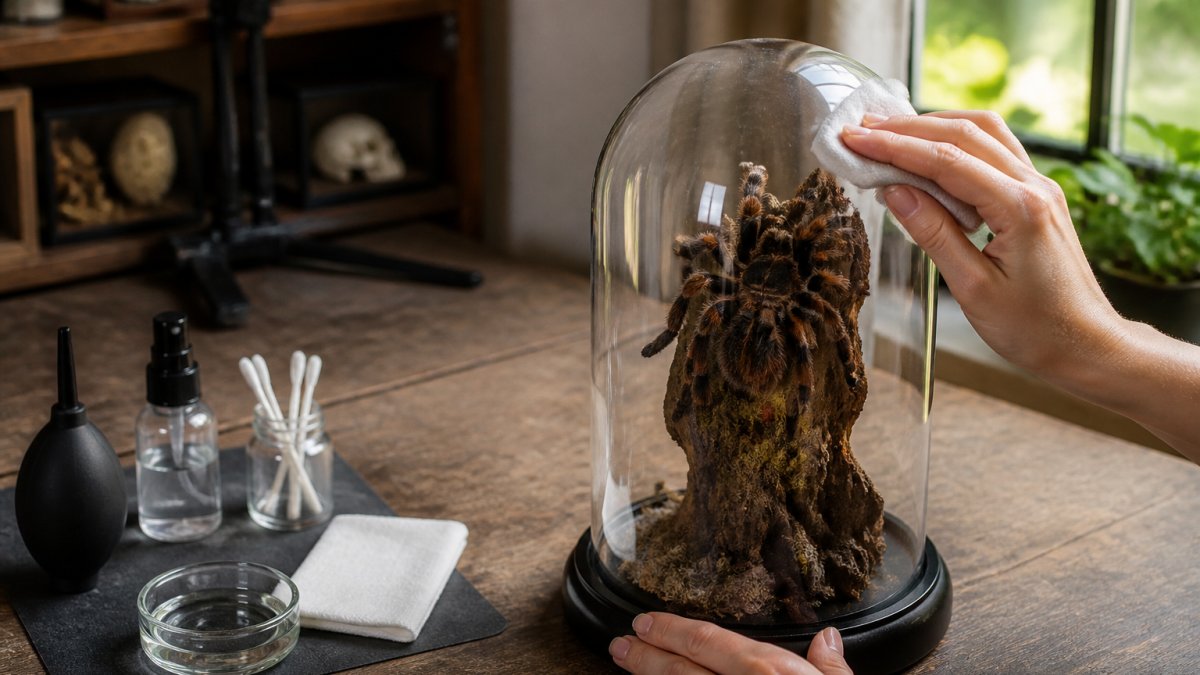
Work in this order:
- Use a soft brush or blower to lift loose dust from the top and sides.
- Dampen a microfiber cloth with plain warm water. Wring it out well.
- Wipe the curved glass in gentle circles, starting at the top.
- Dry immediately with a second, dry lint-free cloth.
- Buff lightly until the glass is streak-free.
Keep one hand steady on the wooden base while you wipe. Pressure on the glass alone can tip the whole piece.
For a glass showcase with shelves, the same method applies. Dust shelves first, then wipe the glass panels, then buff.
Choosing a Safe Glass Cleaner for Display Cases
The safest glass cleaner for display cases is a mild dish soap diluted in warm water, applied with a damp cloth. It lifts fingerprints and light grime without attacking the glass or the finish on a wooden base. But the right choice depends on what the dome is made of and how its surface has been finished, so identify both before you pick a bottle.
First, confirm the material
Not every clear dome is glass. Acrylic and polycarbonate domes are lighter, warmer to the touch and more prone to scratching, and some solvents that are fine on glass will cloud or craze them. Tap the dome gently with a fingernail: glass rings with a bright, sustained note, while acrylic gives a duller, shorter tap. If you cannot tell, treat it as acrylic until you are sure, the gentler routine is safe on both.
- Glass domes: mild soap and water, distilled water for the final wipe, soft microfiber only.
- Acrylic domes: plain water or a pH-neutral plastic cleaner, no ammonia, no alcohol, no paper products. Wipe with a soft cloth and never rub hard, because acrylic scratches permanently.
Then check the finish
A clear dome is not always plain clear glass. Coated, tinted, antique and decorated glass each react differently to cleaners, and the wrong product can dull a coating or lift a painted detail.
- Untreated clear glass: the standard mild soap and water routine is fine.
- Coated or anti-reflective glass: avoid ammonia and abrasive creams, which can break down the coating over time. Use distilled water and a microfiber cloth, and buff dry.
- Tinted glass: ammonia-based cleaners can cloud the tint over repeated use. Stick to neutral soap and water.
What to avoid, and why
- Ammonia-based cleaners can cloud coated or tinted glass over time.
- Acetone and alcohol strip finishes, dry out seals and attack acrylic.
- Abrasive creams and powders scratch the surface permanently.
For a shop-bought option, choose a neutral cleaner labelled safe for glass and test it on a hidden spot first. Distilled water is worth keeping on hand too. It rinses away soap residue without leaving mineral spots behind.
Picking the Right Glass Display Cleaning Cloth
A microfiber cloth is the best choice for glass display cleaning. The fine fibres trap dust instead of pushing it across the surface, and they don't shed lint the way paper products do.
Keep three cloths in your kit:
| Cloth | Job | Why It Matters |
|---|---|---|
| Damp microfiber | Lifts dust and fingerprints | Traps particles without scratching |
| Dry lint-free cloth | Removes moisture | Prevents water spots |
| Soft buffing cloth | Final polish | Delivers a streak-free finish |
Wash your cloths separately from anything rough, and never use fabric softener. It coats the fibres and smears glass. Replace cloths once they feel stiff or start leaving residue.
Removing, Lifting and Replacing the Dome Safely
Sometimes the dome has to come off: a specimen needs repositioning, or grime has built up at the base. Lift it only when you must, and do it with both hands.
Follow these steps:
- Clear a padded surface beside the display.
- Grip the dome near its base, not at the top.
- Lift straight up, slowly, keeping it level.
- Set it down on the padding, open side up.
- Clean the base and rim while the dome is off.
- Lower the dome back straight down, lining up the rim with the base groove.
Never twist or angle the dome as you lift. The rim can chip against the wooden base, and a chip weakens the whole piece.
Multi-butterflies in a XLarge Glass Dome →
Cleaning the Rim, Base, Seams and Underside
The rim and base collect the most grime, and they're the parts most people forget. Dust settles in the seam where the dome meets the wood, and fingerprints build up on the underside of the glass. Work through these areas in a fixed order so you never recontaminate a surface you have just cleaned.
The sequence
- Base first, dry. Dust the wooden base with a soft dry cloth or a soft brush before any moisture is introduced. Loose dust plus a damp cloth equals a muddy smear along the wood grain.
- Seam next, dry. Run a soft brush or a cloth-wrapped fingertip along the join between dome and base to lift trapped dust. A dry brush reaches into the groove without pushing debris inside.
- Rim, barely damp. Wipe the rim with a cloth wrung out until it is almost dry, then dry it immediately with a second cloth. Moisture left on the rim can mark the wood and soften the seal.
- Underside last, with the dome off. Rest the dome open side up on a padded surface and wipe the inner surface gently with a barely damp cloth. This is where haze shows most, and it is the one area you cannot reach with the dome in place.
- Buff and reassemble. Buff the inner surface dry before lowering the dome back onto the base, lining up the rim with the base groove.
Tools that reach without scratching
- A soft brush, a clean makeup brush or a camera-lens brush works well, for the seam and any carved detail on the base.
- A cloth-wrapped fingertip for narrow grooves where a brush will not fit.
- A microfiber cloth folded into a pad for the rim, so you can control pressure.
Avoid cotton buds on antique or painted rims: the tip can shed fibres and the stick can chip a fragile edge. Avoid toothbrushes, which are stiffer than they look and can lift finish from wood.
Drying matters as much as cleaning
Every one of these areas should be dry before the dome goes back on. Moisture trapped under the rim is the most common cause of a cloudy ring on the base and of musty smells inside a sealed dome.
For a glass showcase, clean the door tracks and shelf edges the same way: dry brush first, barely damp cloth second, dry buff last. A soft brush reaches into the corners without scratching.
How to Protect Insect Specimens in a Display During and After Cleaning
The best way to protect insect specimens in a display is to keep them sealed and untouched. Your cleaning should only ever touch the outside of the glass.
A few habits make a real difference:
- Never open the dome unless you genuinely need to.
- Keep the display out of direct sunlight, which fades colours over time.
- Place it away from heat sources and damp rooms.
- Dust the outside weekly so grime never builds up.
If you do lift the dome, work away from draughts and open windows. A light touch and a steady hand are all a preserved specimen needs.
Our Japanese emperor butterfly in a dome and other pieces are sealed for exactly this reason.

Troubleshooting Haze, Mineral Spots and Persistent Streaks
Haze and streaks usually come down to three things: too much cleaner, the wrong cloth, or water left to dry on its own.
Try this order of fixes:
- Streaks: Buff with a dry lint-free cloth. If they persist, you used too much soap. Rinse with distilled water and buff again.
- Mineral spots: These come from tap water. Wipe with distilled water, then dry at once.
- Haze inside the glass: This needs the dome lifted. Clean the inner surface gently with a barely damp cloth, then buff dry before replacing it.
- Stubborn fingerprints: A tiny amount of mild dish soap on a damp cloth, then rinse and buff.
Acrylic domes need extra care. They scratch more easily than glass, so use only a soft cloth and plain water, and never rub hard. If you're unsure which material you have, tap it gently. Glass rings; acrylic sounds duller.
Caring for a glass dome display is mostly about patience and the right cloth. Newman Art Designs has been crafting museum-preserved specimens in glass domes and shadowbox frames since 1996, with free shipping across Australia. Browse our multi-butterfly glass dome or scorpion dome collection and bring a piece of the natural world into your home.

Frequently Asked Questions
What glass cleaner is safe for glass dome displays?
A mild dish soap diluted in warm water is the safest option for routine cleaning. Mix a few drops in a spray bottle of water and apply to your cloth, not directly to the glass. Avoid ammonia, acetone, alcohol and vinegar, which can damage coatings or leave residue. For a dedicated product, choose a neutral pH cleaner labelled safe for delicate surfaces. Always test on a small hidden area first. If your dome houses preserved specimens, keep moisture minimal and dry thoroughly to protect what's inside.
How do you clean a glass dome display without streaks?
Streaks come from too much cleaner, dirty cloths or hard water. Use a two-cloth method: one slightly damp microfiber cloth to lift grime, then a dry lint-free cloth to buff the surface. Work in small circles and turn the cloth often. If you have hard water, use distilled water for the final wipe. Avoid spraying cleaner directly onto the glass, since overspray can reach the specimen. Finish by buffing the entire dome with a clean, dry cloth to remove any remaining film.
How do you clean a glass dome without damaging the specimen inside?
The safest approach is to avoid removing the dome unless necessary. Clean the exterior with a barely damp cloth, keeping moisture away from the base opening. If you must lift the dome, do so with both hands, lifting straight up and placing it on a soft towel. Never tilt or invert it. For interior dust, use a soft brush or a low-suction vacuum with a brush attachment, working gently around the specimen. Handle carefully: preserved insects are fragile and can detach if disturbed.
Can you use vinegar to clean a glass display dome?
Vinegar is acidic and can damage some glass coatings, tinted finishes and the wooden or acrylic bases common on display domes. It can also leave a lingering smell and, if it contacts the specimen, cause harm. For routine cleaning, a mild dish soap solution is safer. If you need to tackle mineral spots, use distilled water and a soft cloth instead. Always avoid abrasive cleaners and scouring pads, which can scratch the glass surface and create places for grime to build up.
